
Ancient Civilizations - Part 2
90 reports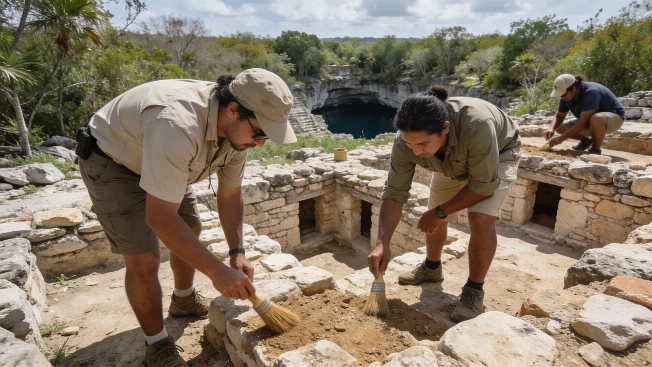
2,000-Year-Old Maya Settlement Uncovered in Yucatán Freight Rail Project
Archaeologists have identified and preserved a previously unknown Maya settlement in Yucatán, revealing 21 structures and evidence of water management. The site, excavated ahead of rail construction, offers new insight into non-elite Maya daily life.
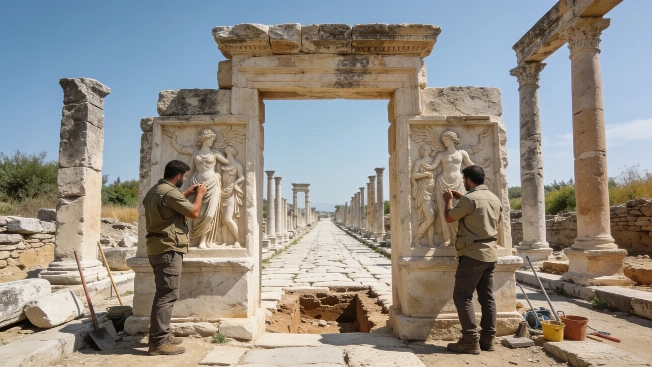
Excavation of Side's Monumental Street Reveals Centuries of Urban Change
Archaeologists have completed the excavation of a nearly 390-meter-long monumental street in the ancient city of Side, southern Turkey, documenting how its architecture and function shifted from the Roman period into Late Antiquity
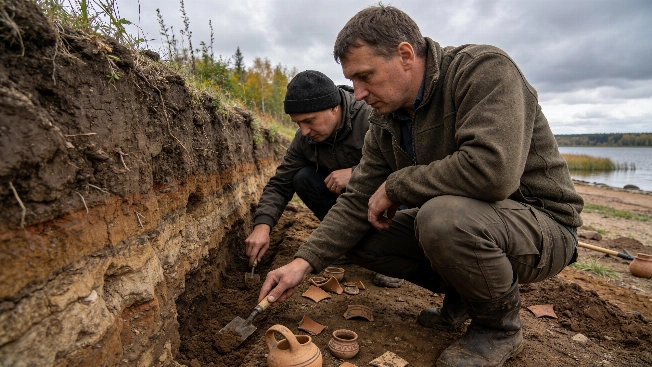
Medieval Galich Fortress Reinterpreted by New Archaeological Evidence
Recent excavations and LiDAR analysis at Galich's fortified settlements indicate that the Lower Settlement's major defenses were likely constructed in the 15th century, challenging the long-held view of a 12th-century origin
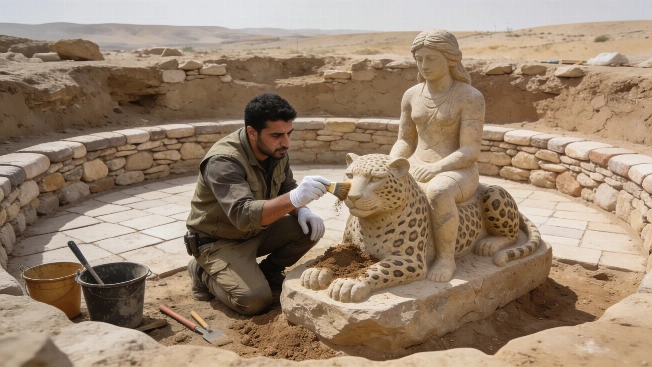
11,000-Year-Old Human-Leopard Sculpture Found at Karahantepe
Archaeologists at Karahantepe in southeastern Türkiye have uncovered a rare Neolithic stone sculpture showing a human figure seated on a leopard, offering new evidence for symbolic art and social practices in early settled communities
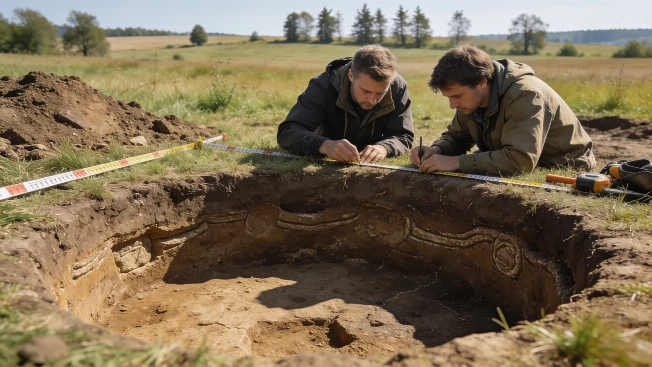
6,500-Year-Old Ritual Enclosure Predating Stonehenge Found in Czech Republic
Archaeologists have uncovered a Neolithic circular enclosure in Central Bohemia, dating to around 6,500 years ago, with entrances aligned to solar and lunar events. The site offers new evidence for early ritual landscapes in prehistoric Europe
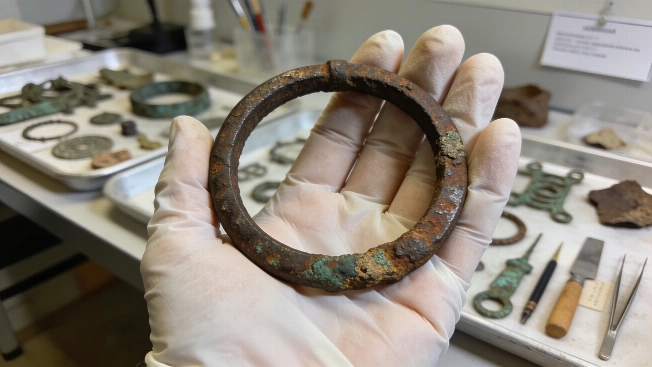
Ancient Greek Rings Reveal Use of Meteorite Iron in Elite Burials
Analysis of Bronze and Early Iron Age rings from Greece shows that some were crafted from meteoritic iron, suggesting the rare metal was valued by Minoan and Mycenaean elites long before iron smelting became common
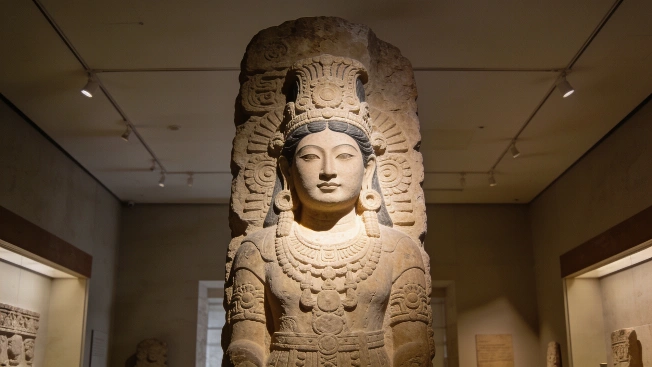
Limestone Stela Reveals Maya Queen's Power in 7th-Century Guatemala
Archaeologists have reconstructed a monumental limestone stela from El Perú-Waka' in Guatemala, depicting Lady K'abel, a Maya ruler, and revealing new evidence about her political and military authority at the end of the seventh century CE
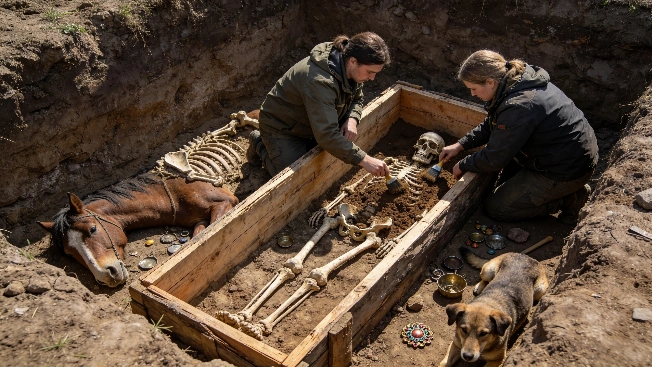
Medieval Chamber Tomb in Russia Reveals Elite Burial with Horse and Dog
Archaeologists excavating at Gnezdilovo near Suzdal have uncovered a rare 10th-century wooden chamber tomb containing the remains of a high-status individual, a horse, and a dog, offering new evidence for early medieval funerary practices in the region
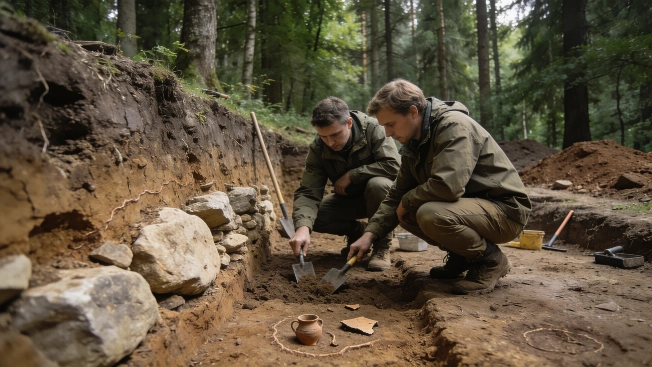
5,500-Year-Old Megalithic Tomb Excavated in Western Poland
Archaeologists have begun targeted excavations of a large earthen mound near Wyrzecz, western Poland, revealing evidence for a monumental tomb built by early farming communities over five millennia ago using megalithic construction techniques
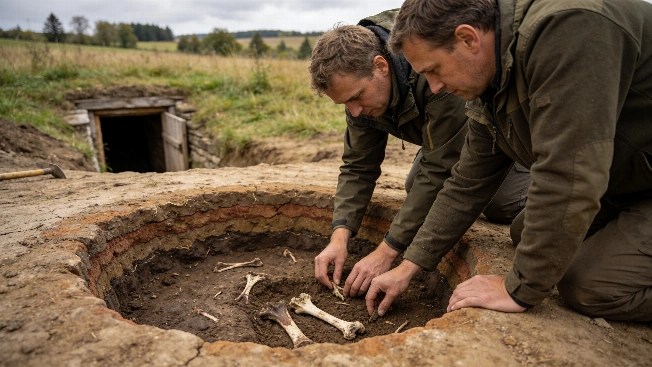
6,500-Year-Old Chleby Enclosure May Have Tracked Sun and Moon
Archaeologists have analyzed a vast Neolithic enclosure near Chleby, Czech Republic, revealing evidence that its entrances and features may have been aligned to solar and lunar cycles over 1,000 years before Stonehenge
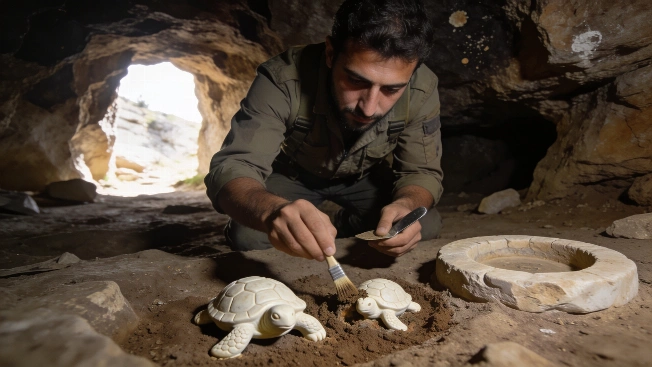
Ice Age Turtle Figurines Suggest Ritual Activity in Northwestern Türkiye
Archaeologists have uncovered 25 limestone turtle figurines at İn Cave in Bilecik Province, Türkiye, dating to 14,500-11,200 BCE, offering rare evidence for symbolic or ritual practices among Epipalaeolithic hunter-gatherers
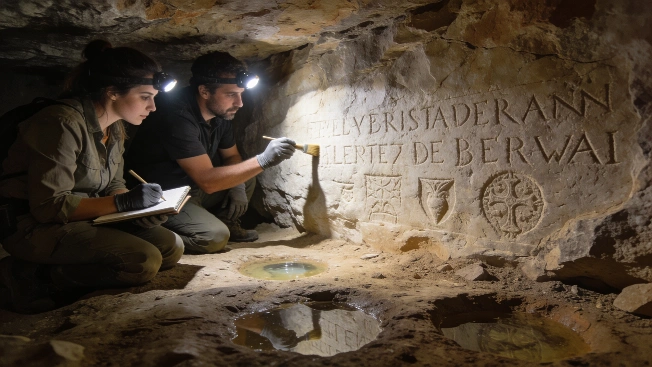
Roman-Era Cave in Spain Yields Over 120 Latin Inscriptions
Archaeologists have recorded more than 120 Latin inscriptions in Cova de les Dones, a cave sanctuary near Valencia, Spain, revealing evidence of a Roman-period cult focused on a mysterious goddess known as 'the Lady.'
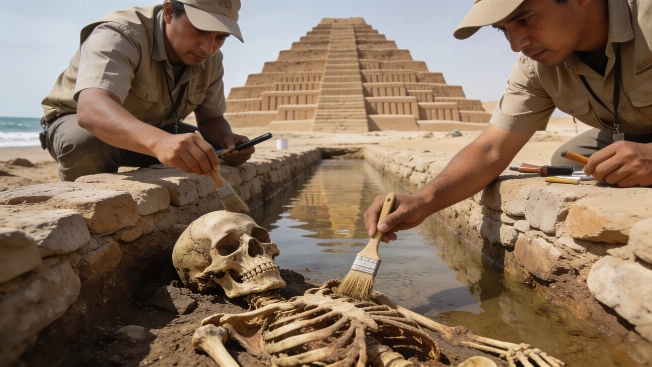
1,400-Year-Old Skeleton in Lima Water Channel May Indicate Ritual Burial
Archaeologists have uncovered a human skeleton in an underground water channel at Huaca Pucllana, Lima, Peru, dating to around 650 CE. The find may shed light on pre-Inca ritual practices and the use of water features in ceremonial contexts.
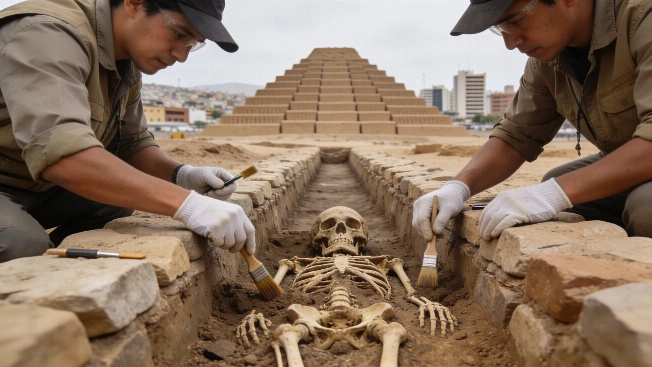
Ritual Burial Uncovered at Huaca Pucllana Sheds Light on Lima Culture
Archaeologists working at Huaca Pucllana in Lima have identified a 1,400-year-old human burial, offering new evidence for ceremonial practices and architectural diversity in the pre-Hispanic Lima culture
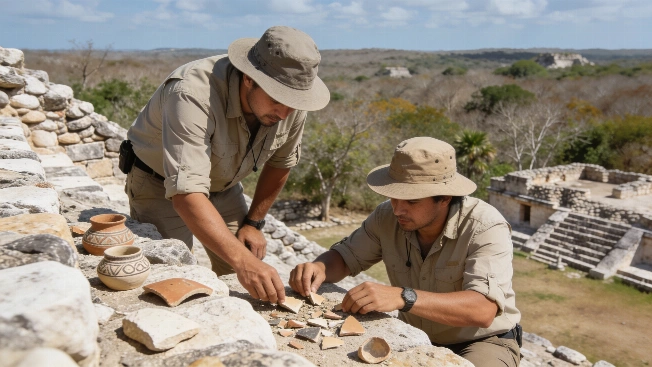
New Excavations at Xcalumkín Reveal Maya Puuc Architecture Origins
Recent archaeological research at Xcalumkín in Campeche, Mexico, has provided new evidence on the development of Puuc architectural traditions, settlement patterns, and possible dual governance among the ancient Maya between the 7th and 10th centuries CE
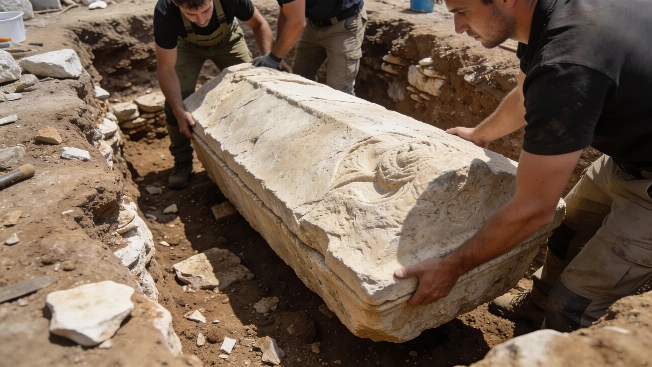
Sealed Roman-Era Sarcophagus Excavated Intact in Cavtat, Croatia
Archaeologists have excavated a massive limestone sarcophagus in Cavtat, Croatia, that remained sealed for over 1,500 years, providing rare insight into Late Antique burial practices and preservation in the eastern Adriatic
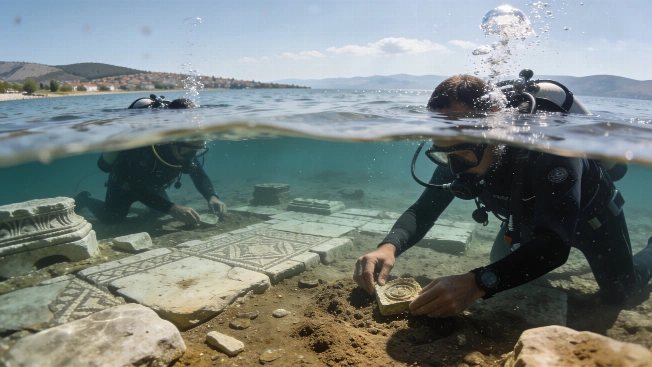
Underwater Church in Turkey Linked to Early Christian Council Debated
Archaeologists excavating beneath Lake İznik in Turkey have uncovered the remains of a small church beneath a later basilica. Some propose it hosted the First Council of Nicaea, but the evidence and dating remain contested.
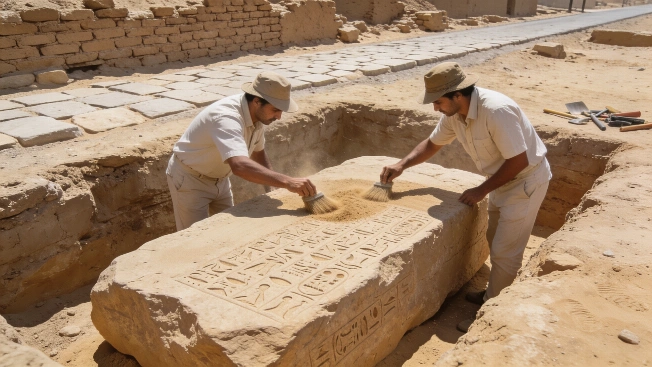
New Finds at Tel Abu Saify Suggest Link to Lost City of Msen
Archaeologists at Tel Abu Saify in Egypt have uncovered fortifications, roads, and inscriptions that may connect the site to the ancient city of Msen, offering new evidence for the route and function of the Horus Military Road
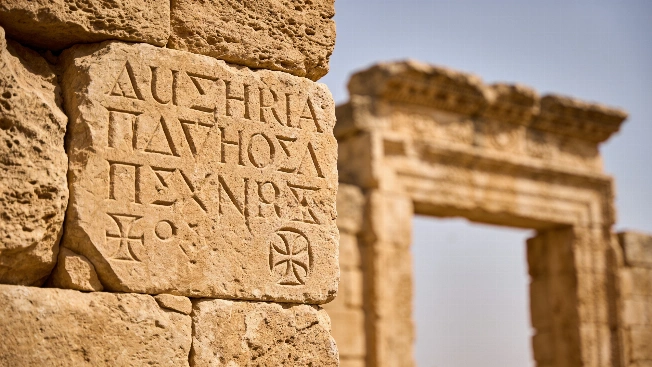
Ancient Libyan Gateway Marks Reveal Hellenistic Construction System
Archaeologists have analyzed over 620 carved marks on the Tauchira Gate at Ptolemais, Libya, uncovering evidence for organized labor, material transport, and possible payment tracking in a major Hellenistic building project more than 2,000 years ago
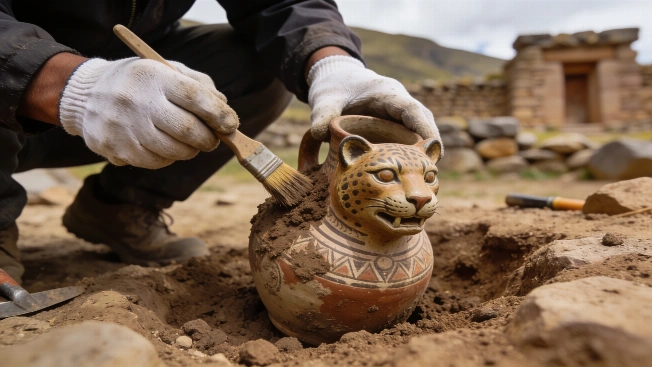
Puma-Headed Pottery Sheds Light on Rituals at Marcahuamachuco
Archaeologists at Marcahuamachuco in northern Peru have uncovered a unique puma-headed ceramic vessel and animal remains, offering new evidence for ceremonial practices and daily life at the site between 850 and 950 CE

How Solar Eclipses Shaped Ancient Views of the Cosmos
William Sheehan's new book examines the earliest recorded solar eclipses, including Archilochus's eyewitness account, and explores how these rare events influenced ancient astronomy and religious thought
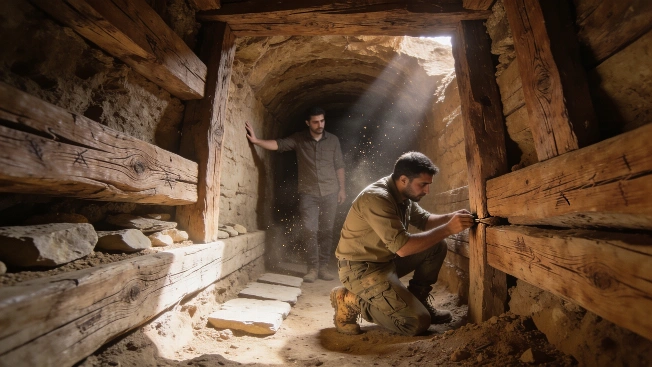
Ancient Gordion Tomb Likely Built for King Midas' Father, Not Midas
Archaeologists at Gordion in central Türkiye have re-examined the so-called Midas Tumulus, concluding that the monumental burial mound was likely constructed for Gordias, the father of the legendary King Midas, based on new analysis of its structure and contents
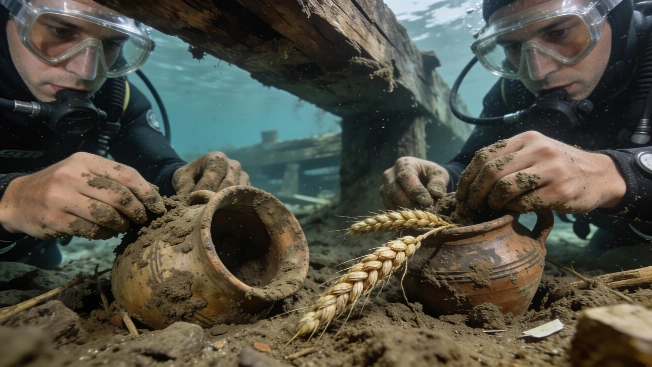
3,000-Year-Old Spelt and Pottery Found in Submerged Italian Settlement
Archaeologists working beneath Lake Bolsena have recovered Late Bronze Age ceramics, preserved spelt, and wooden structures, offering new insight into prehistoric occupation and environmental preservation at Gran Carro di Bolsena
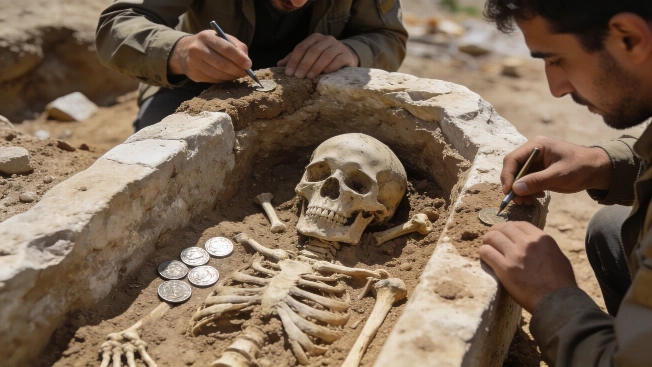
Aspendos Grave Yields Ancient Skeleton and Wrestler Coins
Archaeologists in Turkey have uncovered a 2,400-year-old stone sarcophagus near Aspendos containing a human skeleton and silver coins depicting wrestlers, offering new evidence for the role of athletics in Classical-period society while raising questions about individual identity
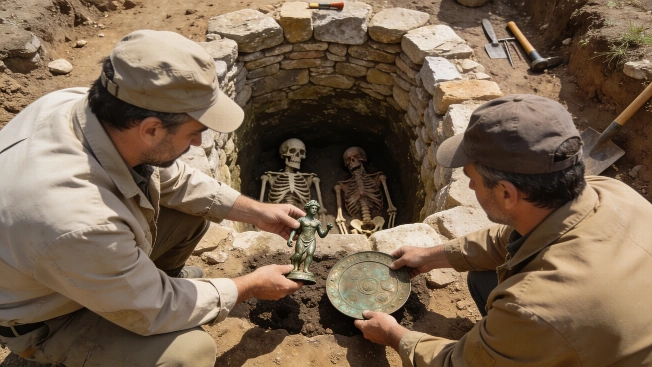
Etruscan Ritual Well With Bronze Offerings and Skeletons Uncovered
Archaeologists at Kainua, near Marzabotto in northern Italy, have excavated a remarkably preserved Etruscan ritual well containing bronze figurines, a bronze plate, and two adult skeletons, offering new evidence for religious practices and urban foundation ceremonies
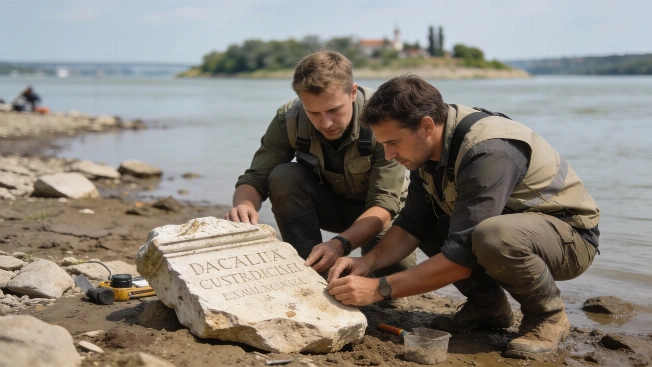
Roman Jupiter Altar Fragment Recovered from Danube Riverbed
Archaeologists have recovered a limestone altar fragment dedicated to Jupiter from the Danube near Dunaújváros, Hungary, after low water levels exposed rarely accessible riverbed areas. The find offers new evidence for Roman religious activity on the Pannonian frontier
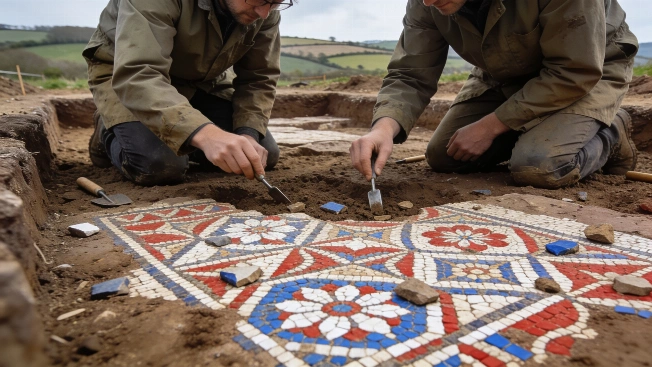
Roman Villa With Mosaic and Bathhouse Unearthed in Devon
Excavations in Devon have revealed a Roman villa complex with a polychrome mosaic, bathhouse, and evidence of industrial activity, offering new insight into rural elite life and architectural change in southwest Britain during the Roman period
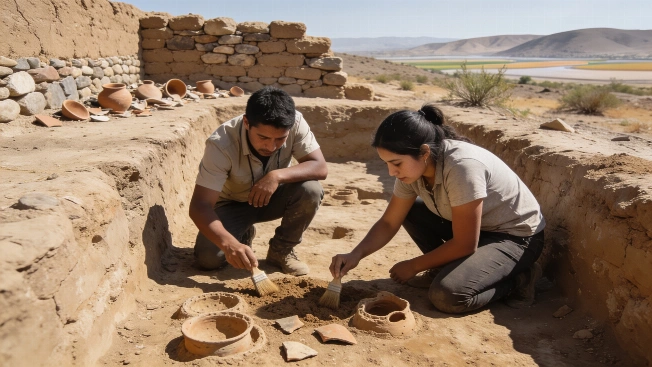
Moche Pottery Workshops Uncovered at Cerro Mayal in Northern Peru
Excavations at Cerro Mayal in Peru's Chicama Valley have revealed extensive evidence of Moche ceramic production, including molds, pottery waste, and workshop-house structures, offering new insight into the organization of ancient craft specialists
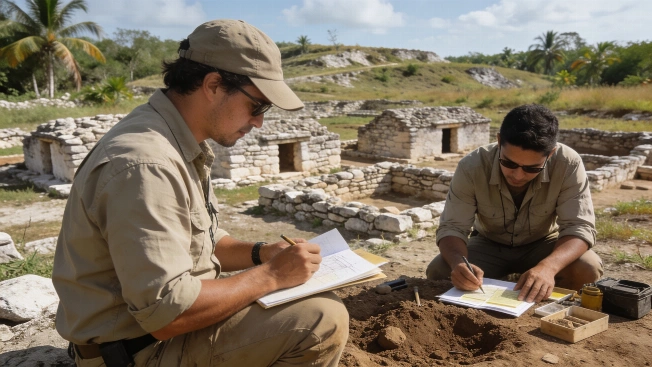
Maya Household Gardens Reveal Ancient Strategies for Food and Water
Archaeologists analyzing soils and settlement patterns in the Northern Maya Lowlands have identified evidence that ancient Maya households organized their domestic plots to support agriculture and manage rainwater, offering new insight into daily life beyond monumental centers
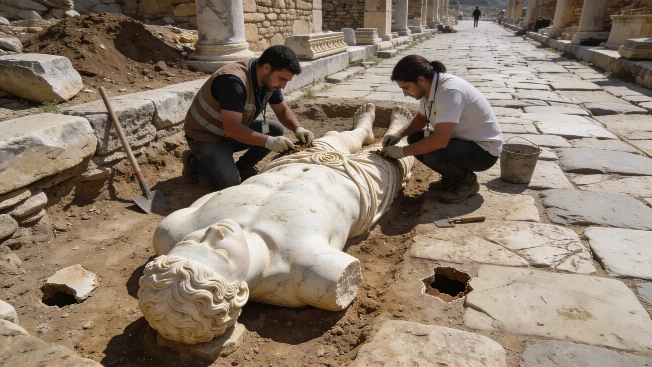
Early Classical Marble Statue Found at Sardis Reveals Lydian Traditions
Archaeologists have uncovered a 2,500-year-old marble statue at Sardis in western Turkey, offering rare evidence of early Classical monumental sculpture and highlighting the interplay of local Lydian and wider Mediterranean artistic traditions
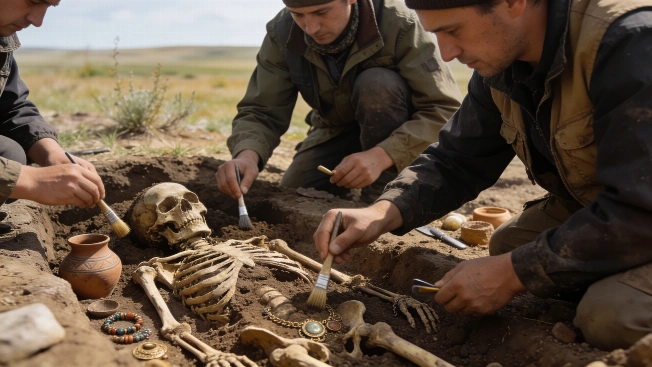
Kazakhstan Burials and Artifacts Reveal Ancient Steppe Trade Links
Recent excavations in Kazakhstan have uncovered Bronze Age and medieval burials, artifacts, and evidence of long-distance trade, offering new insight into the region's prehistoric communities and their connections across Eurasia
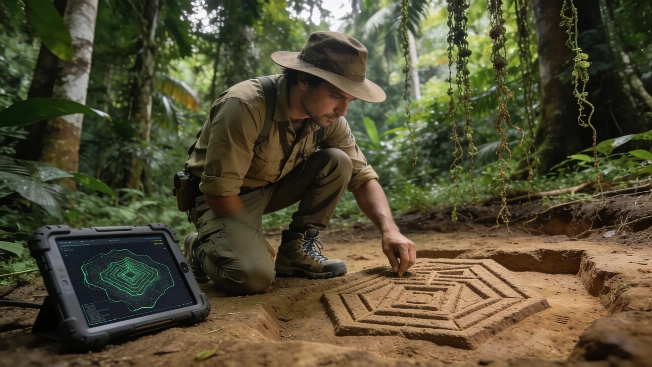
LiDAR Reveals Monumental Earthworks of Ancient Amazonian Society
Aerial LiDAR mapping in southwestern Amazonia has identified thousands of previously unknown monumental earthworks, expanding the known scale of pre-Columbian landscape engineering and challenging assumptions about ancient Amazonian population density
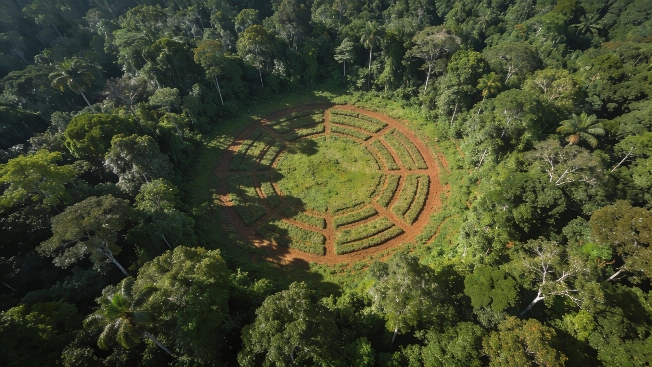
LiDAR Uncovers Hundreds of Ancient Geoglyphs in Amazon Rainforest
Aerial laser scanning has revealed nearly 400 previously unknown earthworks beneath the Amazon rainforest canopy, offering new evidence for the scale and organization of the Aquiry society that flourished in western Brazil over two millennia ago
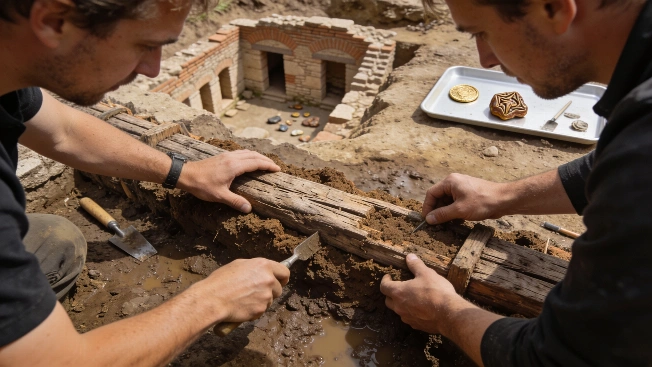
Early Roman Defenses and Rare Finds Unearthed at Vindonissa Camp
Archaeologists at Vindonissa, Switzerland's key Roman legionary camp, have uncovered the first confirmed section of its original defensive wall, a legionary barracks, and a rare gold coin, offering new evidence for the site's earliest military occupation
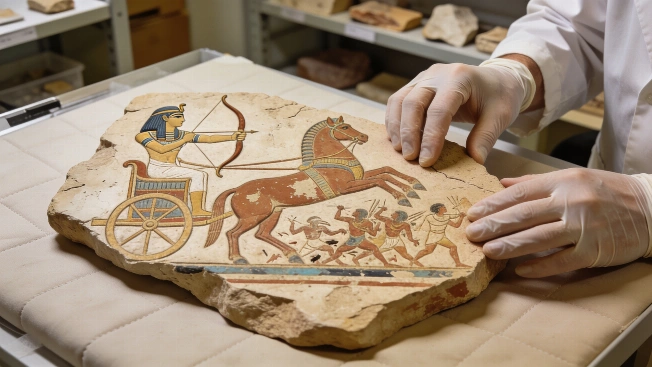
Ancient Egyptian Relief Fragment Shows Pharaoh Overcoming Foreign Foes
A painted sandstone relief from Luxor, created during the reign of Amenhotep II, depicts an Egyptian pharaoh defeating western Asian soldiers. Later reused in a temple foundation, the artifact offers insight into royal iconography and material reuse
Part 2 of 3