Recent archaeological research at Xcalumkín in Campeche, Mexico, has provided new evidence on the development of Puuc architectural traditions, settlement patterns, and possible dual governance among the ancient Maya between the 7th and 10th centuries CE
Archaeological investigations at Xcalumkín, a Maya site in the Puuc region of Campeche, Mexico, are offering new perspectives on the emergence of distinctive architectural forms and political organization in the Late Classic period. The latest findings, published in the second volume of a research series by Pierre Becquelin and Dominique Michelet, focus on the site's construction phases, material culture, and the hypothesis that Xcalumkín may have operated under a dual governance system from the 7th to 10th centuries CE.
Excavation and Chronology
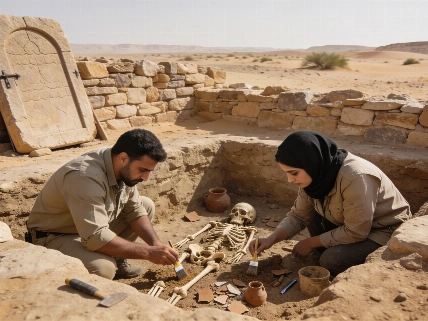
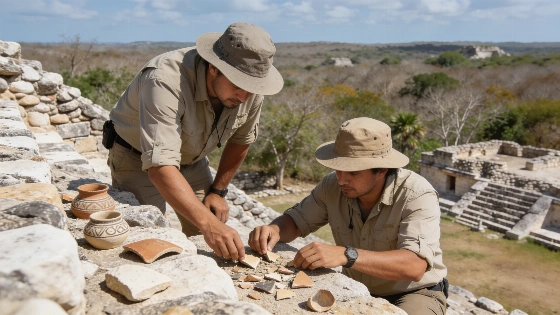
Xcalumkín was occupied and developed in three main phases between approximately 650 and 950 CE. Archaeological work at the site has included five field seasons-1992, 1993, 1994, 2001, and 2007-under the project Xcalumkín in its Chronological Trajectory, authorized by Mexico's National Institute of Anthropology and History (INAH). Excavations have targeted architectural complexes, residential structures, and public spaces, allowing researchers to reconstruct the site's chronological development and examine the evolution of Puuc architectural features.
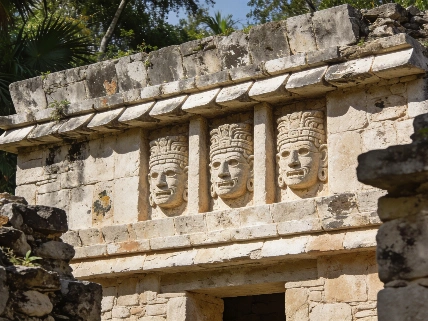
The research team analyzed stratigraphy, architectural remains, and ceramic assemblages to refine the site's occupational sequence. Ceramic sherds were used to establish relative dating, while lithic artifacts and construction techniques provided further chronological markers. The evidence suggests that Xcalumkín played a significant role in the early development of the Puuc architectural style, which is characterized by elaborate stone mosaics and decorative facades.
Material Culture and Political Structure
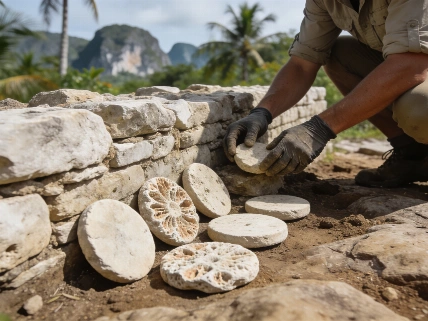
Volume 2 of the research series shifts focus from surface survey to the analysis of excavated materials, including ceramics, stone tools, and architectural elements. The study documents changes in ceramic types and manufacturing techniques over time, supporting a detailed chronological framework for the site. Everyday stone tools and construction debris offer insight into domestic activities and building practices.
One of the central interpretive questions addressed is the possibility of dual governance at Xcalumkín. The distribution of architectural complexes, spatial organization, and the presence of multiple monumental structures suggest that political authority may have been shared or divided between two entities. This interpretation remains provisional, as direct evidence for administrative functions is limited, but the pattern is consistent with broader trends observed in other Maya centers of the Puuc region.
Hieroglyphic Inscriptions and Regional Context
Xcalumkín is notable for its substantial number of sculpted monuments bearing hieroglyphic inscriptions. These texts, while fragmentary, provide rare evidence for local political actors and events, supplementing the architectural and material record. The inscriptions allow researchers to investigate the organization of smaller Maya settlements and their relationship to larger regional centers.
Although Xcalumkín was not a major capital, its archaeological record is particularly valuable for understanding the development of Puuc architecture and the diversity of political arrangements in the region. The research at Xcalumkín complements studies of other Maya sites and contributes to a more nuanced picture of settlement patterns and governance. For comparison, investigations at sites such as Gnezdilovo near Suzdal have also revealed complex burial and social structures, as seen in the analysis of a 10th-century chamber grave containing elite individuals and animals (see related research on early elite burials).
Publication and Future Directions
The new volume, presented at the 37th International Book Fair of Anthropology and History in Mexico City, builds on the initial survey and typological analysis published in 2021. It is organized into five chapters covering excavation results, ceramics, lithic tools, architectural analysis, and broader interpretations. The concluding section synthesizes findings from both volumes and identifies areas for further research, including the role of Xcalumkín in the wider development of the Puuc variant of Classic Maya civilization.
According to researchers, the combined evidence from Xcalumkín provides a foundation for examining changes in settlement organization and architectural traditions across the Puuc region. The site's record demonstrates that even secondary centers can yield critical data for reconstructing ancient political and social transformations.
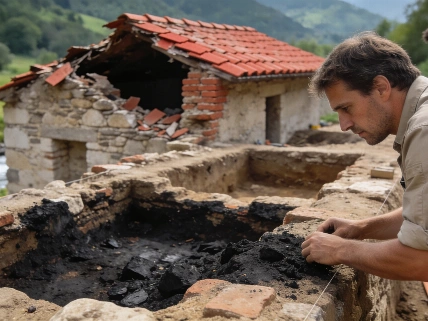
Establishing the chronology of Maya sites like Xcalumkín relies on a combination of stratigraphic excavation, ceramic typology, and architectural analysis. Stratigraphy refers to the study of soil and deposit layers, which helps archaeologists determine the relative sequence of construction and occupation. Ceramic typology involves classifying pottery fragments by style and manufacturing technique, providing a basis for relative dating when absolute methods such as radiocarbon dating are not available. Together, these approaches allow researchers to build a detailed timeline for site development, even in the absence of direct written records or organic material suitable for radiocarbon analysis.