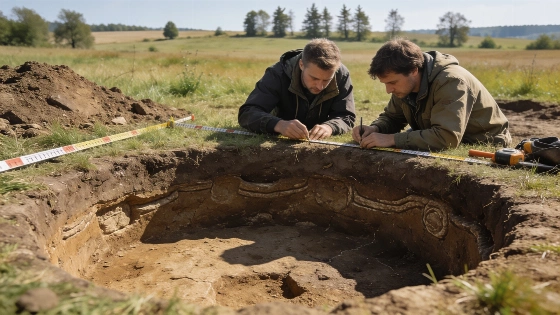
Archaeologists have uncovered a Neolithic circular enclosure in Central Bohemia, dating to around 6,500 years ago, with entrances aligned to solar and lunar events. The site offers new evidence for early ritual landscapes in prehistoric Europe
A team of archaeologists working in the Central Bohemian Region of the Czech Republic has identified a large Neolithic circular enclosure at Chleby, estimated to be approximately 6,500 years old. This structure, interpreted as a ritual center, is notable for its size, architectural features, and apparent alignment with astronomical events. The discovery adds to a growing body of evidence for complex ceremonial landscapes in prehistoric Europe, predating monuments such as Stonehenge by about a millennium.
Excavation and Structure
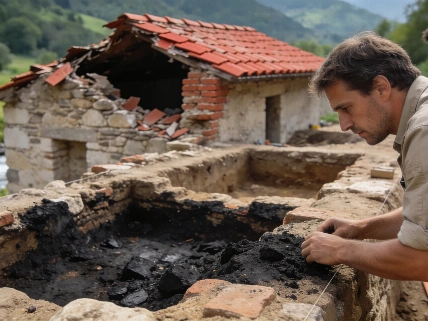
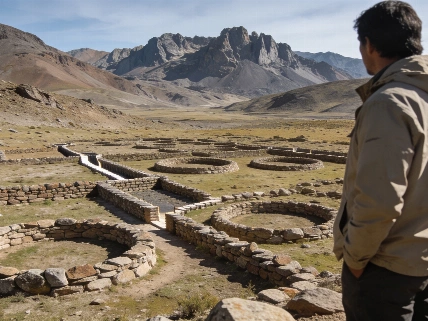
The Chleby enclosure consists of a broad ditch forming a circle roughly 230 meters in diameter and up to 2.5 meters deep. Archaeologists documented twelve entrances distributed around the circumference, each leading toward the center. While the original superstructure has not survived, posthole patterns and soil discoloration suggest that wooden posts once formed the enclosure's walls. Animal bone fragments recovered from the ditch, including cattle skulls and horns, indicate that the entrances may have been marked or decorated with these remains. Such practices are consistent with the symbolic importance of cattle in early farming societies across Neolithic Europe.
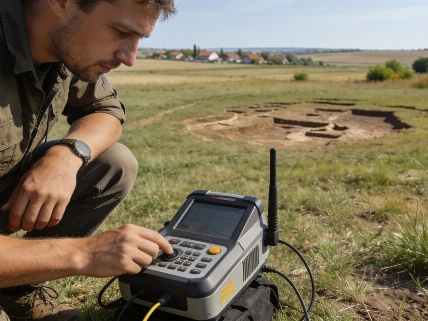
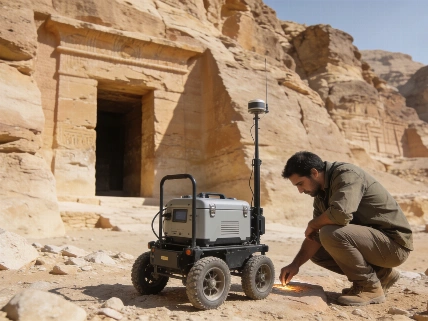
Remote sensing and ground-penetrating radar were used to map the enclosure before targeted excavation. The site's preservation is relatively good, with clear ditch profiles and stratified deposits. The absence of comparable circular enclosures from this period in the region makes the Chleby site particularly significant for understanding local Neolithic ritual architecture.
Astronomical Alignment
Detailed analysis of the enclosure's entrances revealed a deliberate geometric arrangement. The orientation of the twelve entryways appears to correspond with key points in the solar and lunar cycles, including the summer and winter solstices and the extreme positions of the moon during its 18.6-year cycle. This suggests that the enclosure was designed to facilitate observation of these celestial events, which may have structured ritual or calendrical activities for the community. The use of monumental architecture to mark astronomical phenomena is also seen at later sites such as Stonehenge, though the Chleby enclosure predates such monuments by centuries.
Archaeologists interpret the enclosure as a focal point for communal gatherings, ritual observances, or seasonal ceremonies. However, the precise nature of activities conducted within the enclosure remains uncertain, as no direct evidence for specific rituals has been recovered. The site's function may have changed over time, as later burials from the Bronze Age Únětice culture were found within the enclosure, and an Iron Age settlement was eventually established atop the earlier monument.
Chronology and Context
Dating of the Chleby enclosure relies on typological analysis of associated ceramics and animal bones, as well as stratigraphic relationships with later features. The estimated age of around 6,500 years places the site in the late Neolithic, during a period of expanding agricultural settlement and increasing social complexity in Central Europe. The enclosure's construction required significant labor investment, suggesting coordinated communal effort and possibly emerging social hierarchies.
Comparable monumental enclosures have been identified elsewhere in Europe, but the Chleby site is currently unique in its region for this period. Its discovery contributes to broader debates about the origins and spread of ceremonial architecture among early farming communities. For example, research on monumental tombs in western Poland has also highlighted the diversity of Neolithic ritual landscapes across the continent, as seen in the excavation of a large earthen mound near Wyrzec (see analysis of Neolithic tomb construction in Poland).
Ongoing Research and Limitations
Archaeological investigation at Chleby is ongoing. Researchers plan to conduct soil chemistry analysis to identify traces of past human activity, which may clarify how the enclosure was used during different periods. The site's later reuse for burials and settlement complicates interpretation, as subsequent disturbance may have altered or obscured original features. No direct radiocarbon dates from the enclosure's construction phase have yet been published, and the absence of preserved organic building materials limits reconstruction of the original architecture.
While the alignment of entrances with astronomical events is strongly suggested by current analysis, alternative explanations for the enclosure's design cannot be excluded. The symbolic or social meanings attached to such monuments are difficult to reconstruct in the absence of written records or direct ethnographic parallels. As with many prehistoric ritual sites, interpretation must remain provisional, grounded in the available material evidence and comparative analysis.
Understanding the significance of the Chleby enclosure requires careful attention to archaeological context, dating methods, and the limitations of preservation. As further research progresses, the site may offer new insights into the development of ritual landscapes and social organization among early European farmers.
Ground-penetrating radar (GPR) is a non-invasive geophysical technique used to detect and map subsurface features by transmitting electromagnetic pulses into the ground and recording the reflected signals. In archaeology, GPR can reveal buried structures, ditches, or postholes without excavation, allowing researchers to plan targeted investigations and minimize disturbance. However, the resolution and interpretive value of GPR data depend on soil conditions, feature size, and the skill of the operator. While GPR can identify anomalies suggestive of archaeological features, confirmation requires ground-truthing through excavation and careful stratigraphic analysis.