
Cryptography
69 reportsNew findings about Cryptography are placed alongside security and privacy; deployment constraints; and system architecture. The treatment of system architecture keeps independent implementation separate from benchmarks until their assumptions and scales are compared; the account does not overlook that results can depend on workload, hardware, configuration, and threat model.

Quantum Industry Builds Leadership Around Security Research and Scale
PQShield, VTT, QuantWare, and Rensselaer Polytechnic Institute have named leaders for security strategy, quantum research, fabrication finance, and national-laboratory collaboration.
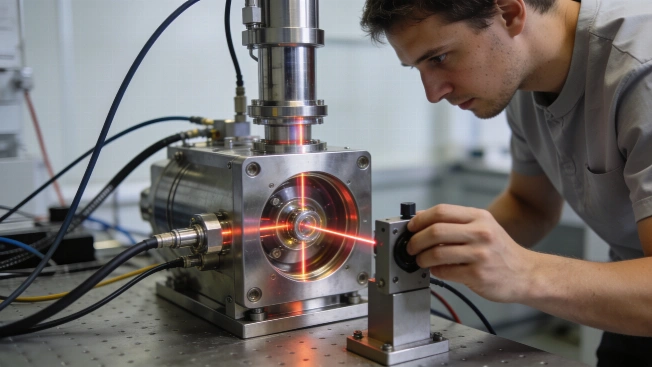
Quantum X Labs Targets Three Quantum Hardware Bottlenecks
Quantum X Labs has reported patent activity in neutral-atom control and quantum-circuit watermarking while developing a platform that combines Ramsey-CPT timing with Rydberg radio-frequency sensing; the available record shows active development, not a demonstrated quantum computer or field-ready instrument.
Arqit Wins NATO Contract as FY 2026 Revenue Nears $1 Million
Arqit expects unaudited FY 2026 revenue of $975,000 to $1 million after reporting seven commercial contracts, a NATO security-services contract and approximately $51 million in cash.
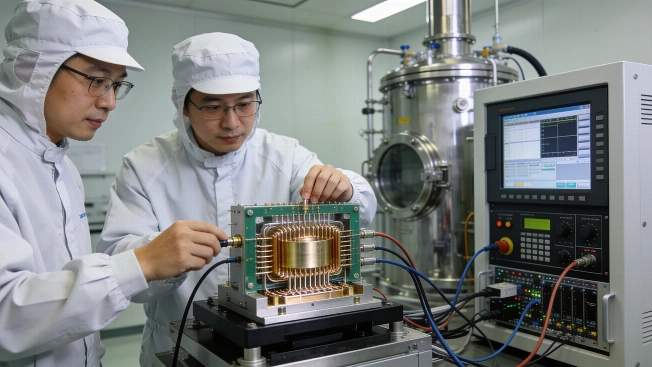
NTT DOCOMO BUSINESS and Classiq Plan Japan's Enterprise Quantum Software Push
On 8 October 2026, NTT DOCOMO BUSINESS and Classiq's Japanese subsidiary signed a memorandum of understanding to market Classiq's quantum software and jointly identify, develop, and validate enterprise applications in Japan. The announcement outlines a planned collaboration, not a completed deployment, performance result, or demonstration of quantum advantage.

Shor's Algorithm Faces a Patent Eligibility Test
Shor's algorithm could threaten RSA by factoring large integers through quantum period finding. Yet a patent claim covering the method may struggle under current US eligibility rules

Strongpoint Targets Crypto Agility in Post-Quantum Custody
Project Eleven has introduced Strongpoint with the Zcash Foundation as an initial development partner, aiming to separate institutional custody controls from the signature schemes used by changing blockchain networks.

Post-Quantum Readiness Claim Lacks Public Verification
A reported GAO assessment says 24 CFO Act agencies had not completed key post-quantum preparation tasks, but the audit and subsequent federal response could not be independently verified in the available public record.

KQC Targets Nasdaq Listing Through Quantum Software Deal
KQC Quantum has agreed to merge with Charlton Aria in a proposed SPAC transaction valuing the company at $80 million before money. The planned Nasdaq listing would finance quantum software and post-quantum security deployments, but the deal remains subject to shareholder, regulatory, listing and cash conditions.

QuantumGate and NEC GCC Target UAE Post-Quantum Security
QuantumGate and NEC GCC will pursue sovereign post-quantum cryptography across UAE infrastructure through migration planning, identity controls and on-premises security integration.

SEALSQ Puts $10 Million Into Post-Quantum Satellite Security
SEALSQ has closed a $10 million PIPE investment in WISeSat.Space, linking post-quantum chips, digital identity and PKI services with a planned low-Earth-orbit satellite infrastructure for protected space-connected IoT.

Space Force Targets AI Risk With RapidFort Security Pact
RapidFort and SpaceWERX will evaluate software supply chain defenses for U.S. Space Force systems, focusing on AI vulnerabilities, ATO approvals, cyber readiness, and the transition to post-quantum cryptography.

FSU Wins $2.1M to Build Quantum Communication Testbed
Florida State University will build a campus-scale quantum communication testbed linking engineering and high-field facilities to study entangled photons under turbulence, magnetic fields and cryogenic cycling.
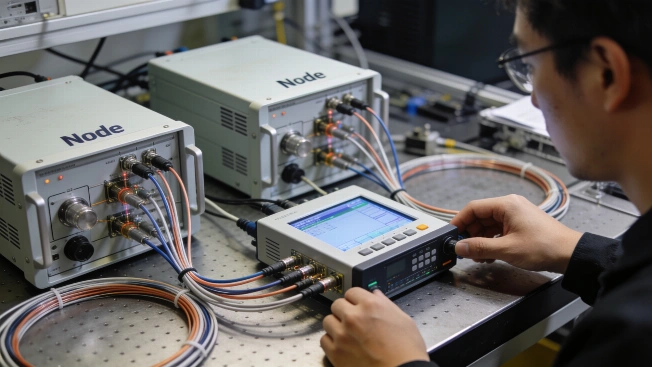
Entanglement Swapping Faces a Patent Eligibility Test
Entanglement swapping could link distant quantum nodes through a Bell-state measurement, but a patent claim may fail if it captures only quantum mechanics without a specific hardware advance

CGI Turns Quantum Hardware Into Enterprise Infrastructure
CGI is building a business around connecting quantum processors to existing enterprise systems. Its work spans optimization, security and federal logistics while the underlying hardware remains outside the company.
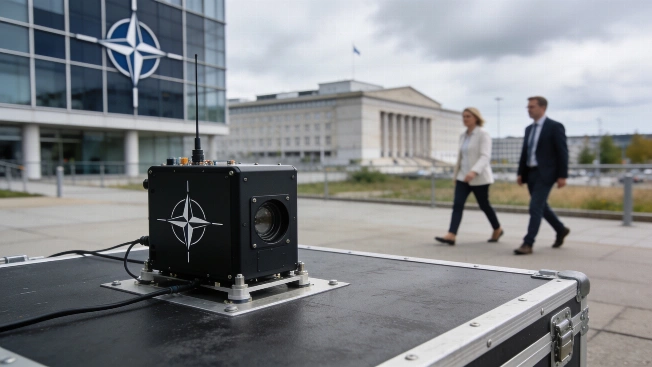
NATO Sets Quantum Defense Milestones Through 2027
NATO has published an implementation roadmap for quantum computing, sensing and communications, including a Brussels-to-Mons pilot link planned for Q4 2027.

Cloudflare Builds a Quantum-Resistant Certificate Authority
Cloudflare plans a publicly trusted certificate authority that combines legacy TLS coverage with Merkle Tree Certificates designed to reduce the cost of post-quantum web security
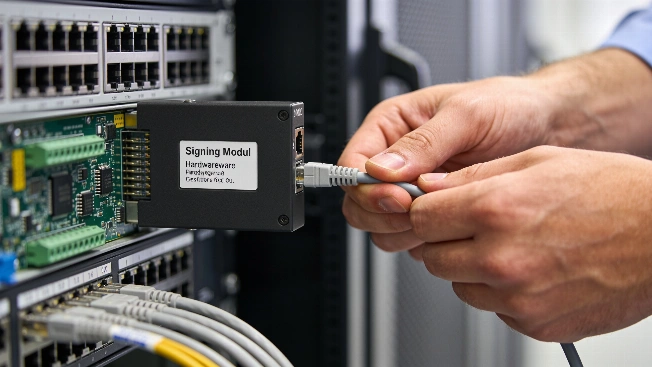
Project Eleven Buys Riva Labs for Post-Quantum Security
Project Eleven has acquired Riva Labs to combine post-quantum signatures, MPC, account abstraction and hardware signing across blockchain infrastructure before quantum computers can threaten today's public-key systems.
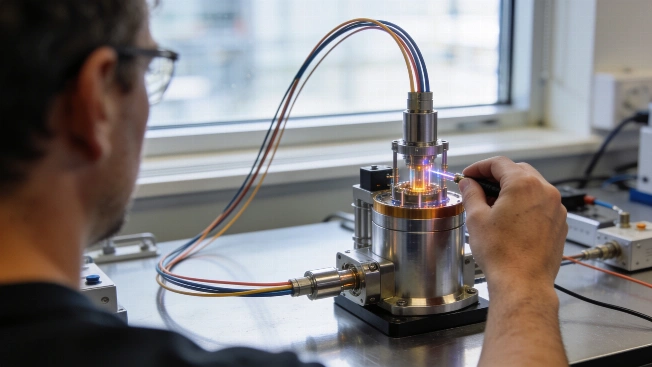
RBC Builds a Quantum Strategy Before Quantum Finance Arrives
Royal Bank of Canada is combining quantum application research with post-quantum security migration, academic fellowships, developer training, a new Director of Quantum role and a C$180 million hardware investment.

Quantum eMotion Buys Plurilock to Commercialize Quantum-Safe Security
Quantum eMotion plans to acquire Plurilock for C$33.8 million in a transaction designed to combine quantum-generated entropy with identity, behavioral-biometric and cybersecurity services across enterprise and public-sector networks.
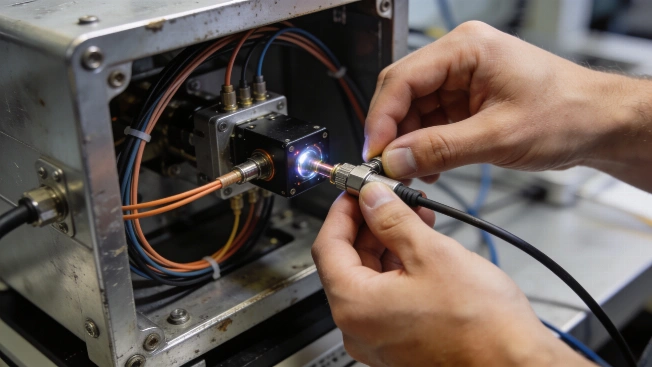
ETSI Warns That Quantum Randomness Can Become Predictable
ETSI's technical report TR 104 171 argues that quantum random-number generators require continuous validation across the full entropy chain because detector dead time, noise and side-channel leakage can reintroduce predictability.

DigiCert Opens Quantum Central for Post-Quantum Migration
DigiCert made Quantum Central generally available on September 24, 2026, giving enterprises a management layer for cryptographic inventories, CBOM generation, policy checks, certificate issuance and post-quantum remediation workflows.
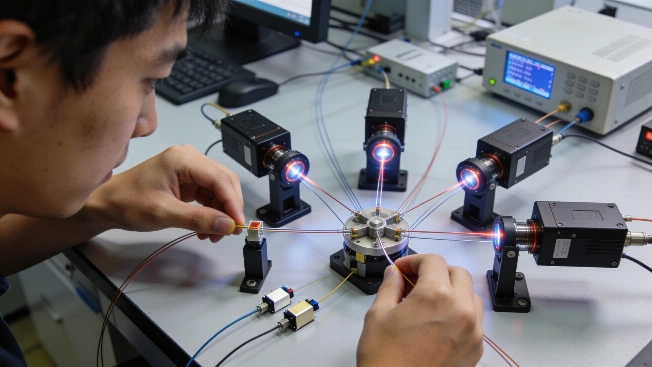
Nanjing Team Brings Asynchronous Quantum Conferencing to 59.6 dB Loss
Nanjing University has demonstrated a three-user measurement-device-independent quantum conferencing network that retains O(η) loss scaling and uses timestamped event pairing and software phase correction instead of global laser locking.

SK Telecom Builds a Digital Twin for Quantum Networks
SK Telecom and KISTI demonstrated a standards-compatible digital twin that lets engineers examine quantum-network configurations before installing physical QKD hardware, while reporting no new secret-key rate, distance or security-certification results.

Federal Agencies Get a FIPS-Validated Quantum-Safe Key Layer
Quantum XChange will use Carahsoft's government distribution network to bring its FIPS-validated Phio TX platform to federal, state, local, and education buyers seeking post-quantum migration without replacing existing applications.
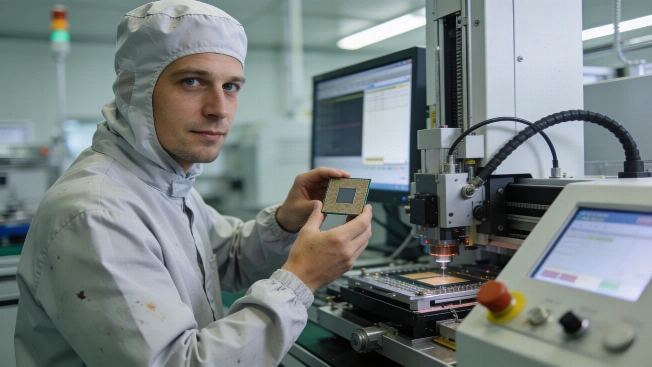
Jura Plans a Post-Quantum Semiconductor Security Hub
SEALSQ, WISeKey and the Canton of Jura have signed an MoU for a proposed CHF 40 million to CHF 60 million center focused on post-quantum chip personalization, testing and secure provisioning.
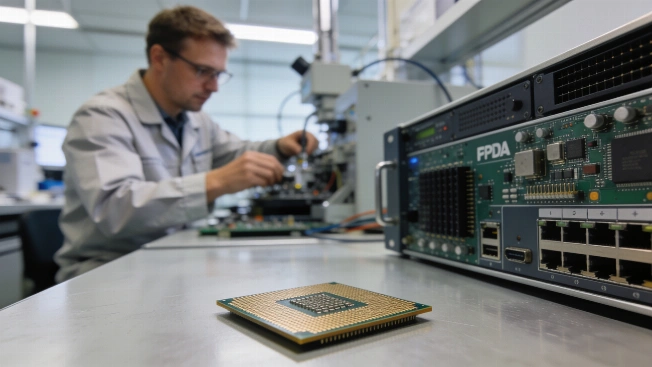
Fortaegis Raises $50 Million for Silicon-Based Quantum-Safe Security
Fortaegis Technologies has raised an oversubscribed $50 million Series A to move its silicon-rooted Secure Compute architecture from technology validation toward commercial production across AI infrastructure, defense, telecommunications, critical infrastructure and automotive systems.
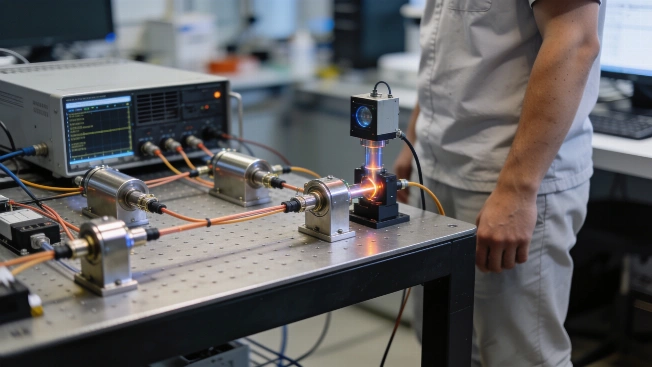
Quantum B Secures European Patent for Entanglement Consensus
Quantum B has received European Patent EP 4462727 for a Quantum Conference Key Agreement protocol that uses multipartite entanglement to help independent network nodes reach consensus, although no deployment or performance benchmark has yet been reported.

Sectigo Quantum Ready Maps the Enterprise PQC Migration
Sectigo announced Quantum Ready(TM) on 17 September 2026 as a Quantum Security Posture Management platform for discovering cryptographic assets, assessing post-quantum risk and prioritizing migration across hybrid enterprise environments.
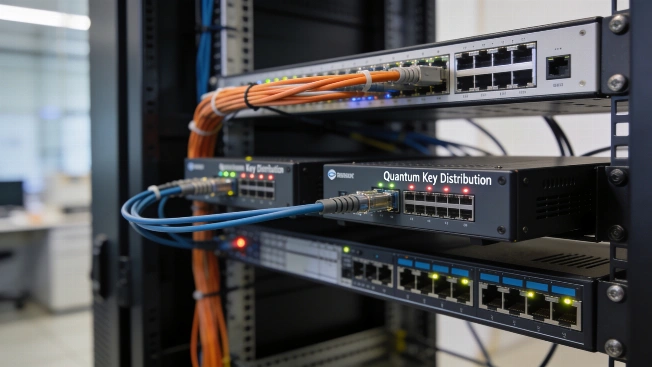
Quantum-Safe Network Platform Launches on Existing Fiber in Europe
Q-SAFE Solutions has introduced a quantum-safe communications platform built in the EU-27, combining quantum key distribution and post-quantum cryptography for telecom, infrastructure, and government networks-no dedicated dark fiber required.

Java 27 Integrates Hybrid Post Quantum Cryptography for TLS 1.3
Oracle has released Java 27 with native support for hybrid post quantum cryptography in TLS 1.3, aiming to address harvest now decrypt later threats and streamline migration to quantum resistant security for cloud and enterprise applications
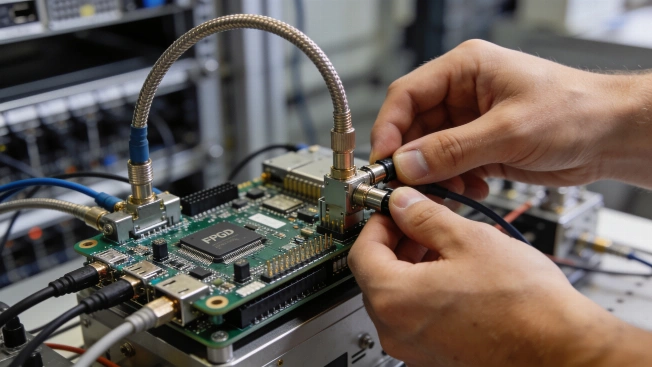
Altera and Riverlane validate real time QEC interface on Agilex FPGAs
Altera and Riverlane have integrated an open source quantum error correction interface on Agilex 7 FPGAs, aiming to standardize real time data movement and control for multi qubit quantum processors across several hardware platforms

Hybrid Quantum Simulation Targets Formula One Engineering Limits
A Formula One team is piloting hybrid quantum-classical simulation tools to model complex physics in car development, integrating quantum algorithms and post-quantum security hardware under strict computational budgets

Keyfactor revenue doubles as post-quantum migration accelerates
Keyfactor reports annual recurring revenue above $200 million as regulatory deadlines and post-quantum cryptography migration drive rapid adoption of automated certificate management and trust infrastructure

IonQ Models Quantum Attack on Bitcoin Elliptic Curve Security
IonQ has released a detailed resource estimate for running Shor's algorithm on a trapped-ion quantum architecture to target the 256-bit secp256k1 elliptic curve, the cryptographic foundation of Bitcoin and many blockchain systems
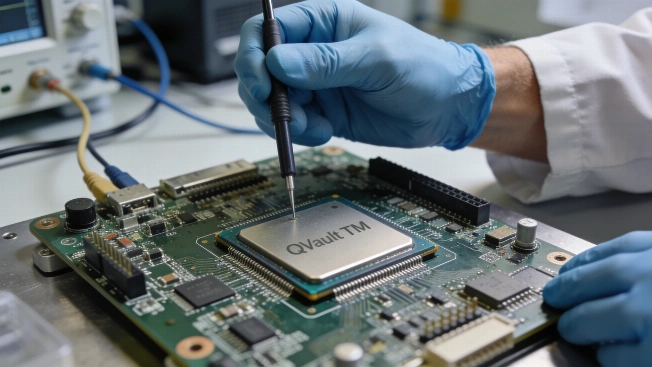
SEALSQ QVault TPM Chip Integrates Post-Quantum Cryptography in Hardware
SEALSQ's QVault TPM chip now supports hardware-isolated post-quantum cryptography through native wolfTPM integration, offering a silicon-based approach to quantum-resistant key storage and cryptographic operations for embedded systems
Part 1 of 2