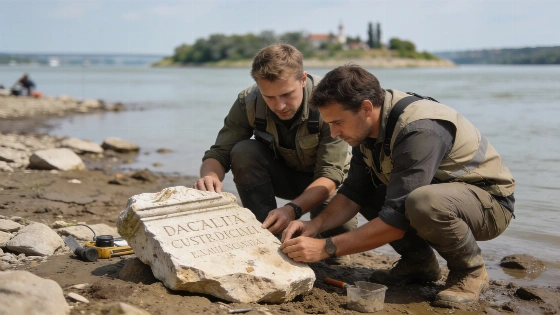
Archaeologists have recovered a limestone altar fragment dedicated to Jupiter from the Danube near Dunaújváros, Hungary, after low water levels exposed rarely accessible riverbed areas. The find offers new evidence for Roman religious activity on the Pannonian frontier
Exceptionally low water levels on the Danube near Dunaújváros, Hungary, have enabled archaeologists to recover a fragment of a Roman limestone altar dedicated to Jupiter, the chief deity of the Roman pantheon. The discovery was made during a targeted field survey by the Intercisa Museum, with support from diving archaeologist Attila J. Tóth, as exposed sections of the riverbed became accessible for investigation.
Survey Context and Recovery
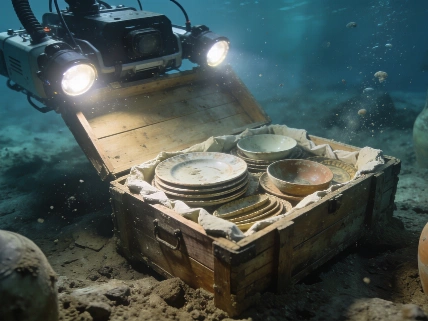
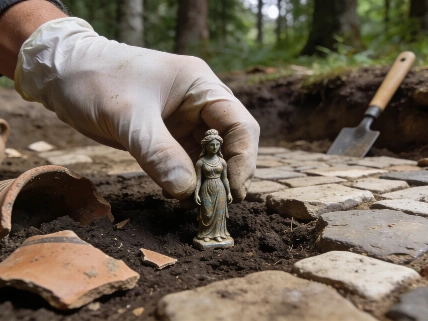
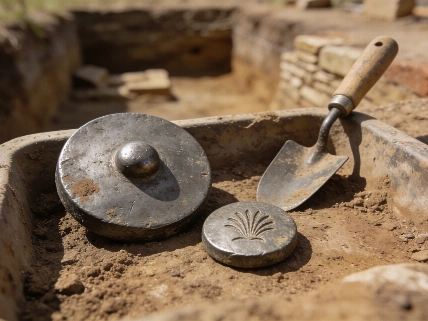
The fieldwork focused on the area around Szalki Island, where archaeologists initially sought evidence related to the medieval Pentelic Monastery. Instead, the team identified a carved limestone altar fragment bearing a dedication to Jupiter. The artifact was recovered from the riverbed, which is typically submerged and inaccessible under normal hydrological conditions. In the days following the initial find, the survey also yielded a Roman limestone tablet, further expanding the assemblage of Roman-period material from the site.
Both artifacts are now undergoing analysis at the Intercisa Museum. The altar fragment's inscription and iconography are expected to contribute to the understanding of religious practices and monumentality at Intercisa, the Roman settlement that once occupied the area of modern Dunaújváros. Intercisa was established as a military fortification along the Danube, forming part of the Limes, the empire's frontier defense system in the province of Pannonia.
Material Evidence and Regional Significance
The limestone altar fragment and associated tablet add to a growing corpus of Roman monuments documented in the region. While the precise date of the altar remains under study, its typology and context are consistent with Roman religious dedications from the 1st to 4th centuries CE. The recovery of these objects from a riverine context highlights both the potential for waterlogged environments to preserve archaeological material and the challenges of interpreting finds lacking secure stratigraphic association.
Archaeological surveys along the Danube have increasingly benefited from periods of low water, which expose submerged features and artifacts. In this case, the team's ability to access the riverbed allowed for the direct recovery of material that would otherwise remain inaccessible. The finds from Dunaújváros complement other recent discoveries of Roman infrastructure and religious monuments along the empire's northern frontier, such as the exposure of Roman road segments in southern Germany, as reported in recent research on the Swabian Alb Plateau.
Hazards and Heritage Protection
During the survey, museum staff also identified what is believed to be an unexploded Second World War munition in the exposed riverbed. The presence of such hazards underscores the risks associated with fieldwork in historically layered landscapes and the importance of professional protocols for artifact recovery and public safety. Military bomb disposal specialists were notified to address the ordnance, and the museum has issued warnings to the public against searching for artifacts in exposed river areas, citing both archaeological and safety concerns.
Periods of low water on the Danube are expected to continue exposing archaeological material, creating opportunities for research but also raising challenges for heritage management. The recovery of the Jupiter altar fragment demonstrates the value of systematic survey and documentation in dynamic riverine environments, where preservation conditions and accessibility can change rapidly.
Interpreting Riverine Finds
Artifacts recovered from riverbeds present particular interpretive challenges. Without secure stratigraphic context, it can be difficult to determine whether objects were deposited intentionally, lost during transport, or displaced by natural processes. In the case of the Dunaújváros altar fragment, its presence in the Danube may reflect ritual deposition, accidental loss, or post-depositional movement. Ongoing analysis of the artifact's inscription, style, and material will help clarify its original function and significance within the broader landscape of Roman Pannonia.
Understanding the archaeological value of riverine finds requires careful documentation, conservation, and, where possible, integration with evidence from controlled excavations. The current discoveries at Dunaújváros highlight the importance of interdisciplinary collaboration and responsive field strategies in the face of changing environmental conditions.
Archaeological provenance refers to the documented origin and context of an artifact or feature within its site. Secure provenance allows researchers to interpret objects within their original depositional setting, supporting reliable dating and association with other finds. When artifacts are recovered from secondary contexts, such as riverbeds, their interpretive value may be limited by the absence of stratigraphic information. However, careful analysis of material, typology, and inscription can still yield important insights, especially when combined with broader regional evidence and comparative research.