
Reports
1200 reports
Quantum One-Time Pads Face a Key-Delivery Test
Symmatrics says it can generate and distribute one-use encryption keys at scale. The company reports trial installations, but the interview provides no independent security evaluation or performance measurements-and a random-number generator alone does not establish secure key delivery.

Meta's New AI Models Face a Test Without Public Scores
Meta says Muse Wonder can retain useful context and work through extended coding and business tasks. But its launch announcement provides no benchmark scores, sample sizes or error rates with which to independently assess those claims.

IonQ Reports Up to 74-Fold Faster Logical Gates Through qLDPC Scheduling
An arXiv preprint by Mark Webster and Nicolas Delfosse describes scheduled joint measurements paired with CliNR, reporting up to 74-fold speedup for logical Clifford operations and up to fivefold for Toffoli gates against sequential logical measurements. The analysis considers Q70 and Q102 codes in IonQ's Walking Cat trapped-ion architecture, but does not establish a full fault-tolerant computer or a useful algorithm run.

WorMa Robot Shifts Water Weight to Conquer Rough Terrain
NYU's WorMa prototype moves 300 grams of water between its head and tail to change traction on slopes and steps and improve swimming without switching its basic undulating motion

Mohenjo-daro Shows Urban Growth Did Not Deepen Inequality
A study of 309 homes at Mohenjo-daro finds that residential inequality fell as the Indus city developed, suggesting that shared infrastructure and collective urban management may have limited wealth gaps

Tangbaletasi Cave Art Tracks Bronze Age Beliefs Into Tibetan Buddhism
Paintings in two caves at Tangbaletasi span possible Bronze Age traditions and later Tibetan Buddhist imagery. New imaging reveals hidden motifs while leaving the figures' precise meanings unresolved.

Amazon puts one million robots behind physical AI development
AWS has introduced the open-source Physical AI Toolchain, combining cloud infrastructure with NVIDIA software to help companies generate data, train models, simulate robots and deploy them at the edge while making clear that the platform is not itself a ready-made robot or safety certification.

IBM Moves Quantum Error Control to the Client Side
IBM Quantum has shifted key error-mitigation controls from a server-side black box to researchers' local workflows while its new Executor primitive handles large circuit families near the hardware.
IBM Opens Qiskit to High Performance Quantum Workflows
IBM has added native C API bindings to Qiskit v2.0, allowing Fortran, C++ and Julia programs to build and manipulate quantum circuits through Qiskit's Rust core without requiring Python as an intermediary.
Europe's Quantum Chips Need a Manufacturing Path
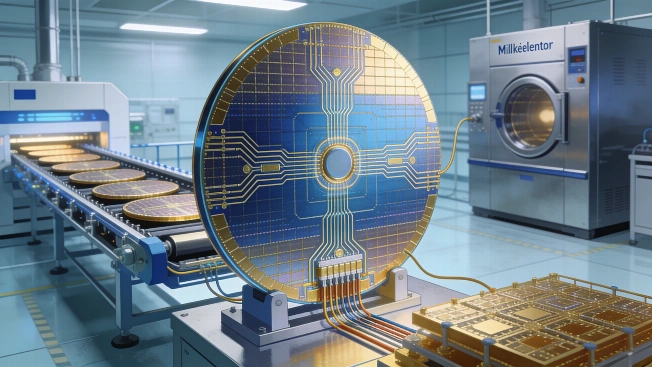
Europe's six quantum pilot lines need shared wafer access, packaging, cryogenic testing and predictable legal pathways if the region is to move from prototype demonstrations to reproducible industrial manufacturing.

Xanadu Reports Nearly Fourfold QROM Cost Reduction in Algorithmic Estimate
Xanadu-linked circuit constructions are reported to reduce the estimated non-Clifford cost of quantum read-only memory by about 3.9-fold for 32-bit entries; the result remains an unverified algorithmic resource estimate rather than demonstrated hardware acceleration.

Hyperbolic Surface Codes Push Quantum Error Correction Toward Modular Hardware
A University of Saskatchewan preprint describes geometry-optimized hyperbolic surface-code families, a routing algorithm for modular hardware, and circuit-level simulations of noisy inter-chip links
Radar Maps Possible Hidden Chambers Beneath Italy's Cave of Venuses
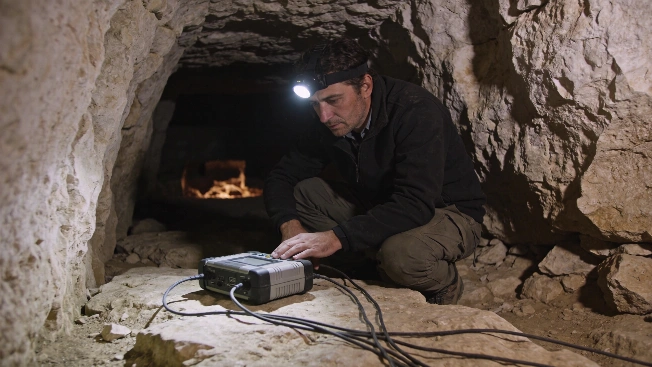
Ground-penetrating radar and electrical resistivity surveys at Italy's Grotta delle Veneri have detected underground anomalies that may connect with the known cave system but are not yet confirmed chambers
Quantum Industry Builds Leadership Around Security Research and Scale
PQShield, VTT, QuantWare, and Rensselaer Polytechnic Institute have named leaders for security strategy, quantum research, fabrication finance, and national-laboratory collaboration.
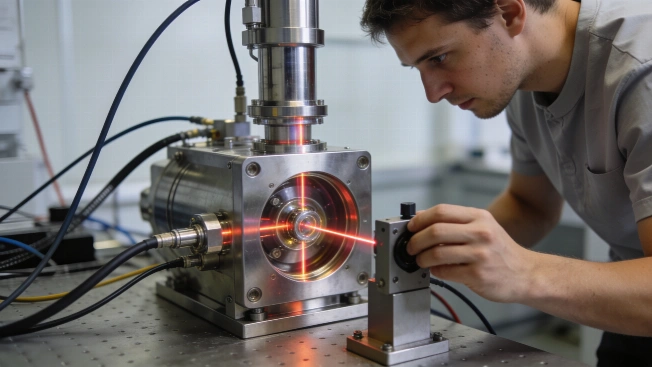
Quantum X Labs Targets Three Quantum Hardware Bottlenecks
Quantum X Labs has reported patent activity in neutral-atom control and quantum-circuit watermarking while developing a platform that combines Ramsey-CPT timing with Rydberg radio-frequency sensing; the available record shows active development, not a demonstrated quantum computer or field-ready instrument.

Moth Quantum puts real quantum hardware inside a browser game
Moth Quantum's browser maze uses qubits and their correlations to generate shifting walls on quantum hardware, without claiming a speed advantage over classical games

A Microcomb Chip Solves a Key Problem in Optical Metrology
A foundry-fabricated photonic chip has produced a self-aligned octave-spanning microcomb by driving one resonator with two lasers separated by an octave, demonstrating a potential route to compact precision metrology.
Arqit Wins NATO Contract as FY 2026 Revenue Nears $1 Million
Arqit expects unaudited FY 2026 revenue of $975,000 to $1 million after reporting seven commercial contracts, a NATO security-services contract and approximately $51 million in cash.
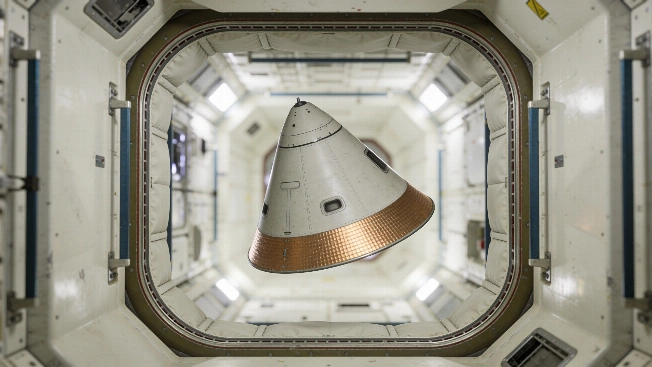
NASA Sends Experimental Heat Shields Into Earth Reentry
NASA is using a departing cargo spacecraft to test 12 experimental reentry capsules and compare heat shield materials for future missions to the Moon, Mars, and other planetary destinations.
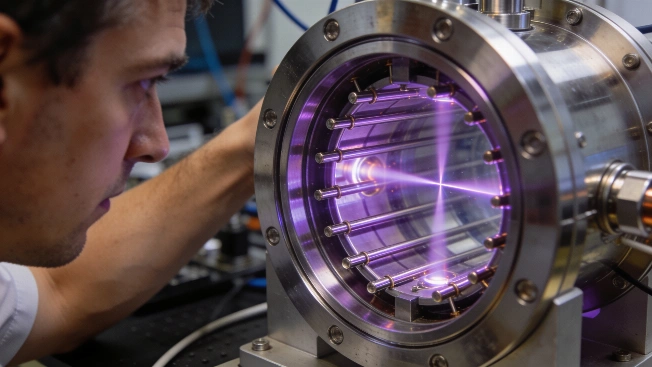
Trapped Ion Processor Resolves a Subtle NMR Double Peak
Quantinuum and HQS reproduced a difficult diphosphane NMR feature on trapped-ion hardware after compressing a 22-spin model into 21 effective spins, using 70 Trotter steps and circuits containing more than 1,400 two-qubit gates
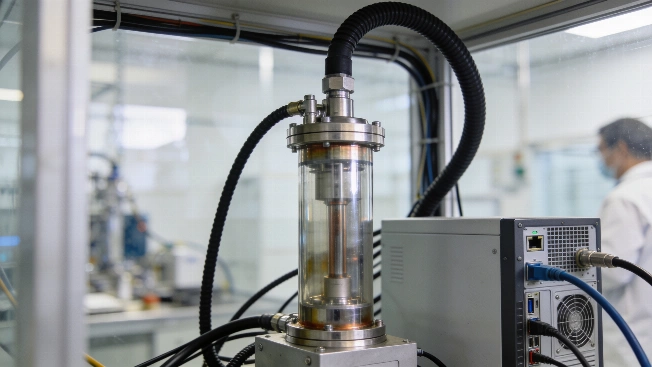
Europe Tests a CPU-QPU Path for Silicon-Spin Quantum Hardware
Quobly and SiPearl will study how an 80-core European ARM processor could interface with a silicon-spin QPU. The MoU targets hybrid HPC systems but does not yet demonstrate a working quantum integration or quantum advantage.
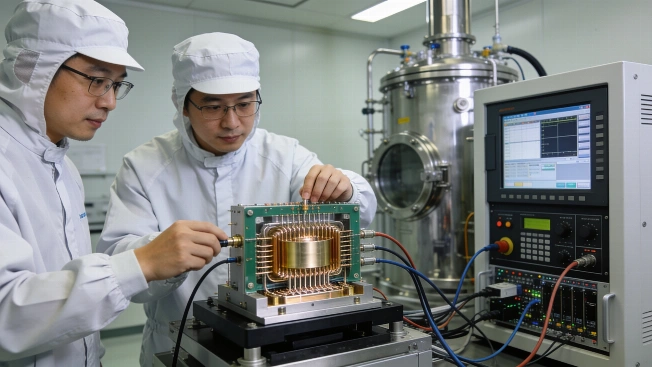
NTT DOCOMO BUSINESS and Classiq Plan Japan's Enterprise Quantum Software Push
On 8 October 2026, NTT DOCOMO BUSINESS and Classiq's Japanese subsidiary signed a memorandum of understanding to market Classiq's quantum software and jointly identify, develop, and validate enterprise applications in Japan. The announcement outlines a planned collaboration, not a completed deployment, performance result, or demonstration of quantum advantage.

Humanoid Robots Move Into FAW-Volkswagen Factory Logistics
UBTECH and FAW-Volkswagen will jointly develop and test embodied-AI humanoid robots for factory logistics and smart-manufacturing demonstrations. The agreement expands earlier production-line trials but does not establish autonomous routine deployment or identify a timetable, site, robot fleet or logistics task list.
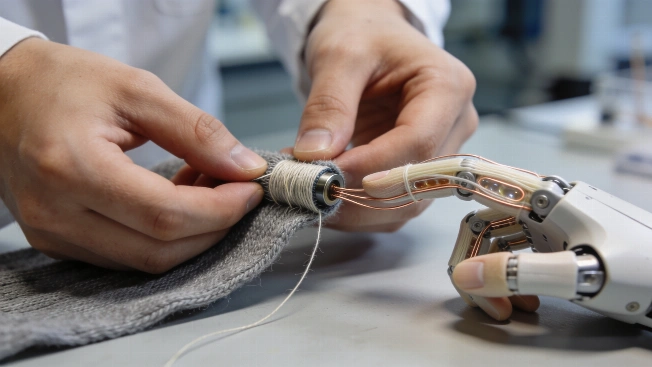
FiberMotor puts linear motion into a thread-like motor
EPFL researchers developed FiberMotor, a 1-3-millimeter electrostatic actuator made from two hollow fibers and copper electrodes. Applying voltage makes one fiber slide inside the other, producing quiet bidirectional linear motion for textiles and soft robotic devices.

DEWALT's DALE Robot Drills 385000 Concrete Holes
DEWALT says its DALE drilling robot has completed more than 385000 concrete holes with over 99 percent accuracy; company-reported deployments include more than 300 weeks saved across 44 data-center construction phases, while August Robotics separately reported 190 weeks saved across 26 major projects.
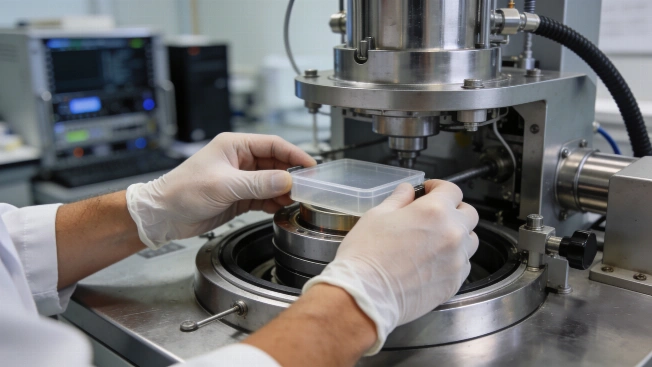
A $1.8 Billion Bet on Predictive Models of Living Cells
Federal agencies and major technology companies are assembling nearly $1.8 billion in funding and resources for open biological datasets designed to train models that predict cellular responses
Shor's Algorithm Faces a Patent Eligibility Test
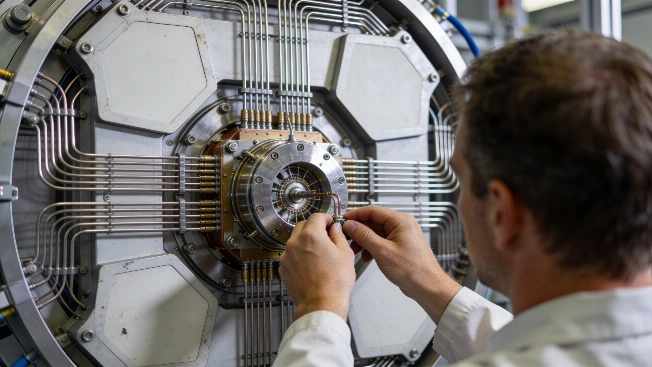
Shor's algorithm could threaten RSA by factoring large integers through quantum period finding. Yet a patent claim covering the method may struggle under current US eligibility rules
DOE Sets Eight Quantum Tests for Fault-Tolerant Scientific Utility
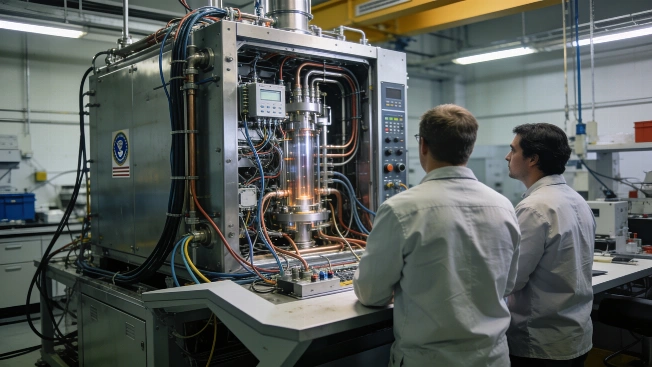
The U.S. Department of Energy has defined eight priority applications across chemistry, materials, subatomic physics and applied mathematics to test whether fault-tolerant quantum computers can deliver measurable scientific value beyond classical high-performance computing.
DOE Funds Quantum Error Correction and Materials Design
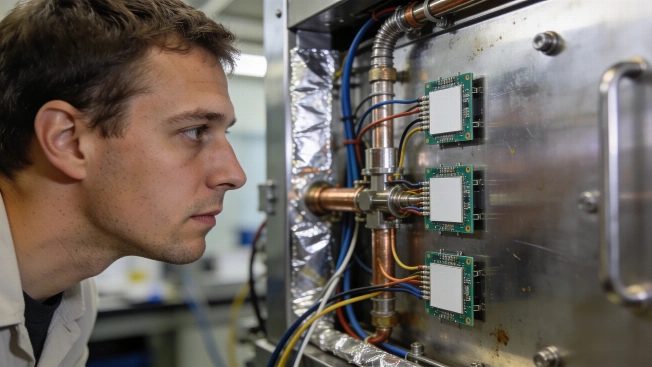
The U.S. Department of Energy has committed $159 million to 12 new Genesis Mission Phase II projects linking artificial intelligence and high-performance computing with quantum error correction, materials design, sensing and accelerator operations.
NVIDIA Puts $1 Billion Behind U.S. Quantum Infrastructure
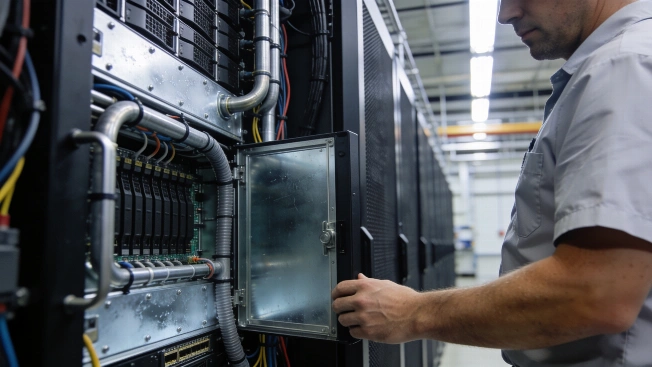
NVIDIA says it will commit $1 billion over five years to U.S. scientific computing and quantum research, linking GPU supercomputing, CUDA-Q emulation and national-laboratory infrastructure to the expanded Genesis Mission.
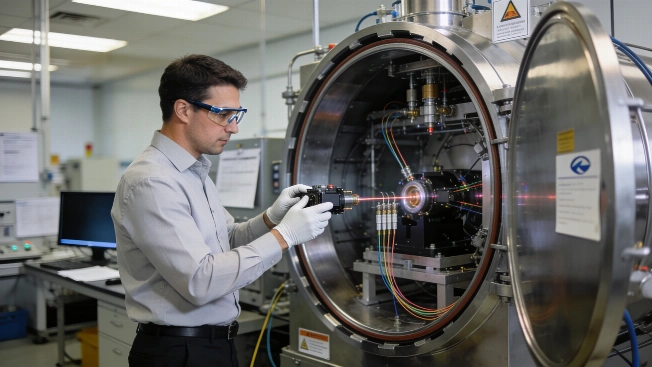
U.S. Backs Photonic Quantum Manufacturing With $150 Million Loan
The Department of War has outlined a $350 million quantum initiative with up to $150 million in conditional financing for PsiQuantum's Milpitas manufacturing hub and approximately $200 million for independent hardware validation under DARPA's Stage C program.
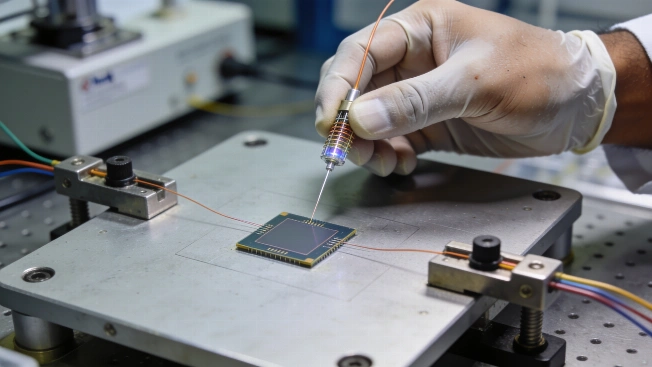
India Advances Silicon Photonics for Quantum Communications and AI
India's five-year silicon photonics programme has entered Phase II, targeting 200 mm wafer design libraries, 1.6 Tbps optical transceivers, microwave photonics above 50 GHz, AI-oriented photonic computing and chip-scale QRNG/QKD circuits.
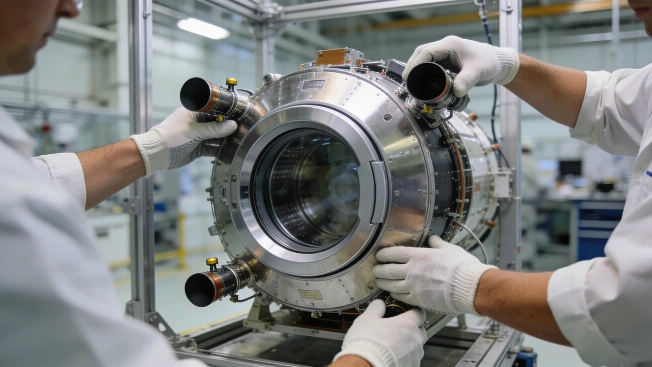
NASA Tests Autonomous Satellite Inspection in Low Earth Orbit
NASA's SSPICY mission has launched the 335-kilogram Otter 24C spacecraft to inspect up to four inoperable U.S.-origin objects in low Earth orbit and test autonomous technologies for future servicing and debris removal.

SPHEREx Maps the Chemical Weather of Brown Dwarfs
NASA's SPHEREx has analyzed 37 brown dwarfs across an extreme temperature range, detecting spectral signatures of water, methane, carbon monoxide and carbon dioxide while revealing how atmospheric chemistry changes as these objects cool.

Webb Finds Tiny Host Galaxy for Farthest Fast Radio Burst
James Webb Space Telescope observations place the farthest localized fast radio burst in a remarkably small, metal-poor dwarf galaxy with intense star formation, strengthening the case for a young magnetar origin while leaving room for multiple FRB mechanisms.
Part 1 of 20