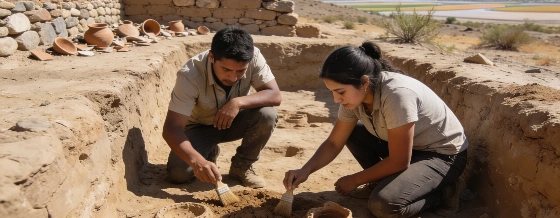
Excavations at Cerro Mayal in Peru's Chicama Valley have revealed extensive evidence of Moche ceramic production, including molds, pottery waste, and workshop-house structures, offering new insight into the organization of ancient craft specialists
Archaeological excavations at Cerro Mayal, an ancient settlement in Peru's Chicama Valley, have produced new evidence that the site functioned as a major center for ceramic production during the Late Moche period, around the seventh century CE. The current fieldwork, led by the Chicama Archaeological Programme and the National University of San Marcos, has focused on stratified deposits containing large quantities of pottery manufacturing debris, ceramic molds, and architectural features associated with craft activity.
Evidence for Specialized Production
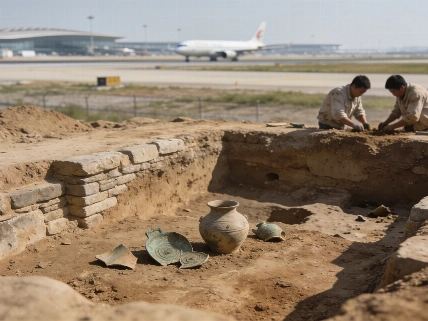
Researchers have recovered numerous ceramic molds-especially those for figurines-alongside potters' plates and substantial accumulations of production waste. These finds, concentrated in the earliest archaeological layers, indicate that pottery manufacture was a primary activity at Cerro Mayal. The presence of adobe and stone walls, as well as areas interpreted as clay preparation zones, further supports the identification of the site as a specialized workshop complex.
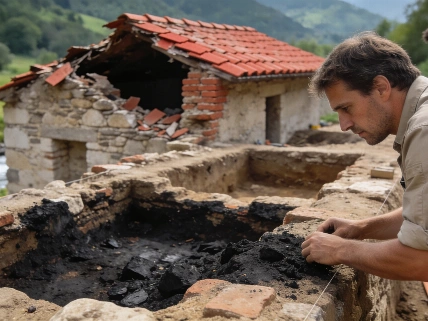
One notable aspect of the excavation is the discovery that many workshop spaces also served as domestic areas. Archaeologists have identified living surfaces and household features within the same structures as the production debris, suggesting that potters lived and worked in integrated workshop-houses. This arrangement provides a rare opportunity to study the organization of craft production and daily life among Moche artisans.
Chronology and Regional Context
The site is dated to the Late Moche period (Phase IV), approximately the seventh century CE, based on ceramic typology and stratigraphic association. To refine the chronology, the team has collected new radiocarbon samples, which have been sent to a laboratory in the United States for analysis. Improved dating is expected to clarify the timing and duration of pottery production at Cerro Mayal and to help trace exchange networks with other Moche settlements in the Chicama, Moche, and Jequetepeque valleys.
The scale of ceramic debris and the diversity of molds suggest that production at Cerro Mayal may have exceeded local demand. Researchers propose that the site supplied pottery to neighboring communities, including the nearby settlement of Licapa II, which has been the focus of related investigations for several years. The question of where ceramics found at Licapa II were produced remains open, but Cerro Mayal is now considered a strong candidate. This pattern of specialized craft production and distribution echoes findings from other ancient societies, such as the identification of food storage facilities at Ani in eastern Türkiye, which also highlight the complexity of ancient economic organization (see related research).
Excavation Scale and Preservation Challenges
The current campaign marks the first major archaeological work at Cerro Mayal in nearly three decades. Earlier excavations in the late 1980s and 1990s established the site's importance but left many questions unresolved due to limited published research and methodological constraints. The present project aims to excavate approximately 100 square meters, making it the largest investigation at the site to date. This expanded area is expected to yield a more comprehensive understanding of the spatial organization, technological practices, and social arrangements of Moche ceramic production.
Cerro Mayal faces ongoing threats from looting and encroachment, as it is located on land owned by a commercial sugar company. The research team emphasizes the urgency of documenting the site before further disturbance occurs. Funding for the project comes from the National University of San Marcos and the Peruvian Institute of Archaeological Studies, as part of a broader initiative to reconstruct the economic and technological foundations of ancient Peru's Moche society.
In total, the excavation has recovered hundreds of ceramic molds, several potters' plates, and large volumes of production waste from stratified contexts. The 100-square-meter excavation area represents a significant increase over previous campaigns, allowing for more detailed spatial analysis and sampling for scientific dating. The new radiocarbon samples will be critical for establishing a secure chronological framework for the site's occupational phases and for assessing the relationship between Cerro Mayal and other Moche settlements in the region.
Understanding Moche Craft Organization
While Moche ceramics are renowned for their artistic quality and iconography, the organization of their production has remained poorly understood. The evidence from Cerro Mayal provides a rare glimpse into the lives of ancient potters, revealing how craft specialists may have combined domestic and productive activities within the same architectural spaces. The integration of workshop and household functions raises questions about labor organization, apprenticeship, and the social status of artisans within Moche society.
Despite these advances, important uncertainties remain. The precise scale of production, the extent of regional distribution, and the mechanisms of exchange are still under investigation. Preservation challenges, including disturbance from modern land use and past looting, complicate the interpretation of the archaeological record. Ongoing analysis of material remains and scientific dating will be necessary to clarify the role of Cerro Mayal within the broader Moche economic landscape.
Archaeological interpretation of craft production sites relies on the careful analysis of material evidence, including manufacturing debris, tools, and architectural features. Stratigraphic context is essential for establishing the sequence of occupation and activity, while scientific dating methods such as radiocarbon analysis provide chronological control. The integration of domestic and workshop spaces at Cerro Mayal highlights the importance of household archaeology for understanding ancient economies. However, preservation biases and post-depositional disturbance can limit the completeness of the archaeological record, requiring cautious interpretation and ongoing research.