Archaeologists have begun targeted excavations of a large earthen mound near Wyrzecz, western Poland, revealing evidence for a monumental tomb built by early farming communities over five millennia ago using megalithic construction techniques
Archaeological investigations in the Greater Poland region have uncovered a monumental earthen mound near the village of Wyrzecz, now interpreted as a megalithic tomb dating to approximately 5,500 years ago. The site, located at the edge of a forest within the General Dezydery Chłapowski Landscape Park, was first identified in 2024 using LiDAR (Light Detection and Ranging) technology, which revealed an elongated, leveled mound previously obscured by woodland cover.
Remote Sensing and Excavation
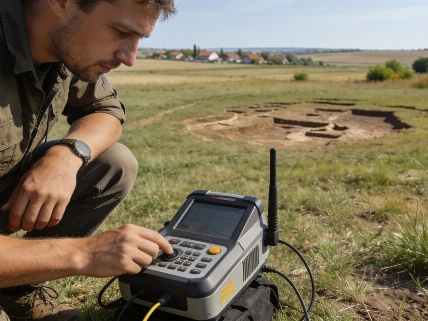
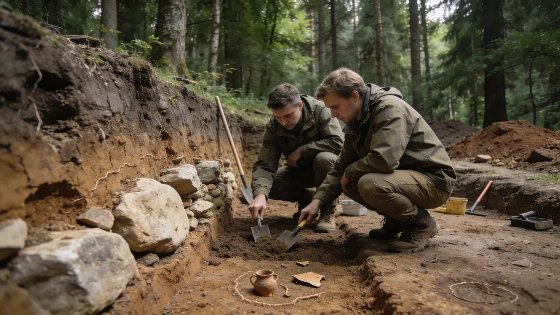
The initial discovery was made when LiDAR data highlighted the mound's unusual shape, prompting further non-invasive surveys in 2025. These included geomagnetic mapping and test drilling, which supported the hypothesis that the feature was not a natural landform but a human-made structure. Archaeologists from Adam Mickiewicz University and the Archaeological Museum in Poznań then began a targeted excavation, opening a trench measuring 2 by 12 meters. The excavation strategy prioritized minimal disturbance, with soil removed in 10-centimeter layers and all material sieved to recover even small artifacts.
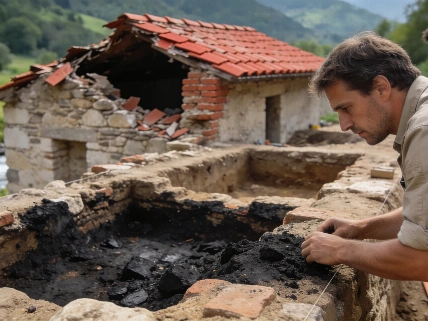
Within the limited area excavated so far, researchers documented large boulders and smaller stones forming what appears to be a retaining wall around the mound. The structure's form and construction techniques are consistent with other megalithic tombs attributed to the Funnel Beaker culture, a group of early agriculturalists known for monumental burial architecture across parts of central and northern Europe.
Material Evidence and Cultural Context
Fragments of prehistoric pottery were recovered from the mound, and preliminary analysis suggests they are associated with the same Funnel Beaker communities believed to have constructed the monument. While only a small portion of the mound has been excavated, the combination of architectural features and ceramic evidence strongly supports its identification as a prehistoric tomb. The mound's distinctive elongated shape, which does not match known structures from earlier or later periods in the region, further strengthens this interpretation.
Comparable Funnel Beaker tombs elsewhere can reach lengths of 130 to 140 meters, though the full extent of the Wyrzecz monument remains to be established. The site's preservation has likely benefited from its location within long-standing woodland, which has protected subtle earthworks from agricultural disturbance. This pattern of preservation echoes findings from other regions, such as the lower Danube, where recent excavations have revealed complex burial traditions and monumentality in landscapes shaped by both natural and human processes.
Interpretation and Limitations
Archaeologists estimate the Wyrzecz tomb was constructed by local farming communities rather than by newly arrived populations, reflecting the development of monumental architecture among established groups in Greater Poland. The evidence for a chamberless, elongated mound with stone retaining walls is consistent with Funnel Beaker mortuary practices, though the limited excavation means that the internal structure and any human remains have not yet been fully documented. The presence of Funnel Beaker pottery within the mound provides a cultural and chronological anchor, but direct dating of organic material will be necessary to refine the construction date.
Until recently, Greater Poland was considered largely absent from the archaeological map of megalithic tombs, despite evidence for Funnel Beaker settlement in the region. The Wyrzecz discovery challenges this view and suggests that monumental burial traditions may have been more widespread than previously recognized. However, the small scale of the current excavation and the absence of a fully exposed burial chamber or skeletal remains mean that key questions about the tomb's use, the identity of those interred, and the broader social context remain open.
Excavation Methods and Future Research
The excavation team has emphasized a conservative approach, aiming to extract as much information as possible while minimizing disturbance to the monument. Photogrammetry and drone-based documentation are being used to create detailed digital records of the trench and its features. All excavated material is carefully sieved to recover small artifacts, reflecting the expectation that objects associated with the tomb may be fragmentary or poorly preserved after thousands of years.
Fieldwork at the site is ongoing, with further laboratory analysis planned for pottery, soil samples, and any organic remains that may be recovered. The results are expected to contribute to a more nuanced understanding of early agricultural communities in Greater Poland and their participation in the broader tradition of megalithic monument construction seen across prehistoric Europe.
LiDAR, the remote sensing technique central to the site's discovery, uses laser pulses to generate high-resolution models of the ground surface, even beneath dense vegetation. By filtering out trees and undergrowth, archaeologists can identify subtle earthworks and buried features that are invisible at ground level. However, LiDAR data alone cannot confirm the function or date of a feature; ground-truthing through excavation and material analysis remains essential for secure archaeological interpretation.