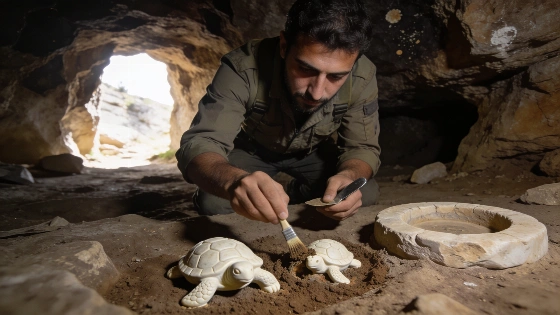
Archaeologists have uncovered 25 limestone turtle figurines at İn Cave in Bilecik Province, Türkiye, dating to 14,500-11,200 BCE, offering rare evidence for symbolic or ritual practices among Epipalaeolithic hunter-gatherers
Excavations at İn Cave, located near Gedikkaya Hill in the İnhisar district of Bilecik Province, northwestern Türkiye, have revealed a group of approximately 25 turtle-shaped figurines crafted from limestone and clay. Radiocarbon dating places these objects between 14,500 and 11,200 BCE, within the Epipalaeolithic period, a time before the widespread adoption of agriculture in Anatolia. The finds provide new evidence for symbolic or ritual activity among late Ice Age hunter-gatherer communities in the region.
Excavation and Context
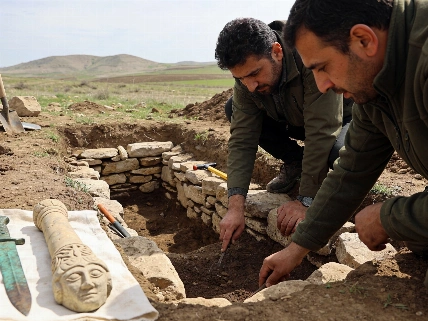
The figurines were recovered during a two-month field season led by a team from Bilecik Şeyh Edebali University. Most of the objects were found inserted into the ground around circular architectural features inside the cave, suggesting deliberate placement. The largest figurine measures about 30 centimeters in length and 20 centimeters in width, while others are smaller and sometimes appear unfinished or hastily made. The site was first identified in 2017, with systematic rescue excavations conducted between 2019 and 2023 under the direction of the Bilecik Museum.
Archaeological material from the cave includes not only the turtle figurines but also evidence of architectural arrangements, with the figurines clustered around circular stone features. The context and arrangement of the objects have led researchers to interpret the cave as a possible ceremonial or cultic area, rather than a purely domestic space. The figurines' association with these features, and their apparent lack of decorative refinement, suggest they may have been produced specifically for ritual deposition rather than for display or everyday use.
Interpreting the Figurines
Many of the turtle figurines show signs of rapid or incomplete manufacture, raising questions about their intended function. Rather than viewing the rough craftsmanship as a lack of skill, archaeologists propose that the objects may have been created for specific ceremonial events, then deliberately placed in the ground as part of those activities. This interpretation is supported by the spatial patterning of the figurines around architectural features, a pattern also seen in later ritual traditions where simple objects or written wishes are deposited as part of vows or ceremonies.
Researchers are also considering whether the shape of Gedikkaya Hill itself, visible from the cave, may have influenced the choice of turtle imagery. Some of the smaller figurines appear to echo the hill's outline, raising the possibility that the landscape was imbued with symbolic meaning. If confirmed, this would represent an early example of what archaeologists call a mountain cult, in which natural features are venerated or incorporated into ritual practice. However, the evidence for this interpretation remains preliminary, and further analysis is needed to establish any direct connection.
Comparative Evidence and Limitations
Turtle symbolism is known from other prehistoric contexts, including the Natufian culture of the Near East and Upper Paleolithic sites, where turtles have been associated with longevity and resilience. However, it is not yet clear whether the Epipalaeolithic communities at İn Cave attributed similar meanings to these animals. The deliberate arrangement of the figurines, combined with their dating to a period before the emergence of large permanent settlements, provides a rare glimpse into the symbolic world of late hunter-gatherers in Anatolia.
The sample consists of around 25 figurines, most made from limestone and some coated with clay. Their recovery from a controlled excavation, with clear stratigraphic association to architectural features, strengthens the case for intentional deposition. The objects have been transferred to the Bilecik Museum and Bilecik Şeyh Edebali University for further study, conservation, and restoration. Similar approaches to interpreting ritual deposition have been applied at other sites, such as the mapping of ceremonial structures beneath Mexico City's historic center, as detailed in a recent survey of Aztec ritual precincts.
Unanswered Questions
Despite the strength of the archaeological context, several uncertainties remain. The precise meaning of the turtle figurines to the people who made them is unknown, and the evidence does not establish whether the objects were linked to specific beliefs, social groups, or seasonal events. The possibility that the hill's shape inspired the figurines is intriguing but not yet demonstrated. Further research, including microscopic analysis of manufacturing traces and comparison with other regional sites, will be needed to clarify the role of these objects in Epipalaeolithic ritual practice.
Radiocarbon dating is a key method for establishing the age of archaeological finds, but its accuracy depends on the quality of the sample and the context in which it was found. In this case, the dating of the turtle figurines relies on their association with securely dated layers within the cave. Calibration of radiocarbon dates is necessary to convert radiocarbon years into calendar years, accounting for fluctuations in atmospheric carbon over time. This process allows archaeologists to place the figurines within a broader chronological framework, but it also introduces a range of uncertainty that must be considered when interpreting the results.