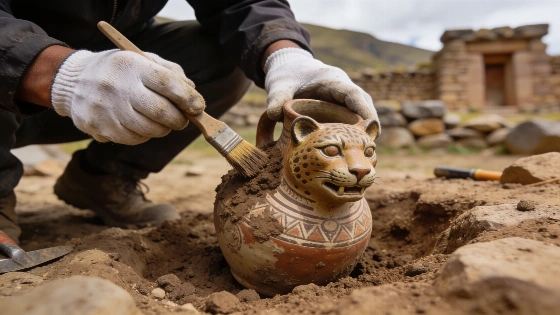
Archaeologists at Marcahuamachuco in northern Peru have uncovered a unique puma-headed ceramic vessel and animal remains, offering new evidence for ceremonial practices and daily life at the site between 850 and 950 CE
Recent excavations at the monumental highland site of Marcahuamachuco in Peru's La Libertad region have revealed a distinctive ceramic vessel featuring a modeled puma head, alongside animal and human remains. These finds, recovered from the West Wall sector, are providing new evidence for the ceremonial and social practices of the population that occupied the site more than a millennium ago.
Ceremonial Objects and Context
The puma-headed vessel, notable for its three-dimensional representation of the animal's head, was found in a context that suggests association with ritual activity. While the precise function of the vessel remains undetermined, its form and archaeological setting indicate it may have played a role in communal ceremonies or feasting events. The puma motif is consistent with the symbolic importance of this animal in ancient Andean societies, where it often appeared in art and architecture as a marker of power or spiritual significance.
Excavations also yielded a range of other materials, including ceramic fragments, stone tools, and both human and animal bones. The combination of these finds points to a complex interplay between ritual, food production, and social gatherings at Marcahuamachuco. The site's monumental stone architecture, including walls, galleries, and plazas, further supports its interpretation as a major pre-Hispanic center with political, religious, and economic functions.
Animal Remains and Diet
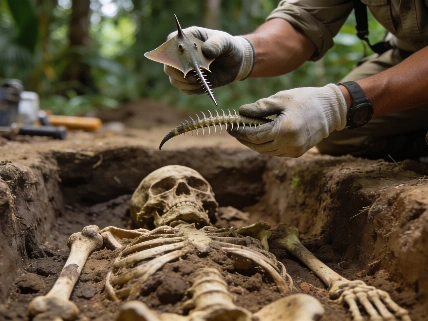
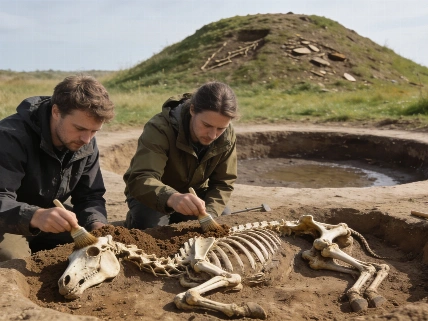
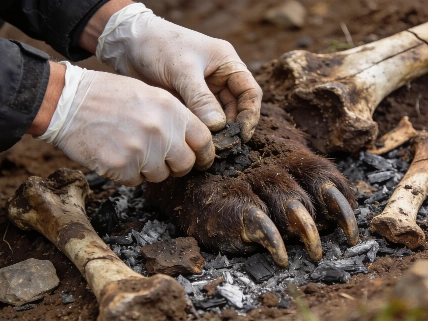
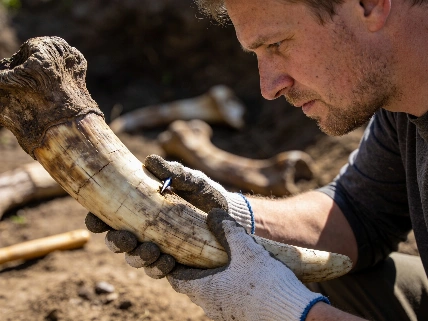
Analysis of faunal remains from the West Wall sector has identified bones from camelids-such as llamas and alpacas-and guinea pigs. These animals were central to Andean subsistence, providing meat, wool, and transport, while guinea pigs were both a dietary staple and, in some contexts, held ritual significance. The presence of these remains, together with pottery and stone artifacts, is helping researchers reconstruct the diet and subsistence strategies of the site's inhabitants.
Archaeologists estimate that the investigated area was occupied between approximately 850 and 950 CE, based on stratigraphic evidence and relative dating of the recovered materials. This period predates the expansion of the Inca Empire and the Spanish conquest by several centuries, situating Marcahuamachuco within a broader network of Andean societies engaged in exchange and cultural interaction. Evidence from the site suggests connections with other regions, including Cajamarca and Huancavelica, indicating that Marcahuamachuco was not an isolated settlement.
Rituals, Festivals, and Social Organization
The diversity of material recovered-including ceremonial vessels, animal bones, and human remains-suggests that festivals and ritual gatherings were integral to the community's social life. Archaeologists propose that these events may have involved communal feasting, the use of symbolic objects, and the performance of ceremonies within the site's monumental spaces. Each fragment of pottery or bone contributes to a more detailed reconstruction of the settlement's organization and the complexity of its social dynamics.
Similar approaches to interpreting ritual and ceremonial evidence have been applied at other sites, such as the Etruscan ritual well at Kainua, where the combination of offerings and human remains has informed understanding of ancient religious practices (see analysis of Etruscan ritual deposits).
Chronology and Regional Networks
Marcahuamachuco's occupation history is complex, but the current research focuses on the period between 850 and 950 CE. The site's architecture and material culture indicate its role as a regional center, with evidence for exchange relationships across the northern Andes. Ongoing analysis of artifacts and ecofacts aims to clarify the extent and nature of these connections, as well as the organization of communal activities within the settlement.
Archaeological work at Marcahuamachuco is ongoing, with continued research and conservation efforts aimed at preserving the site and expanding knowledge of the societies that built and inhabited it. The latest discoveries underscore the value of integrating material, faunal, and human remains to reconstruct the lived experience of ancient Andean communities.
Understanding the archaeological context of ceremonial objects like the puma-headed vessel depends on careful excavation and documentation. Archaeologists rely on stratigraphy-the study of soil and deposit layers-to establish the relative sequence of occupation and activity at a site. By analyzing the association of artifacts, ecofacts, and architectural features within these layers, researchers can infer the timing and function of specific practices, while also recognizing the limitations imposed by preservation, disturbance, and sampling bias.