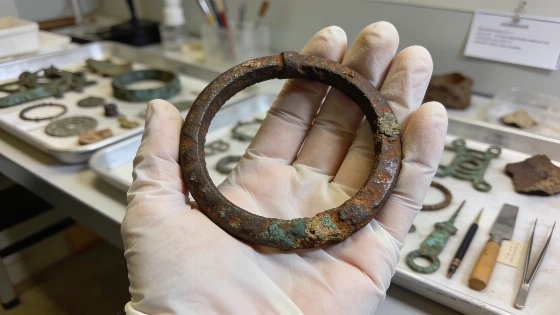
Analysis of Bronze and Early Iron Age rings from Greece shows that some were crafted from meteoritic iron, suggesting the rare metal was valued by Minoan and Mycenaean elites long before iron smelting became common
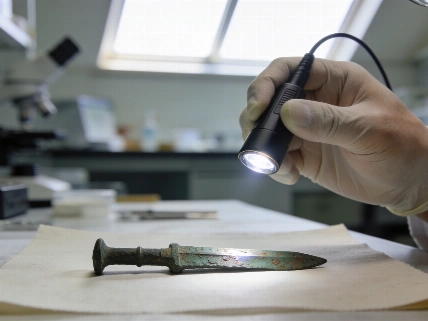
Recent research into Bronze and Early Iron Age artifacts from Greece has identified a small group of iron rings likely forged from meteorites, offering new insight into the use of rare materials by ancient elites. The study examined 91 iron objects from 33 archaeological sites, now held in 19 museum collections, using portable X-ray fluorescence analysis to determine their chemical composition without damaging the artifacts.
Meteorite Iron in Archaeological Context
Among the 91 objects analyzed, 13 rings and ring fragments displayed unusually high concentrations of nickel, a chemical signature consistent with meteoritic iron. Of these, nine were considered highly likely to be of meteoritic origin, with a tenth also probable. The remaining three rings may also derive from meteorites, but further evidence is needed. Most of the other iron artifacts showed little or no nickel, indicating they were produced from smelted terrestrial ore.
The majority of the high-nickel rings date to between the 18th and 14th centuries BCE and were recovered from wealthy tombs at major Mycenaean centers such as Mycenae, Dendra, Vathyo, and Kakovatos. These tombs are associated with individuals of high social status, suggesting that meteoritic iron was reserved for the elite. One notable ring was found at the Minoan sanctuary of Anemospilia on Crete, reportedly on the finger of a man interpreted as a high-ranking priest.
Material Significance and Social Value
Some of the rings combined meteoritic iron with gold, silver, or bronze, and certain examples may have functioned as seals rather than simple ornaments. The concentration of these rare iron rings in elite burials points to their role as symbols of authority or status. Two rings from Dendra were found inside a gold vessel decorated with an octopus motif, further emphasizing their prestigious context.
During the Bronze Age, iron smelting from terrestrial ore was not yet widespread in the Aegean. Meteorites, which arrive on Earth already containing metallic iron, provided an alternative source that could be worked without advanced smelting technology. The rarity and unusual properties of meteoritic iron may have contributed to its symbolic or ritual significance, in addition to its material value.
Possible Origins and Disappearance
Greece's humid climate and geography make the recovery of meteorites difficult, raising the possibility that the raw material for these rings was imported. Egypt, with its arid deserts and established connections to the Aegean during the Bronze Age, is one proposed source, though no direct evidence links the Greek rings to Egyptian meteorites. The tradition of meteoritic iron rings appears to have peaked in the later Helladic Bronze Age and faded as the Mycenaean palace system collapsed and iron smelting became more common in the 12th and 11th centuries BCE.
The reasons for the decline of meteoritic iron jewelry remain uncertain. It may reflect broader social and political upheavals at the end of the Bronze Age, or the increasing availability of smelted iron may have reduced the exclusivity of the material. The study more than doubles the number of eastern Mediterranean sites where high-nickel iron artifacts have been identified, expanding the known distribution of this rare material.
Analytical Methods and Broader Context
The research relied on non-destructive portable X-ray fluorescence, allowing scientists to analyze valuable museum objects without sampling. Elevated nickel content is a key indicator of meteoritic iron, which often contains the iron-nickel alloy kamacite. The findings highlight the importance of chemical analysis in distinguishing between meteoritic and terrestrial iron, especially in regions where preservation is challenging.
Comparative studies of ancient materials increasingly rely on advanced analytical techniques to reconstruct past technologies and social practices. For example, investigations of Neolithic enclosures in central Europe have used astronomical alignments and material analysis to interpret ritual and calendrical functions, as seen in recent research on a large enclosure near Chleby (study of solar and lunar alignments at a Neolithic site).
Understanding the distinction between meteoritic and smelted iron is essential for interpreting the technological capabilities and social organization of ancient societies. The presence of meteoritic iron in elite burials suggests that materials from beyond Earth played a distinctive role in the symbolism and power structures of Bronze Age Greece.
Nickel-rich iron artifacts are identified through chemical analysis, which can distinguish meteoritic iron from smelted terrestrial iron based on trace element composition. Portable X-ray fluorescence (pXRF) is a non-destructive method that measures the elemental makeup of artifacts without removing samples. This approach is especially valuable for rare or museum-held objects, where preservation and ethical considerations limit destructive testing. The identification of meteoritic iron relies on elevated nickel content and the presence of specific iron-nickel alloys, providing a scientific basis for tracing the origins and significance of ancient metal objects.