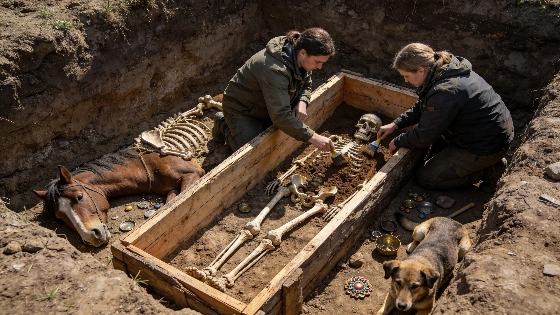
Archaeologists excavating at Gnezdilovo near Suzdal have uncovered a rare 10th-century wooden chamber tomb containing the remains of a high-status individual, a horse, and a dog, offering new evidence for early medieval funerary practices in the region
A recently excavated burial at the Gnezdilovo cemetery, located near Suzdal in western Russia, has provided new insight into the funerary customs of early medieval elites. Archaeologists uncovered a well-preserved wooden chamber tomb dating to the 10th century CE, containing the remains of an adult male, a horse, and a dog. The burial context and associated artifacts suggest connections between local Rus' traditions and Scandinavian mortuary practices during a period of significant cultural interaction.
Excavation and Context
The Gnezdilovo site, situated approximately 220 kilometers northeast of Moscow, has been the focus of systematic archaeological investigation. During the most recent field season, researchers identified a chamber tomb approximately one meter below the surface, measuring 3.1 by 2.7 meters. The wooden structure's roof had collapsed, but the chamber's layout and contents remained largely undisturbed. The burial was one of 15 excavated graves at the site this season, most of which were simpler earthen pit interments or barrow mounds.
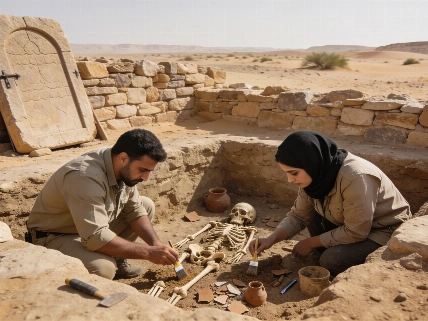
Within the chamber, the skeletal remains of a man estimated to have died between the ages of 25 and 35 were found alongside those of a horse and a dog. The preservation of the wooden chamber is unusual for the region, where organic materials typically decay rapidly. Only around 80 medieval chamber burials of this type have been documented across western Russia, making this find a rare example of early elite funerary architecture outside major urban centers.
Grave Goods and Social Status
The individual was interred with a range of grave goods, including an iron knife, stirrups, riding equipment, a bone comb, and a battle axe. A silver, horseshoe-shaped brooch was found near the neck, likely used to fasten a garment. The presence of both a horse and a dog within the same burial, along with high-quality personal items, is consistent with interpretations of elevated social status and possible military-administrative roles within the early Rus' polity. Female burials at the site included silver rings and necklaces with rock-crystal beads, while other male graves contained weapons and horse-riding gear, reflecting broader patterns of gendered grave goods in the region.
Chamber tombs of this type have previously been identified primarily in urban centers associated with the Kievan Rus', a political entity that emerged in the late ninth and tenth centuries CE and included Baltic, Slavic, and Norse populations. The discovery of such a burial at Suzdal suggests the site may have served as a significant regional center earlier than previously recognized. This interpretation is supported by the presence of elite funerary architecture and imported burial customs, which indicate connections to broader networks of power and identity formation in early medieval northeastern Europe.
Comparative Evidence and Limitations
The Gnezdilovo chamber tomb adds to a growing body of evidence for the diversity of mortuary practices among early medieval elites in the region. Similarities with Scandinavian burial customs, such as the use of wooden chambers and the inclusion of animals and weapons, have been noted in other sites across the Kievan Rus' territory. However, the limited number of such burials and the challenges of organic preservation complicate efforts to reconstruct the full range of funerary variation. The interpretation of status and identity from grave goods remains subject to debate, as material wealth does not always correspond directly to social or political rank.
Recent discoveries elsewhere in Europe, such as the identification of medieval stronghold remains above the Gironde Estuary in France, have also highlighted the importance of regional centers and their role in shaping political landscapes during the medieval period. For example, defensive earthworks and settlement traces at Saint-Georges-de-Didonne have provided new perspectives on local power structures and long-term occupation patterns (see analysis of medieval fortifications in France).
Preservation and Research Outlook
The exceptional preservation of the Gnezdilovo chamber tomb offers rare opportunities for further analysis, including osteological study of the human and animal remains, examination of artifact manufacturing techniques, and potential biomolecular sampling. The wooden structure itself may yield information about construction methods and resource use in the 10th century. Ongoing research at the site aims to clarify the chronology of the cemetery, the origins of the individuals buried there, and the extent of cultural exchange between local and Scandinavian populations. As with all mortuary archaeology, interpretations remain provisional pending additional excavation, laboratory analysis, and comparative study.
Understanding the significance of chamber tombs in early medieval Russia requires careful attention to archaeological context, preservation conditions, and the limitations of the surviving evidence. The Gnezdilovo burial demonstrates how rare finds can challenge assumptions about the distribution of elite practices and the emergence of regional centers in the early Rus' world.
Estimating age at death from skeletal remains relies on a combination of methods, including analysis of dental development, epiphyseal fusion, and degenerative changes in bones such as the pelvis and vertebrae. In adults, age estimation is less precise than in juveniles, as skeletal markers of aging can vary widely between individuals due to genetics, health, and activity. Archaeologists typically report age ranges rather than exact years, and preservation quality can further limit the accuracy of these estimates. Understanding these methodological constraints is essential for interpreting demographic patterns and social organization in past populations.