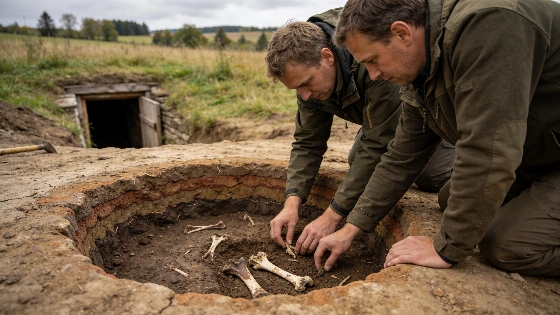
Archaeologists have analyzed a vast Neolithic enclosure near Chleby, Czech Republic, revealing evidence that its entrances and features may have been aligned to solar and lunar cycles over 1,000 years before Stonehenge
A large circular enclosure discovered near Chleby in the Czech Republic is providing new insight into the ceremonial and astronomical practices of early European farming communities. Recent investigations suggest that the 6,500-year-old monument, measuring approximately 230 meters in diameter and surrounded by a ditch over 2.5 meters deep, may have been deliberately constructed to align with significant solar and lunar events. This interpretation is based on the identification of 12 irregularly spaced entrances, whose arrangement appears to create sightlines for observing key moments in the solar and lunar cycles.
Entrances and Astronomical Alignment
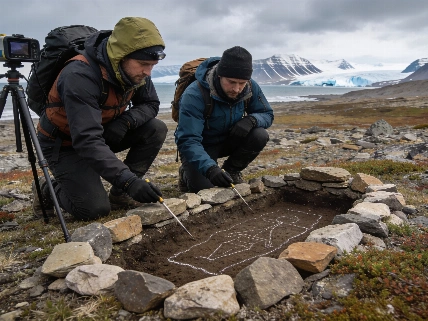
Researchers from the University of West Bohemia have focused on the geometry of the enclosure's entrances, noting that their placement is unlikely to be random. Two principal observation points have been identified within the monument. One is consistent with tracking the Moon's most extreme positions on the horizon during its roughly 18-year cycle, while the other aligns with sunrise at the summer solstice and sunset at the winter solstice. These features parallel the well-known solstitial alignments at Stonehenge, but radiocarbon dating of organic material from Chleby indicates that the Czech site predates the major construction phases of Stonehenge by more than a millennium.
The enclosure's design suggests that sophisticated astronomical observations were being incorporated into monumental architecture by some of Europe's earliest farming populations. The deliberate orientation of entrances and the scale of construction point to a complex understanding of celestial cycles long before similar practices are documented in western Europe.
Ceremonial Use and Material Evidence
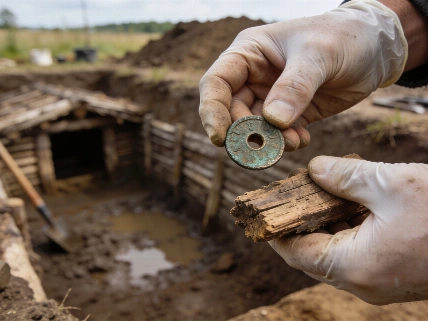
Archaeological excavations have uncovered additional evidence for the ceremonial significance of the Chleby enclosure. Bull skulls and horns were found within the ditch, particularly near the entrances, raising the possibility that these remains once decorated monumental gateways. The presence of cattle remains is consistent with the symbolic importance of bulls among early farming societies in prehistoric Europe. The arrangement of these materials suggests that entering the enclosure may have involved passing through gateways marked by animal remains, reinforcing the site's ritual character.
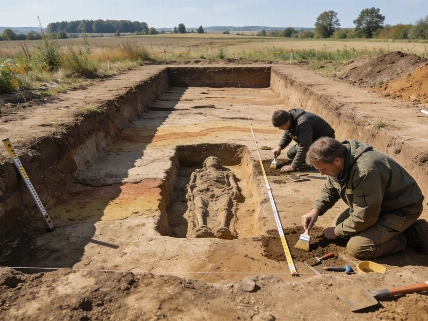
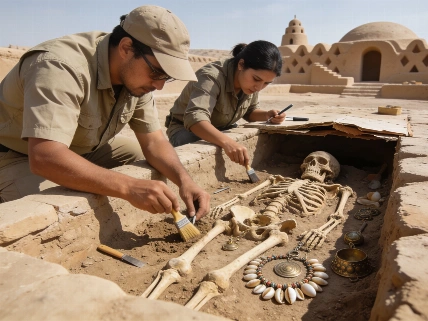
Human skeletal remains have also been recovered from the monument. A later burial associated with the Bronze Age Únětice culture contained the commingled remains of approximately 18 individuals. Analysis indicates that these burials were deposited gradually over time, rather than in a single event, suggesting that the site retained ritual or commemorative significance long after its initial construction. However, evidence points to a substantial change in the site's function over the millennia. By the Iron Age, the ditch had been filled in and an ordinary settlement established atop the former sanctuary, marking a shift from ceremonial to domestic use.
Soil Analysis and Changing Function
To better understand the activities that took place within the enclosure, researchers are now analyzing soil samples from the site and its surroundings. Chemical signatures preserved in the soil may reveal traces of human activity that are not visible through conventional archaeological methods. This approach could help distinguish areas used for specific purposes and clarify how the monument's function evolved over thousands of years.
The Chleby enclosure's combination of astronomical orientation, monumental architecture, animal symbolism, and later human burials makes it one of the most significant ritual sites of its period in Central Europe. Its discovery adds to a growing body of evidence that Neolithic communities across Europe were capable of integrating complex astronomical knowledge into their ceremonial landscapes. Comparable research into ritual and burial practices at other sites, such as the recent findings of Roman-era graves and Iron Age harnesses in Ukraine's Odesa region, further illustrates the diversity and continuity of ceremonial traditions across prehistoric Europe (archaeological discoveries in the lower Danube).
Chronology and Interpretation
At approximately 6,500 years old, the Chleby enclosure predates the main construction phases of Stonehenge by more than 1,000 years. While there is no evidence of direct connection between the two monuments, the similarities in their astronomical alignments suggest that the observation of celestial cycles was a widespread feature of monumental architecture among early farming societies. The scale of the Chleby enclosure, the deliberate positioning of its entrances, and the integration of animal and human remains all point to a site of considerable importance for multiple generations.
Despite these findings, important uncertainties remain. The precise rituals performed at Chleby, the full range of activities carried out within its boundaries, and the reasons for its eventual abandonment as a ceremonial center are not yet fully understood. Ongoing soil analysis and further excavation may help clarify these questions, but the evidence currently available highlights both the sophistication and the complexity of Neolithic ceremonial landscapes in Central Europe.
Understanding the dating of prehistoric monuments like Chleby relies on a combination of radiocarbon analysis, stratigraphic context, and the association of organic materials with architectural features. Radiocarbon dating measures the decay of carbon-14 in organic remains, providing an estimate of when the material was last alive. Calibration against known fluctuations in atmospheric carbon-14 levels is necessary to convert radiocarbon years into calendar dates. The reliability of these dates depends on the preservation of suitable material, the absence of contamination, and the secure association of dated samples with the construction or use of the monument. These factors are critical for establishing the chronology of complex sites and for comparing ceremonial practices across different regions and periods.