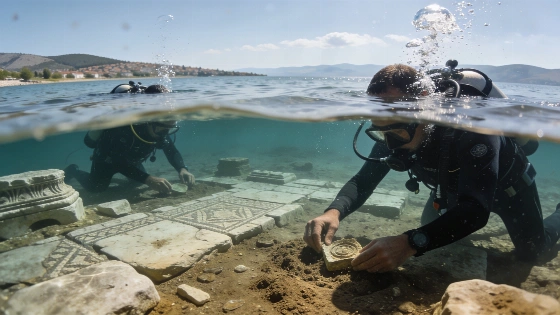
Archaeologists excavating beneath Lake İznik in Turkey have uncovered the remains of a small church beneath a later basilica. Some propose it hosted the First Council of Nicaea, but the evidence and dating remain contested.
Archaeological excavations at Lake İznik, the site of ancient Nicaea in northwestern Turkey, have revealed the remains of a small church structure beneath a larger submerged basilica. The discovery has prompted debate among specialists about whether this earlier church could be the location where the First Council of Nicaea convened in 325 CE, a pivotal event in Christian history. The claim is based on the church's stratigraphic position and its proximity to the historical center of Nicaea, but the evidence remains incomplete and interpretations differ.
Excavation and Context
The submerged basilica was first identified in 2014 through aerial and underwater survey. Since 2015, archaeologists led by Mustafa Şahin of Bursa Uludağ University have conducted systematic excavations, revealing a stone pavement approximately 30 centimeters below the basilica floor. This lower level is interpreted as the foundation of an earlier, smaller church. No standing walls or decorative elements from the earlier structure have been recovered, and only the stone pavement survives, suggesting that much of the original building may have been constructed from perishable materials such as wood.
Based on stratigraphic relationships and historical records, the excavators propose that the smaller church predates the basilica, which was constructed around 380 CE. The earlier church is thought to have been destroyed by an earthquake in 368 CE. The team has not yet established the full dimensions or architectural plan of the earlier structure, and its identification as the "Church of Neophytos" remains provisional.
Debate Over Historical Significance
The suggestion that this church hosted the First Council of Nicaea is grounded in historical accounts, notably those of Eusebius of Caesarea, who described the council as meeting in a "house of prayer." However, some historians and archaeologists not involved in the excavation caution that the evidence is insufficient to confirm this identification. The precise dating of the earlier church has not been established through radiometric or typological methods, and no inscriptions or artifacts directly link the structure to the council.
Alternative interpretations emphasize that the most significant sessions of the council may have taken place in the imperial palace of Constantine I, which has not been located and may also lie beneath the lake. The lack of architectural remains from the earlier church further complicates efforts to associate it with the council. As David Gwynn, a historian specializing in early Christianity, notes, the discovery offers a glimpse into the architectural context of early Nicaea but does not by itself resolve the question of the council's exact meeting place.
Preservation and Ongoing Research
The underwater context of the site presents both challenges and opportunities for archaeological investigation. The stone pavement of the earlier church is preserved beneath the later basilica, but organic materials and architectural features have not survived. Excavation is ongoing, and further analysis may clarify the chronology and function of the structures. The site's layered history, with one church built atop another, reflects broader patterns of religious and architectural change in late Roman Anatolia.
Numerical data from the site indicate that the earlier church's pavement lies about 30 centimeters below the basilica floor, and the basilica itself was constructed in the late fourth century CE. The destruction of the earlier church is attributed to an earthquake in 368 CE, with the basilica built on the same site roughly a decade later. The absence of diagnostic artifacts or inscriptions from the earlier phase limits the precision of current interpretations.
Comparative Perspectives
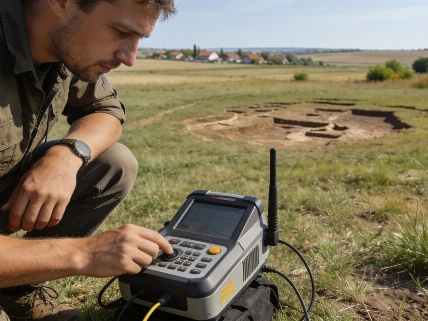
The debate over the identification of the church at Lake İznik echoes similar challenges faced in other archaeological contexts, where the absence of direct evidence complicates efforts to link material remains to historically documented events. For example, the use of ground-penetrating radar to map the remains of the St Clara Monastery beneath a modern football field in Denmark demonstrates how non-invasive methods can reveal buried structures, but also how interpretation depends on the quality and context of the evidence. (mapping of medieval monastic remains in Denmark).
As research continues at Lake İznik, the site remains an important case study in the complexities of archaeological interpretation, especially when written sources and material evidence do not align perfectly. The ongoing excavation may yet yield new data, but for now, the identification of the earlier church as the council's meeting place remains a hypothesis rather than a confirmed fact.
Understanding the relationship between archaeological layers is central to interpreting sites with long histories of occupation and rebuilding. Stratigraphy-the study of the sequence and relative position of layers-allows archaeologists to reconstruct the order of construction, destruction, and reuse at a site. In underwater contexts, stratigraphic relationships can be especially challenging to document, as water movement and sedimentation may disturb original deposits. Careful excavation and recording are essential to distinguish between primary construction phases and later modifications, and to avoid over-interpreting incomplete evidence.