
Physics
282 reportsParticle physics and theoretical physics frame the reporting, with relativity providing a further check. It examines what symmetries imply and how models are falsified, showing where limiting cases or counterexamples restrict the explanation.

Einstein's Equations Allow a Form of Gravitational Reconnection
A solar flare releases enormous energy as magnetic fields reconnect. Physicists have now described a mathematical counterpart in gravity, while simulations and gravitational-wave observations are still needed to test its role
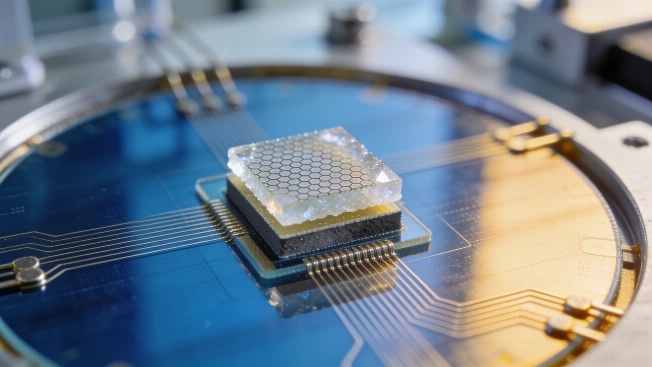
Magic-Angle Graphene Amplifies Strain Response
A piezoelectric silicon platform lets researchers tune strain in twisted bilayer graphene. Near charge neutrality its gauge factor reaches about 100, although that figure describes relative sensitivity rather than a hundredfold jump in raw resistance

A Pigeon Needs 60 Metres to Glide to a Zero-Speed Landing
A control-theory model finds that a pigeon could stop at a raised perch without flapping, but only after building speed and covering about 60 metres horizontally
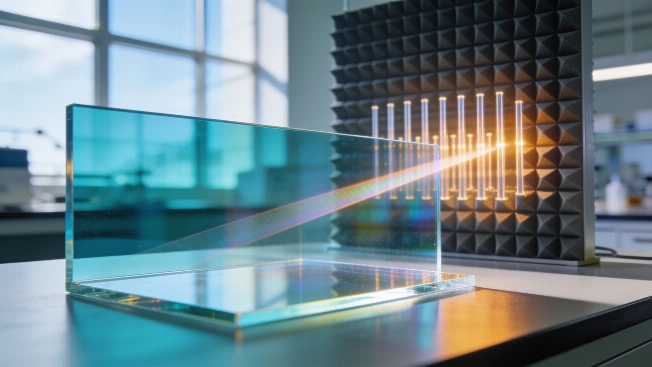
Metamaterials Move From Lab Designs Toward Practical Uses
A UK roadmap published in October 2026 sets out five steps to move metamaterials from academic research toward industry, as work on light control and sound management reveals useful applications alongside persistent manufacturing barriers.
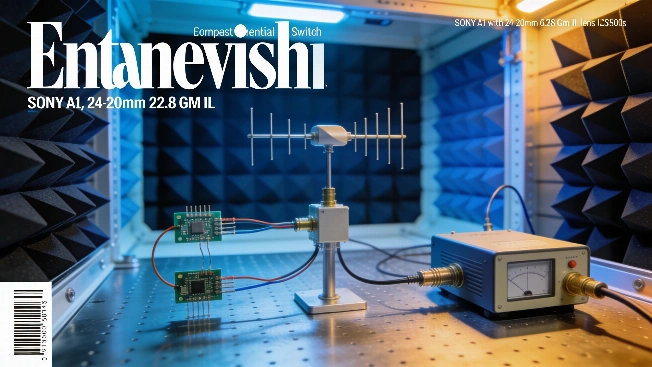
Thermal Noise Carries Data Without an Active Radio Signal
Stanford researchers encoded bits by switching an antenna between open and short circuits, then recovered them from amplified thermal noise in an anechoic chamber. A channel model raised transfer rates 100-fold
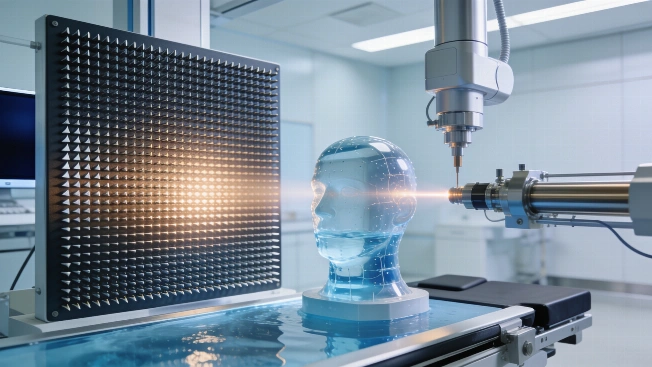
3D Printed Modulator Delivers Carbon-Ion Dose in About 30 Seconds
In a lung-cancer planning study, a printed pin array shaped a single-energy carbon-ion beam; phantom measurements showed more than 99% target coverage, while delivery took about 30 seconds

Encyclopedia Britannica Shows How Atomic Ideas Changed
Across eight editions of the Encyclopedia Britannica the atom shifts from an indivisible particle to a quantum structure. The entries show how scientific models gain authority and lose it as evidence changes

Moiré Twists Control Elastic-Wave Skyrmion States
Earlier experiments generally produced one skyrmion type at a time. A two-layer elastic-wave platform instead uses relative rotation to create patterns that can host several topological states
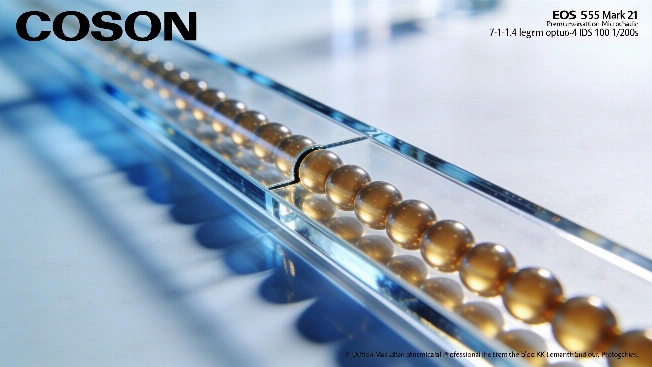
Channel Width Changes How Single-File Particles Move
Particles remain in single file inside a narrow channel yet still shift sideways. Researchers say this limited freedom changes fluctuations and collective motion in ways standard one-dimensional models miss
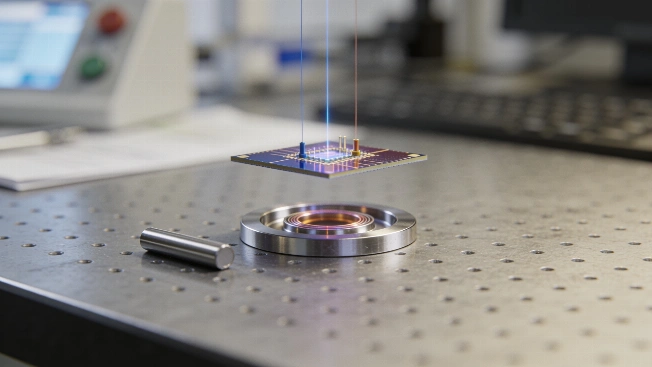
EPFL Device Converts Millimeter Waves to Light at 67%
A thin-film lithium niobate photonic molecule paired with a sub-millimeter resonator reached 67% internal conversion efficiency, while free-space antenna coupling keeps total wireless efficiency far lower
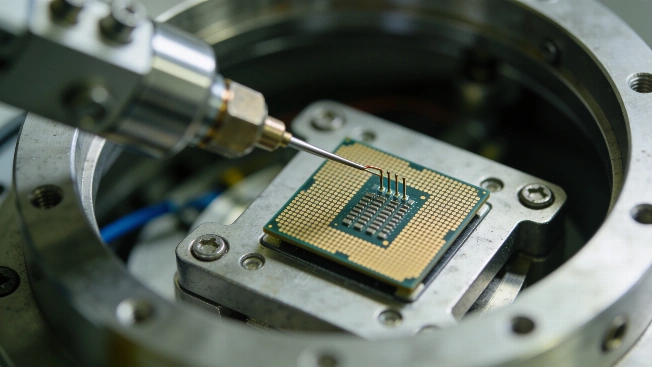
Hybrid Qubits May Fill Specialized Roles in Quantum Processors
A Physics Reports review traces five semiconductor-superconductor qubit designs from gate-tunable circuits to Majorana-based parity devices, with near-term uses more likely in specialized processor roles than as replacements for aluminum transmons
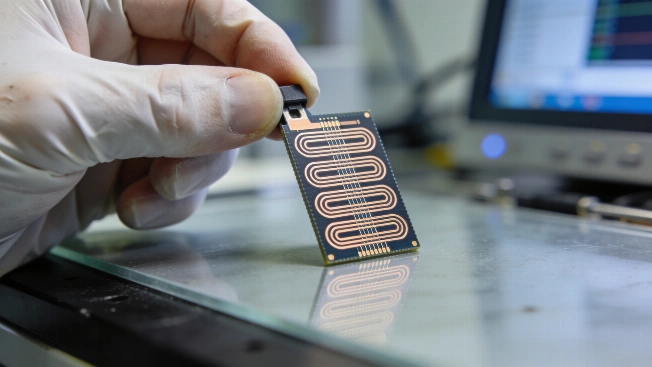
Uniform SQIF Loops Set an Absolute Magnetic Field Baseline
A 46×16 superconducting array produced a reproducible zero-flux anti-peak using uniform loop geometries, offering a route to absolute magnetic sensing without sacrificing the junctions' intrinsic sensitivity
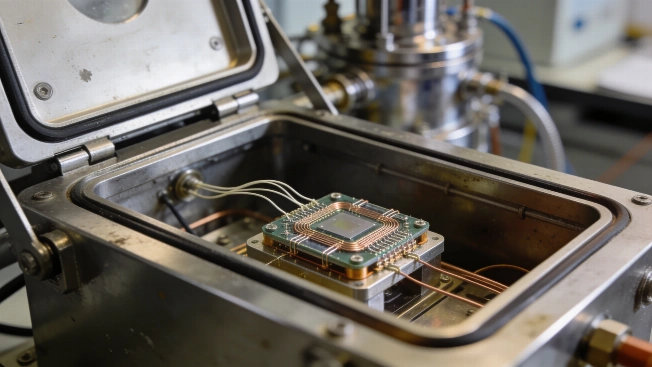
Floating Transmons Use Parasitic Capacitance to Cancel Crosstalk
An XY pulse can disturb neighboring superconducting qubits, yet a Chalmers test chip showed that engineered parasitic capacitances can cancel the unwanted lead signal at a frequency away from zero exchange coupling
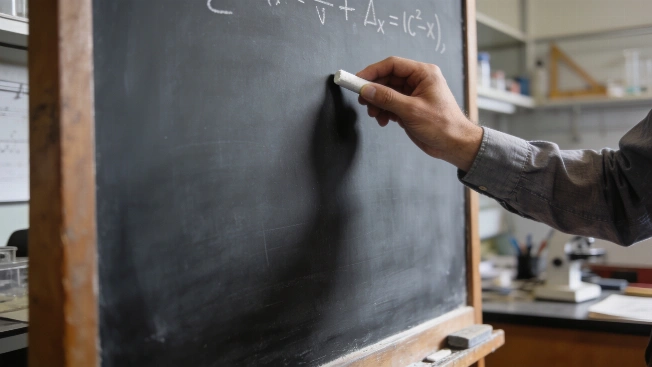
OpenAI Claims AI Proofs Challenge Math and Computing Theories
OpenAI says its models proved the local smoothing conjecture across spatial dimensions and refuted the Exponential Time Hypothesis. Lean proofs are public, but the claims still require independent mathematical and computing review.
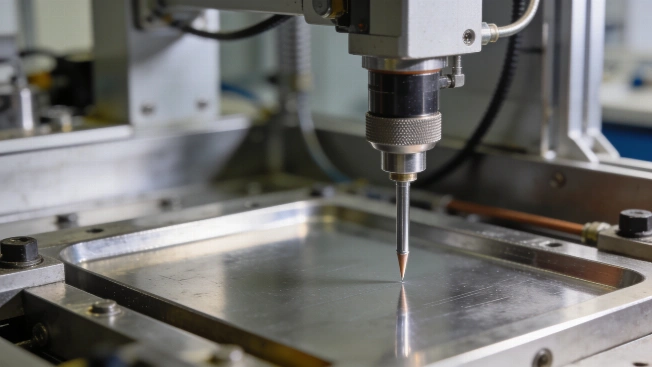
STM Directly Drives a Single Titanium Nuclear Spin
At 0.4 K and 1.4 T researchers used an STM-based ENDOR method to address a 47Ti nuclear spin directly, with an electronic channel providing readout. Full quantum-gate control still requires pulsed-wave sequencing

Optical Atomic Clock Runs Aboard Navy Support Vessel
During Maritime Big Play Pacific Infleqtion says Tiqker operated continuously aboard RV Merlin for two weeks and supported BARB-26. The trial tested local timing in a GPS-degraded setting but supplied no numerical stability result
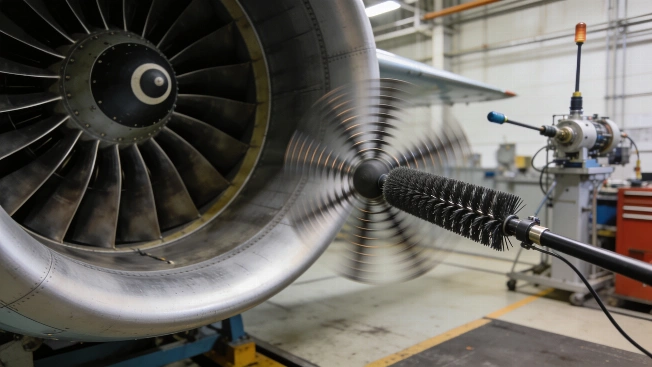
NASA Glenn Instruments Track Airflow and Engine Noise
At NASA Glenn, rotating microphones capture information a fixed sensor misses, while phased arrays and velocity probes help researchers connect sound with airflow and check noise-prediction methods
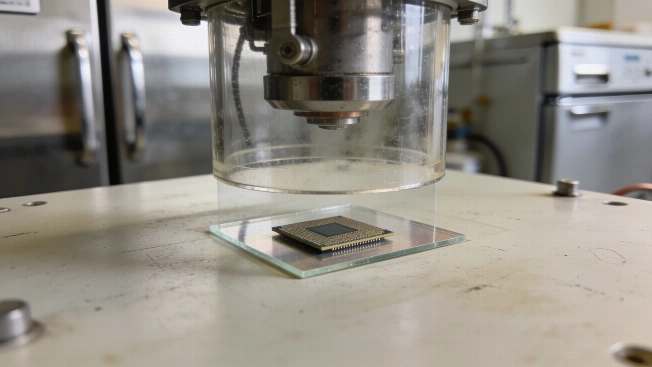
EeroQ bets on helium-bound electrons for quantum scaling
EeroQ aims to hold electron spins above superfluid helium on a semiconductor chip. The company reports charge-qubit work so far; its 10,000-qubit system remains a target rather than a demonstrated machine
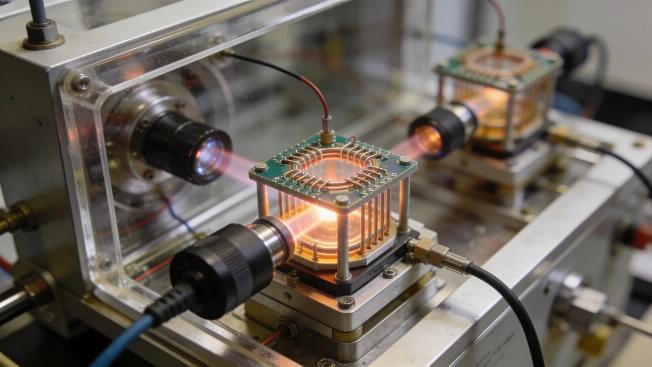
Calcium qubits hold network entanglement for 14 seconds
Oxford researchers linked trapped-ion modules using interfering strontium photons, then transferred the shared quantum state to calcium memory qubits. The measured storage time greatly exceeded the network's average entanglement-generation interval.

Quantum mechanics sets a floor for thermalization
Researchers derive an approximate ℏ/(2kBT) timescale for quantum systems under a general thermalization rule. The result is mathematical, and its scope depends on how broadly the machine must work.
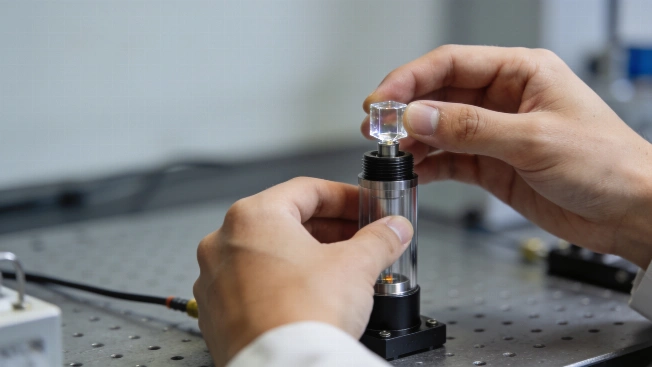
Lanthanum bromide sharpens gamma-ray detection
Cerium-doped lanthanum bromide can distinguish gamma-ray energies more precisely than common sodium iodide detectors while operating at room temperature. Its performance depends on crystal quality and detector configuration.
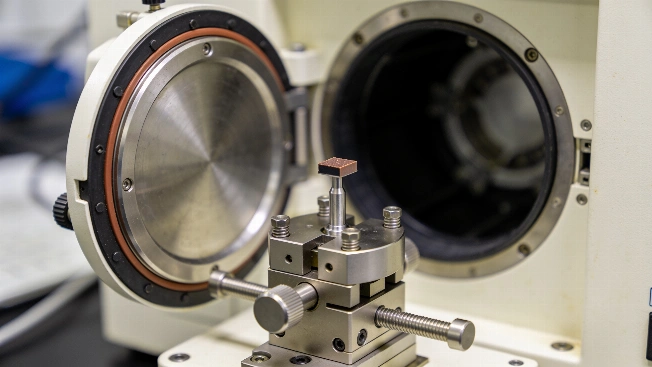
Moving one sample between nanoscale measurements
On 12 November 2026, a live session sponsored by SmarAct will examine how flexible sample positioning can support complementary measurements on a single specimen across microscopy and spectroscopy.

Online attacks leave physics facing a test of public trust
Dan Hooper says online personalities are directing claims of stagnation and misconduct at modern physics. Robert P. Crease examines scientists' possible responses and questions whether the label populism fits.
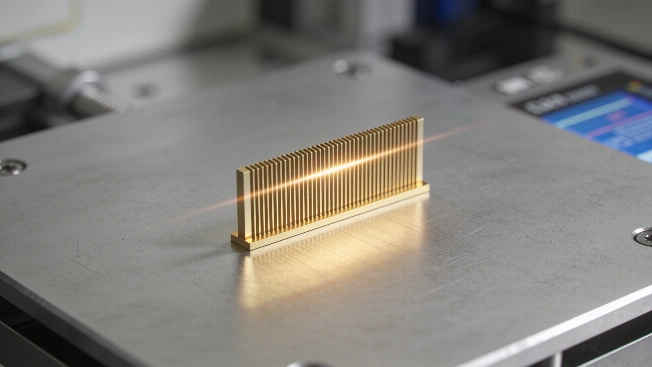
Gold Grating Splits Plasmon Modes by Light Spin
A periodic gold nanostructure produced different plasmon responses to left- and right-circularly polarized light. The proposed mechanism relies on the focused beam and grating geometry rather than built-in structural asymmetry.
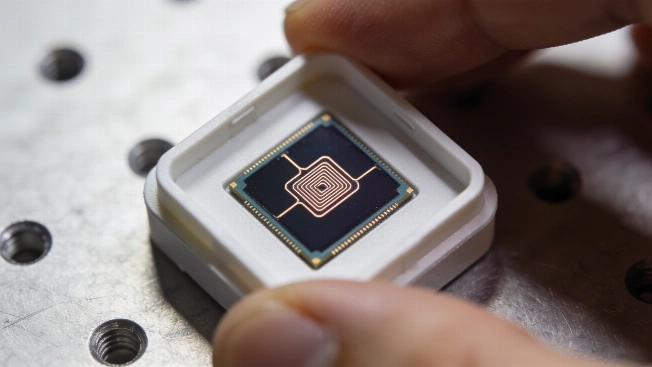
Spin Waves Deliver 4 dB Isolation on a Chip
An Argonne and UIUC team coupled propagating spin waves to a superconducting resonator on one chip, reporting 4 dB of power isolation at a specific transmission peak. The result is a proof of concept, not a complete microwave isolator.
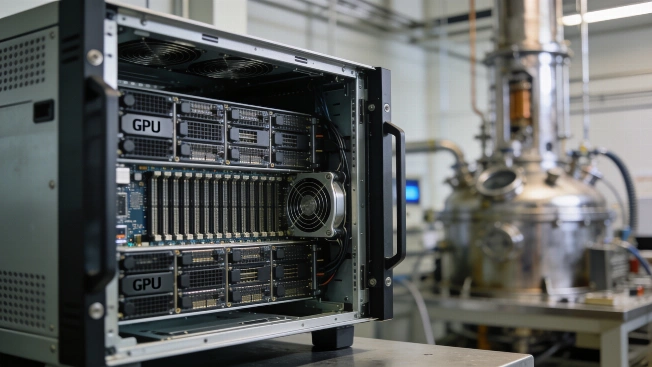
GPU Calibration Cuts Quantum Decoder Training to Seconds
Riverlane and NVIDIA report that an H100 GPU cuts surface-code decoder-training epochs from minutes to seconds, while recalibrated priors lower logical error rates by several percent to as much as twofold compared with uncalibrated starting weights.
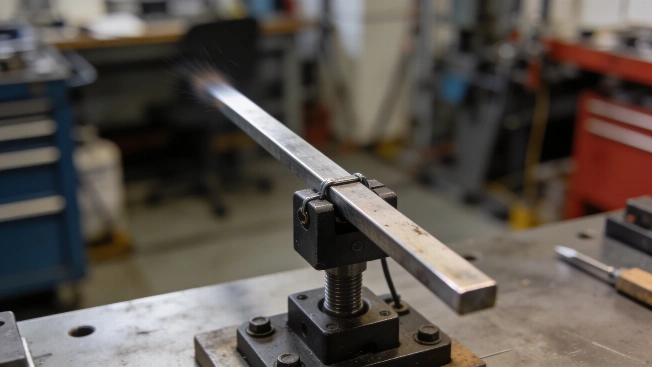
How Two Nearby Modes Turn Structural Motion Complex
A NASA technical bulletin uses a reduced eigenvalue model to explain how nonproportional damping can change two closely spaced structural modes, even when total damping is light.
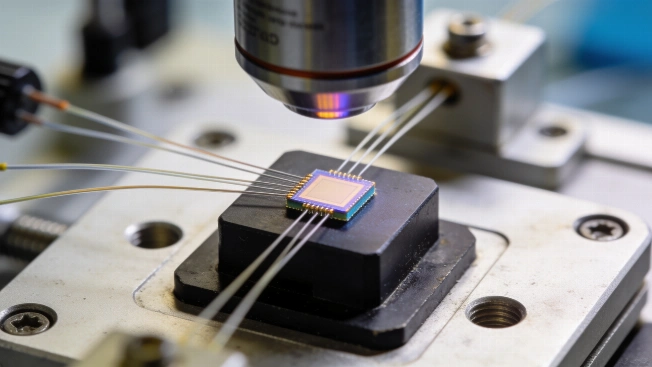
A Photonic Chip Transfers Skyrmion Topology Between Quantum States
An integrated silicon nitride photonic chip transferred a skyrmion pattern from a single-photon state into correlations between two photons. The reported topological number remained measurable under noise even after concurrence fell to zero: a result about state structure, not proof of a functioning quantum network.

Xanadu Reports Nearly Fourfold QROM Cost Reduction in Algorithmic Estimate
Xanadu-linked circuit constructions are reported to reduce the estimated non-Clifford cost of quantum read-only memory by about 3.9-fold for 32-bit entries. The result remains an unverified algorithmic resource estimate, not demonstrated hardware acceleration.
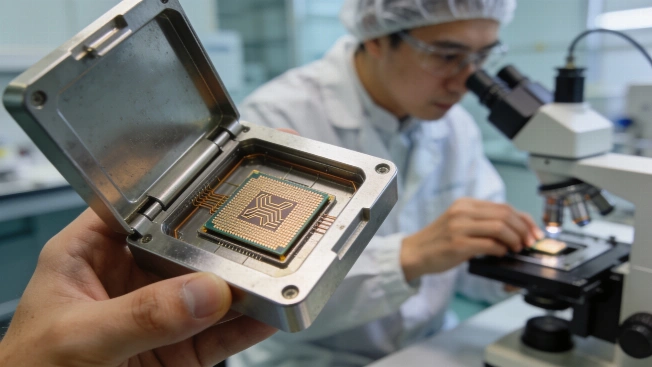
Nanometre Fabrication Shifts Explain Transmon Qubit Performance Gaps
A blinded study of 22 superconducting transmons links twofold T1 variation to nanometre-scale oxide and etch differences while finding no clear role for macroscopic surface defects
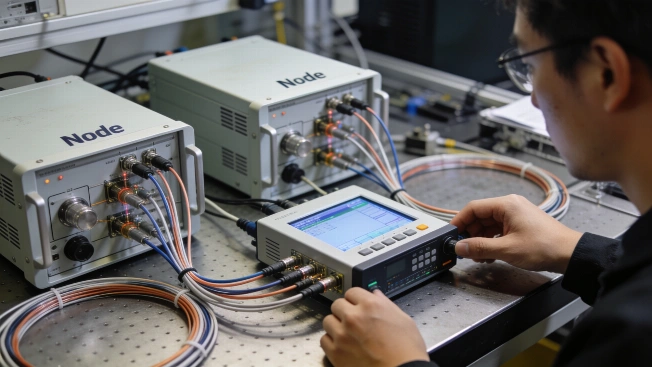
Entanglement Swapping Faces a Patent Eligibility Test
Entanglement swapping could link distant quantum nodes through a Bell-state measurement, but a patent claim may fail if it captures only quantum mechanics without a specific hardware advance
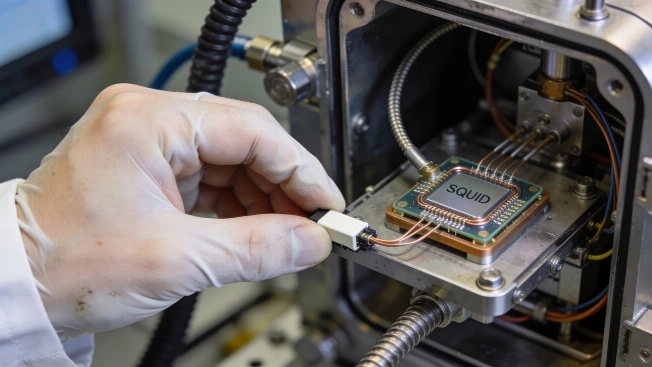
DC-Biased SQUID Stabilizes Multi-Photon Cat Qubits
Alice & Bob and ENS Lyon used a microvolt-scale DC-biased SQUID to control photon conversion between superconducting resonators and demonstrate multi-photon dissipation for cat-qubit stabilization.
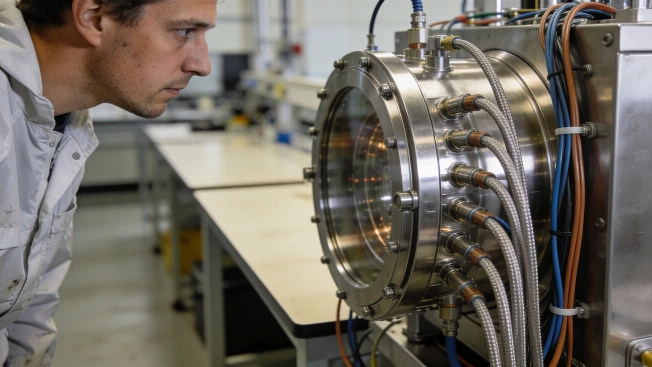
Roadrunner Quantum Lab Opens Albuquerque Quantum Hardware Facility
Roadrunner Quantum Lab opened on September 29, 2026, as a 35,000-square-foot Albuquerque facility linking quantum startups with Sandia and Los Alamos scientists, independent benchmarking, cryogenic testing and packaging infrastructure.
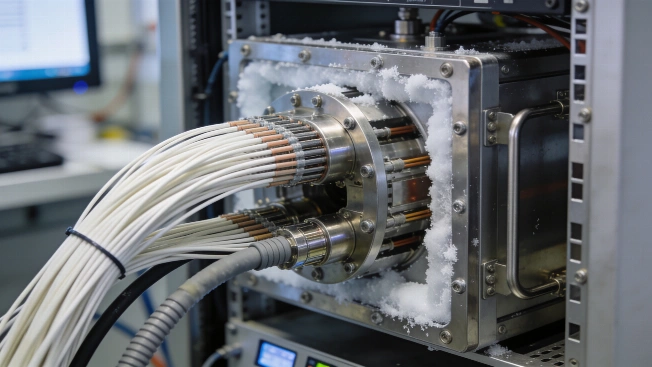
Xanadu and Bluefors Target the Cryogenic Bottleneck in Quantum Scaling
Xanadu and Bluefors announced a multi-million-dollar partnership on September 29, 2026, to develop modular cryogenic infrastructure for photonic quantum systems whose SNSPD detectors must operate near 2 kelvins.
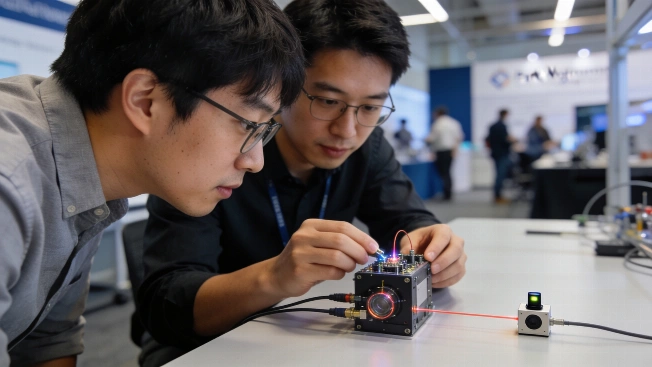
KIST Pushes Korean Quantum Startups Toward US Market Entry
At the Quantum World Congress in College Park, KIST connected South Korean quantum startups with D-Wave and Microsoft, alongside East Asian research networks. OptiQ-Labs plans to open a US East Coast office in November 2026.
Part 1 of 9