
NASA - Part 5
307 reports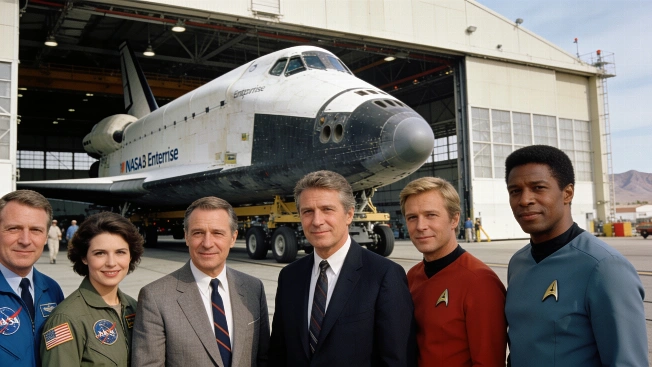
NASA's Enterprise Shuttle: How a Test Vehicle and Star Trek Fans Shaped the Shuttle Era
On September 17, 1976, NASA introduced its first space shuttle orbiter, OV-101. Named Enterprise after a wave of public support, the vehicle became basic to early shuttle flight tests and helped set the stage for the program's future.
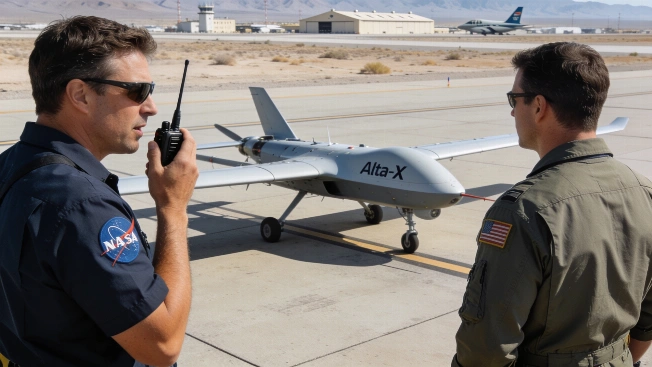
NASA tests new Moon and Mars landing system at Armstrong flight lab
NASA's Dale Reed Subscale Flight Research Laboratory is testing the SPLICE guidance system on the Alta-X drone to improve hazard detection and precision landing for future Moon and Mars missions.
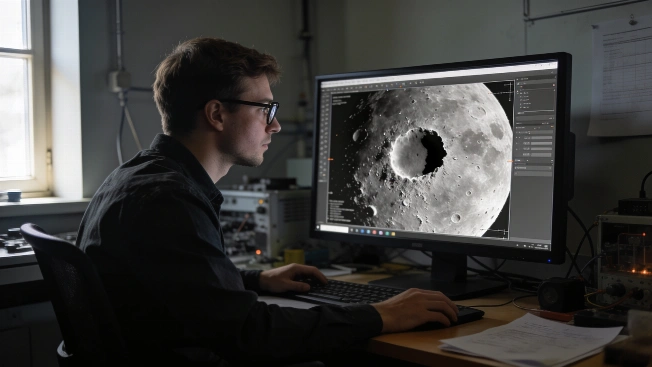
NASA orbiter spots largest new lunar crater in a century
NASA's Lunar Reconnaissance Orbiter has found a 728-foot-wide impact crater on the Moon's eastern limb, created between April and May 2024 by a building-sized asteroid or comet. The discovery gives scientists a rare look at how the lunar surface changes after a major collision.
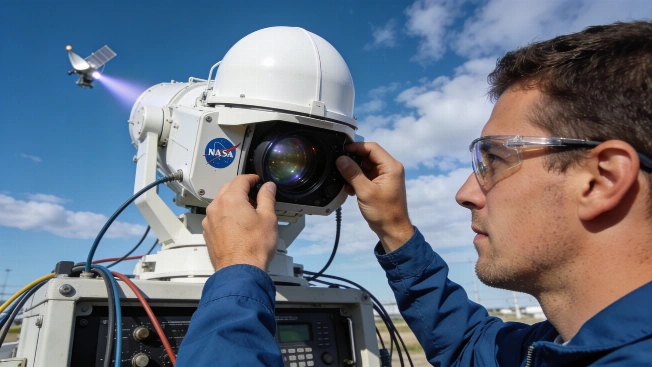
NASA tracks Earth's shifting center of mass with satellites
NASA scientists have measured how Earth's center of mass moves by millimeters each year as water, ice, and air shift across the globe, using satellite laser ranging and GPS data.
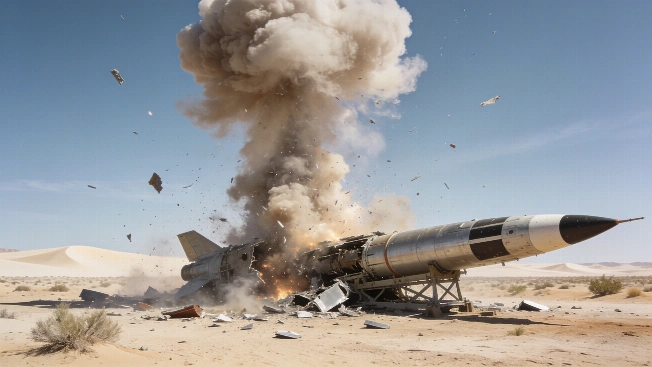
V-2 Rocket Explosion Cut Albert III's Spaceflight Short
A V-2 rocket carrying the monkey Albert III exploded seconds after launch in 1949, exposing the dangers of early animal spaceflight and the technical limits of postwar rocketry.

NASA opens competition for states to host new Space Academy
NASA is inviting states to propose locations for the U.S. Space Academy, aiming to start classes in 2028 and build a permanent campus by 2031 to train future scientists and astronauts.
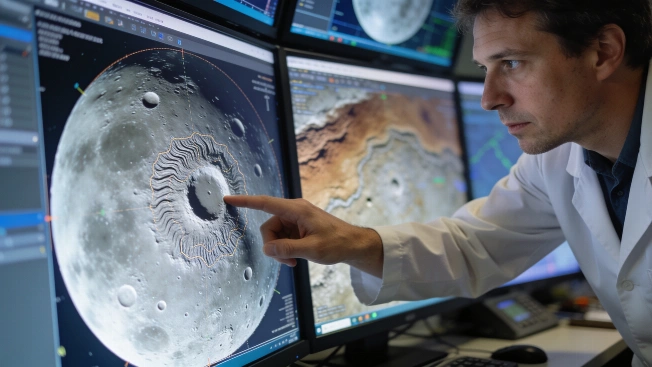
Mercury's Surface Hides Evidence of Greater Planetary Shrinkage
A new study using NASA MESSENGER data finds that Mercury may have shrunk by up to 30 percent more than earlier models indicated, with impact debris masking the true scale of the planet's contraction.
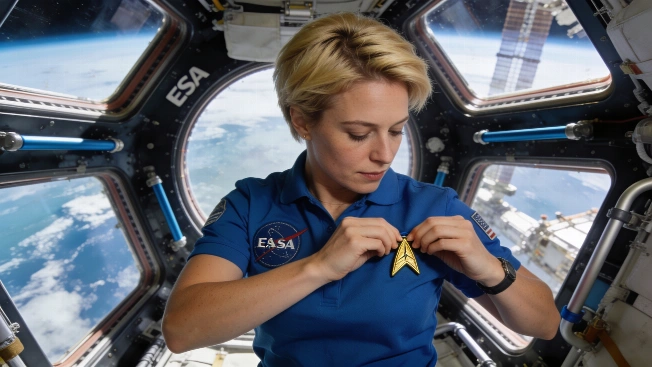
ESA astronaut honors Star Trek legacy aboard International Space Station
ESA astronaut Sophie Adenot marked Star Trek's 60th anniversary by wearing a Starfleet badge aboard the International Space Station, highlighting the show's influence on real-world space exploration and international scientific cooperation.

Landsat 8 Captures Anak Krakatau Eruption from Orbit
NASA and USGS's Landsat 8 satellite recorded Anak Krakatau's eruption as volcanic gas and ash entered the atmosphere, grounding flights and halting local activity while the volcano remained active.
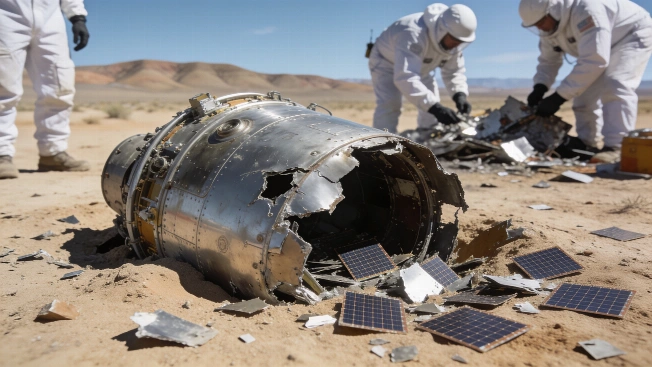
Genesis Sample Capsule Carash Exposed a Critical Spacecraft Design Flaw
NASA's Genesis mission was designed to return solar wind samples from deep space, but its capsule shattered in the Utah desert after a parachute system failure. The crash prompted a fresh examination of spacecraft safety and sample-recovery methods.
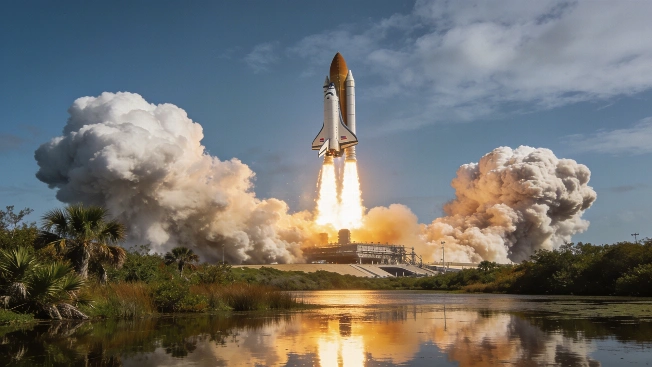
NASA's 100th Astronaut Flight Tested Space Station Assembly in Orbit
NASA's space shuttle Endeavour launched the STS-69 mission on September 7, 1995, where the crew tested International Space Station assembly techniques during a spacewalk and deployed and retrieved two satellites
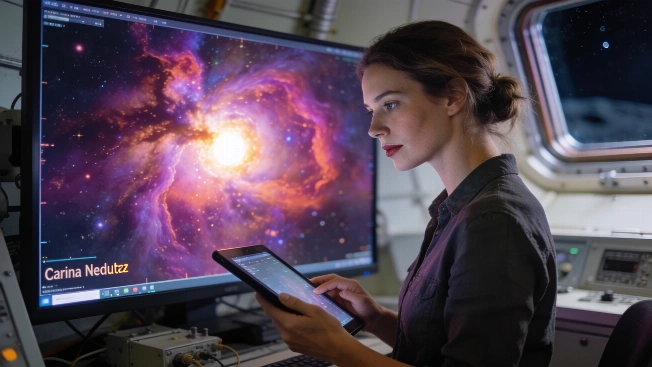
Webb Telescope Reveals Rare O-Type Star Cluster in Carina Nebula
A new James Webb Space Telescope image reveals a dense cluster of newborn stars, including a rare O-type giant, inside the Treasure Chest globule in the Carina Nebula. The image offers a detailed look at early stellar evolution in one of the Milky Way’s most active star-forming regions.
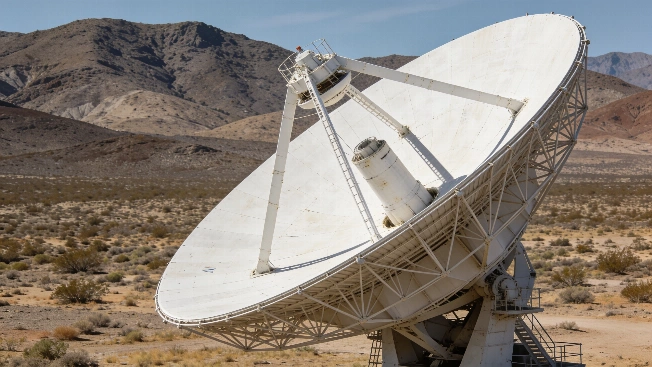
NASA adds new Goldstone antenna to expand deep space communications
NASA has activated a new 34-meter antenna at Goldstone to increase the Deep Space Network's capacity as Artemis and other missions strain existing communications infrastructure.
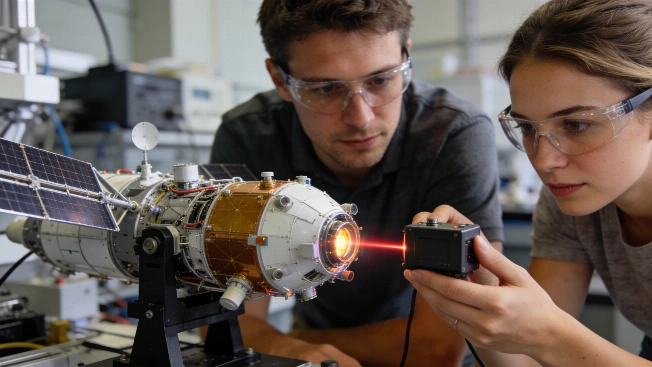
NASA tests Slingshot spacecraft concept for mineral mapping beyond Earth
A NASA-funded study is evaluating whether a small spacecraft using Raman spectroscopy could remotely identify minerals on the Moon, asteroids, and Martian moons, potentially transforming how resources are surveyed before future missions
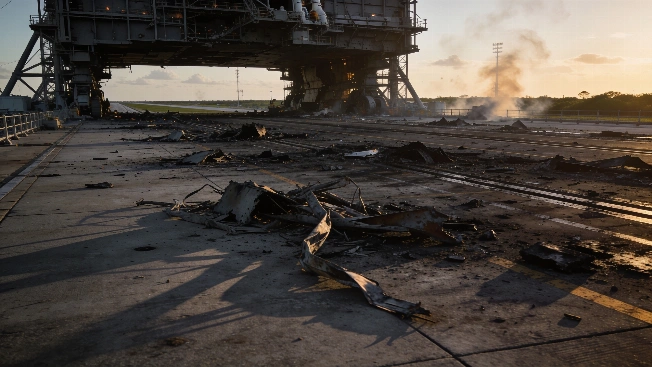
Blue Origin rocket blast detected over 1600 kilometers from Cape Canaveral
A Blue Origin New Glenn rocket explosion at Cape Canaveral produced infrasound waves detected more than 1600 kilometers away. Researchers used specialized sensors to estimate the blast's energy and assess its impact on launch operations and future missions.
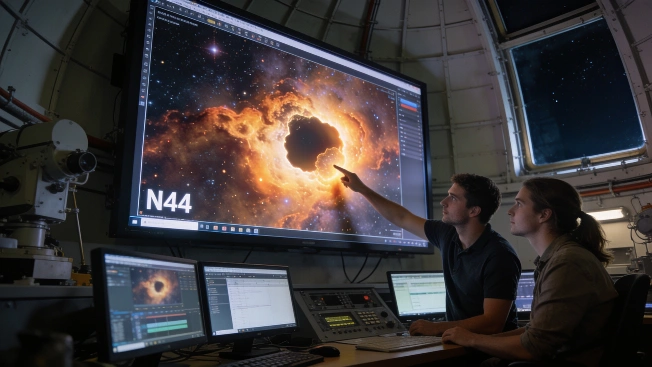
Hubble Reveals Giant Superbubble Structure in Large Magellanic Cloud
A new Hubble Space Telescope image captures the nebula N44 in the Large Magellanic Cloud, highlighting a vast superbubble at its center and offering fresh understanding into how massive stars shape their galactic environment
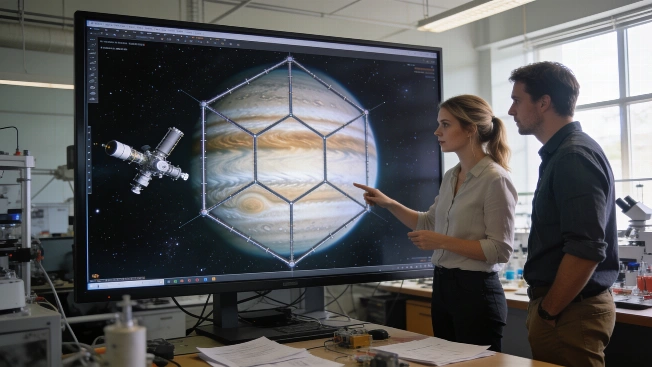
Hubble Reveals Giant 10-Sided Cloud Structure at Saturn's South Pole
Astronomers using the Hubble Space Telescope have identified a vast, ten-sided atmospheric pattern encircling Saturn's south pole. The decagon challenges assumptions about the planet's unique polar weather and raises new questions about giant planet meteorology.
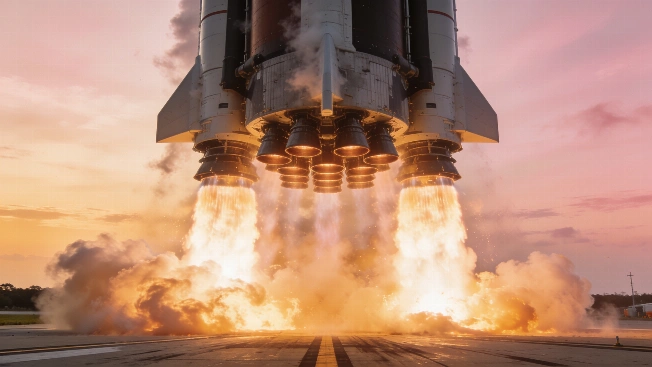
Falcon Heavy Launches NASA's Roman Telescope Toward Deep Space Science
SpaceX's Falcon Heavy rocket has launched NASA's Nancy Grace Roman Space Telescope, sending the observatory on a million-mile journey to its operational orbit beyond Earth.
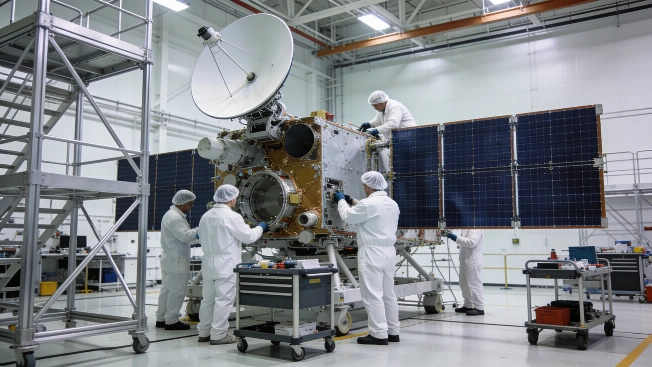
NASA Selects Blue Origin to Build Dedicated Mars Communications Orbiter
NASA has awarded Blue Origin a $700 million contract to develop the Mars Telecommunications Network, a dedicated relay orbiter intended to support future Mars missions as current infrastructure ages
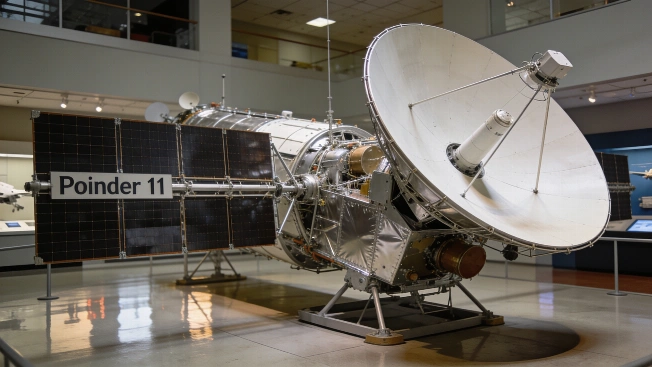
Pioneer 11's Saturn Flyby Tested the Limits of Deep Space Navigation
NASA's Pioneer 11 spacecraft became the first probe to traverse Saturn's rings in 1979, gathering data about the planet's moons and rings while measuring its magnetic field and clearing the way for later missions to the outer solar system.
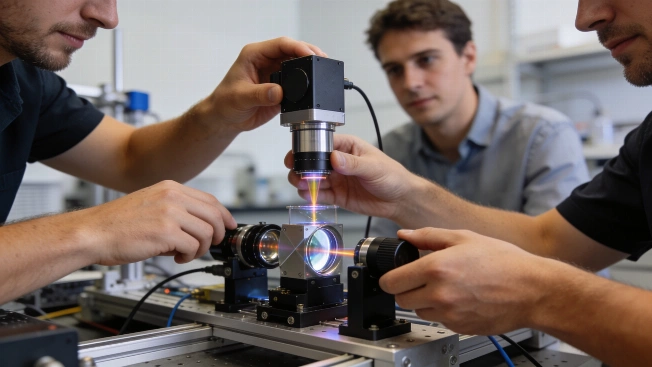
Quantum Camera Startup Secures $10M+ for Sub-Diffraction Imaging
Diffraqtion has raised over $10 million in pre-seed funding to advance quantum-enabled optical sensing platforms that claim to resolve features far below the classical diffraction limit, targeting applications in space area awareness and defense.
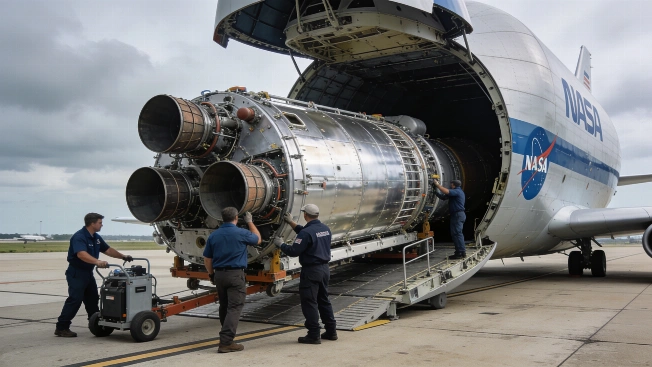
NASA's Super Guppy Transformed Space Hardware Transport in 1965
NASA's Super Guppy cargo aircraft completed its first test flight in 1965, enabling the agency to move oversized rocket stages and spacecraft components across the United States for missions including Apollo and Artemis.
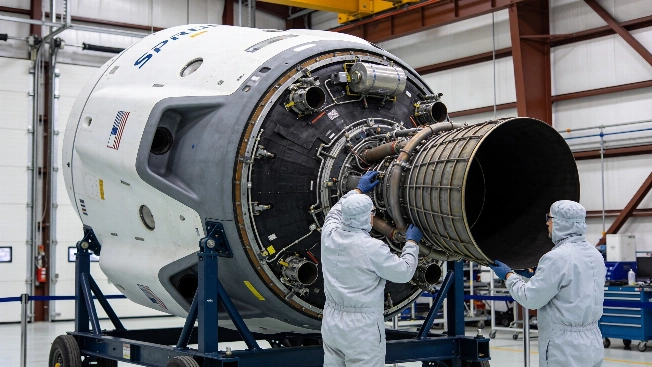
SpaceX Crew-13 Launch to ISS Delayed by Dragon Propulsion Leak
NASA and SpaceX have postponed the Crew-13 mission to the International Space Station after detecting an oxidizer leak in the Dragon spacecraft's propulsion system. The new launch date has not been confirmed as teams investigate the issue.
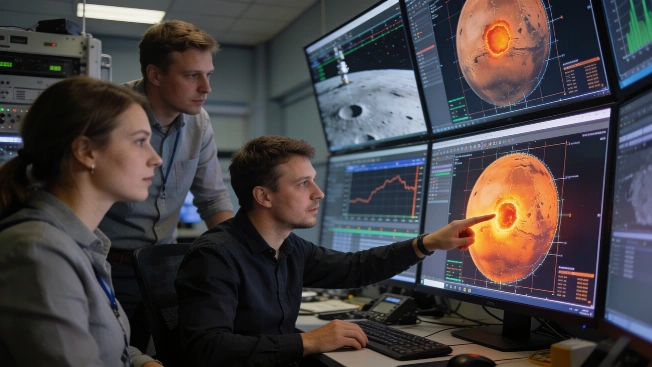
Mars Interior Reveals Unexpected Southern Hemisphere Thermal Anomaly
Analysis of NASA spacecraft data suggests Mars's southern mantle is hundreds of degrees warmer than the north, challenging assumptions about the planet's internal symmetry and geological history
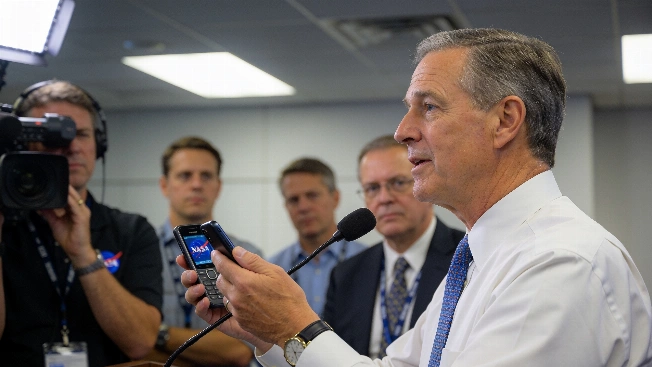
Roman Space Telescope Launch Draws Attention Amid Policy Reversal
NASA's Nancy Grace Roman Space Telescope launched successfully, marking a basic stage for infrared astronomy after years of budget uncertainty and political debate over its funding and future.
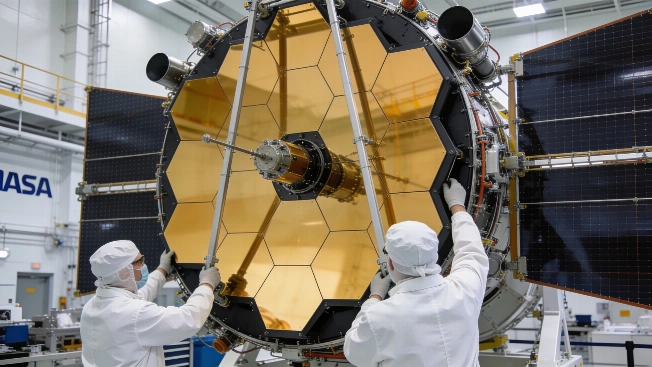
Nancy Grace Roman Space Telescope Prepares for Launch and Legacy
NASA's Nancy Grace Roman Space Telescope, named for the agency's first chief astronomer, is scheduled to launch on August 28, 2026. Its advanced infrared instruments will study dark matter and dark energy, alongside exoplanets.

Nancy Grace Roman's Legacy: The Astronomer Who Shaped NASA's Vision
As NASA prepares to launch the Nancy Grace Roman Space Telescope, the story of its namesake, a pioneering astronomer and the agency's first chief of astronomy, offers understanding into the evolution of space science and the people who shaped it.
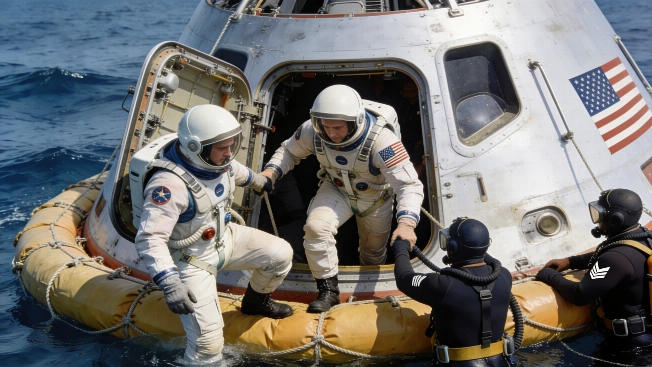
Gemini 5 Mission Sets New Space Endurance Record for NASA in 1965
NASA's Gemini 5 mission showed that astronauts could survive eight days in orbit, providing impressive evidence that future lunar missions were feasible and marking a turning point in human spaceflight duration
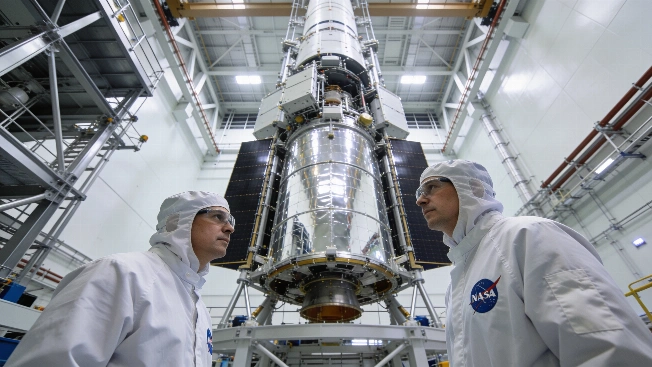
NASA's Roman Space Telescope Set for Launch to Map Distant Cosmos
NASA's Nancy Grace Roman Space Telescope is scheduled to launch from Florida to investigate exoplanets and distant galaxies with a wide-field infrared observatory, while probing dark matter. Its first science images are expected in 2027.
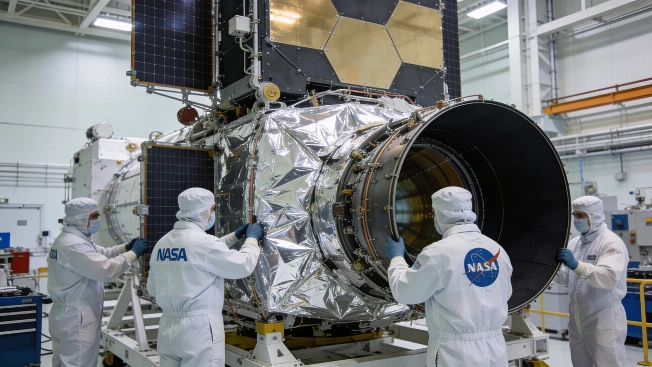
NASA's Roman Space Telescope Nears Launch After Budget Uncertainty
NASA's Nancy Grace Roman Space Telescope is set for launch after nearly two decades of development. It survived the threat of cancellation and major funding cuts to become the agency's next flagship observatory, focused on dark energy and exoplanets while also mapping cosmic structure.
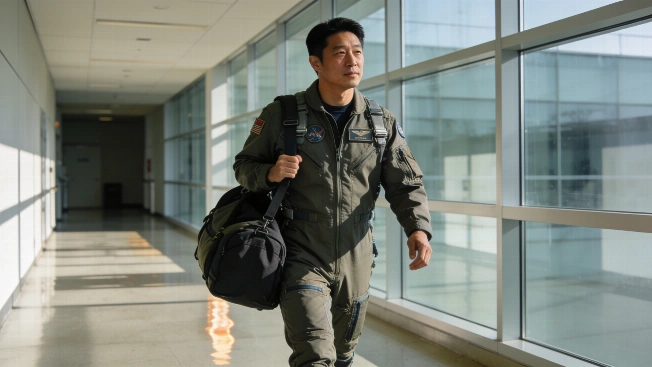
NASA Astronaut Jonny Kim Departs Agency to Resume Naval Aviation Career
NASA astronaut Jonny Kim, a Harvard-trained physician and Navy SEAL, is leaving the agency after nine years and one mission to the International Space Station to return to active duty in naval aviation training.
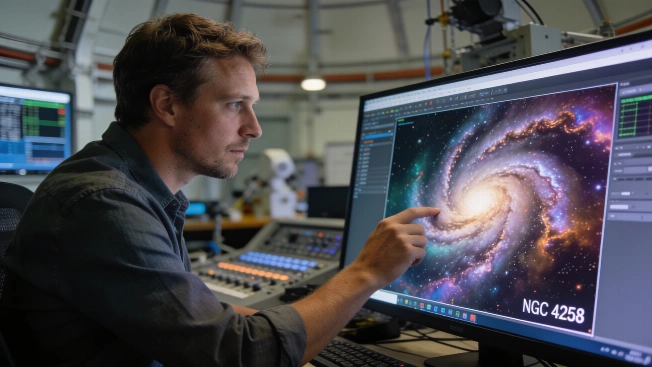
NASA Telescopes Reveal Unusual Extra Arms in Spiral Galaxy NGC 4258
A composite image from NASA's Chandra, Hubble, and James Webb telescopes reveals the spiral galaxy NGC 4258, highlighting two anomalous extra arms shaped by its central supermassive black hole
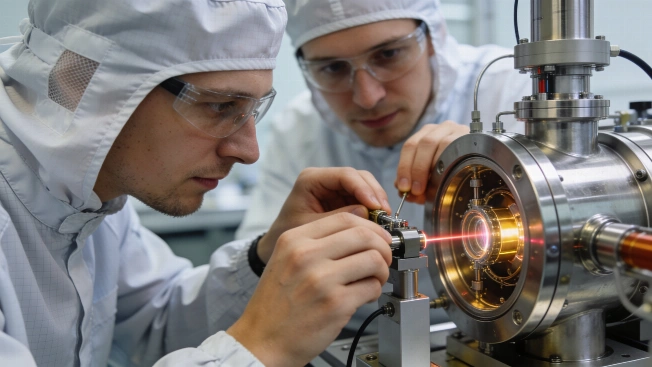
NASA Funds Next-Phase Quantum Gravity Sensor for Space Testing
NASA has awarded Infleqtion a $20 million contract to advance a quantum gravity gradiometer, supporting hardware integration and microgravity testing for future Earth observation from orbit.
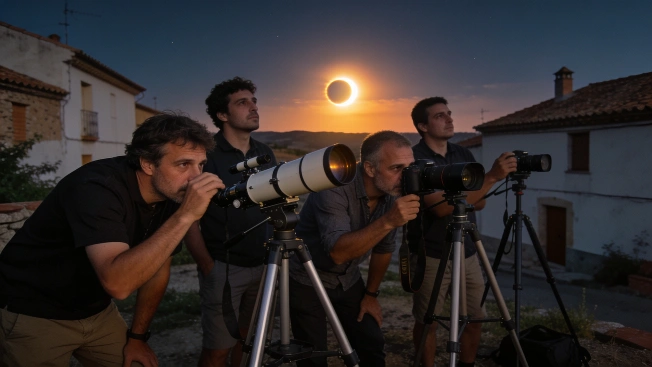
Citizen Scientists Capture Total Solar Eclipse in Spanish Village
A team of citizen scientists and astronomy enthusiasts gathered in Valoria la Buena, Spain, on August 12 to observe and document the total solar eclipse, using telescopes and live data feeds to study the Sun's corona under rare atmospheric conditions.
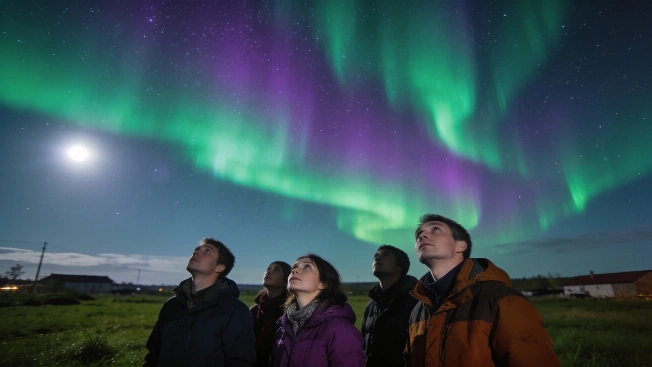
Earth-Facing Sunspot Fires M6.9 Flare and CME Toward Earth
A highly active sunspot has produced an M6.9-class solar flare and launched a coronal mass ejection toward Earth, raising the possibility of geomagnetic disturbances and enhanced auroral activity later this week.
Part 5 of 9