
As NASA prepares to launch the Nancy Grace Roman Space Telescope, the story of its namesake-pioneering astronomer and the agency's first chief of astronomy-offers insight into the evolution of space science and the people who shaped it
As NASA readies the Nancy Grace Roman Space Telescope for launch, attention has turned to the scientist whose name it bears. Nancy Grace Roman, often called the 'mother of Hubble,' played a decisive role in establishing NASA's astronomy program and advancing the agency's capacity to explore the universe. Her influence is visible not only in the missions she helped realize, but also in the generations of scientists inspired by her leadership and vision.
Roman's Path to NASA
Nancy Grace Roman was born in 1925 and developed an early interest in astronomy, a field that offered few opportunities for women at the time. After earning her doctorate in astronomy, she joined NASA in 1959, becoming the agency's first chief of astronomy and the first woman to hold an executive position there. Roman's work was instrumental in defining NASA's approach to space-based astronomy, including the development of large-scale observatories and the prioritization of scientific objectives over purely technological milestones.
Roman's advocacy for space telescopes was central to the eventual realization of the Hubble Space Telescope. She worked to secure funding, coordinate scientific priorities, and navigate the technical and political challenges that accompanied such an ambitious project. Her efforts laid the groundwork for a new era of astronomical observation, enabling discoveries that would have been impossible from ground-based observatories alone.
Personal Encounters and Influence
Roman's impact extended beyond her administrative achievements. At public events, she was known for her approachable demeanor and her ability to connect with both scientists and the public. During the 2017 March for Science in Washington, D.C., Roman was recognized by peers and admirers alike, including figures such as Bill Nye and NASA astronaut Leland Melvin. Observers described moments of genuine warmth and mutual respect as Roman engaged with colleagues, reflecting her status as a role model within the scientific community.
Her presence at such gatherings underscored the importance of representation and mentorship in science. Roman's career demonstrated that leadership in astronomy was not limited by gender or background, and her willingness to share her experiences encouraged others to pursue scientific careers. The legacy of her mentorship is evident in the continued efforts to broaden participation in space science and to recognize the contributions of underrepresented groups.
The Roman Space Telescope Mission
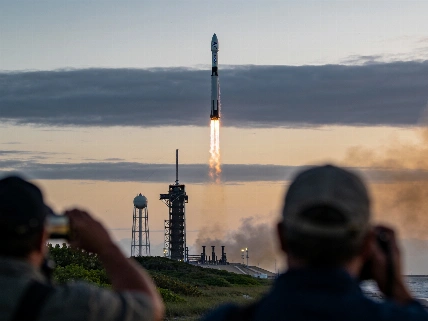
The Nancy Grace Roman Space Telescope, scheduled for launch in August 2026, represents the next major step in NASA's program of space-based astronomical observation. The observatory is designed to investigate dark energy, exoplanets, and the structure of the universe using a 2.4-meter primary mirror and advanced wide-field imaging capabilities. Its instruments will enable surveys of unprecedented scale and sensitivity, complementing the work of the Hubble and James Webb Space Telescopes.
Roman's vision for accessible, high-impact astronomy is reflected in the mission's scientific goals. The telescope will conduct wide-field surveys to map the distribution of galaxies and measure the effects of dark energy on cosmic expansion. It will also employ microlensing techniques to detect exoplanets, expanding the census of planetary systems beyond the reach of previous missions. The Roman Space Telescope's data will be made publicly available, supporting a broad range of research across the astronomical community.
Legacy and Continuing Impact
Roman's influence is not limited to the missions that bear her name. Her approach to scientific leadership-emphasizing collaboration, transparency, and the pursuit of fundamental questions-continues to shape NASA's strategy for space science. The Roman Space Telescope builds on the legacy of earlier observatories, while also addressing new scientific challenges that have emerged from recent discoveries.
Her story also highlights the importance of individual agency in the progress of science. While technological advances and institutional support are essential, the determination and vision of scientists like Roman have often been decisive in overcoming obstacles and realizing ambitious projects. As the Roman Space Telescope prepares for launch, her legacy serves as a reminder of the human dimension behind major scientific achievements.
Roman's contributions are part of a broader tradition of astronomical discovery. For example, recent observations with the Dark Energy Camera have revealed new details about star formation and ancient stellar populations, illustrating how advances in instrumentation continue to expand our understanding of the cosmos. (see how wide-field imaging has transformed studies of star clusters.)
Roman passed away in 2018 at the age of 93, but her influence endures in the missions, discoveries, and scientists she helped inspire. The launch of the Roman Space Telescope will mark not only a technical milestone, but also a tribute to a career that changed the course of space science.
Understanding the significance of the Roman Space Telescope requires some context about how space-based observatories operate. Unlike ground-based telescopes, which are limited by Earth's atmosphere, space telescopes can observe a broader range of wavelengths and achieve higher resolution. The Roman Space Telescope's wide-field instrument will allow astronomers to survey large areas of the sky quickly, enabling statistical studies of cosmic structure and the detection of rare phenomena. By combining high sensitivity with a large field of view, the mission is expected to provide data that will inform models of cosmic evolution and the distribution of matter in the universe.