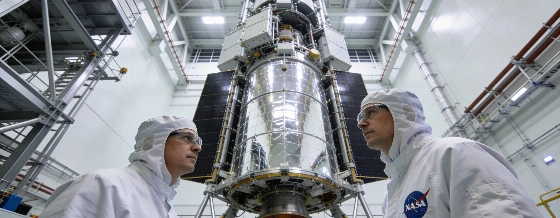
NASA's Nancy Grace Roman Space Telescope is scheduled to launch from Florida, aiming to investigate exoplanets, dark matter, and distant galaxies with a wide-field infrared observatory. Its first science images are not expected until 2027
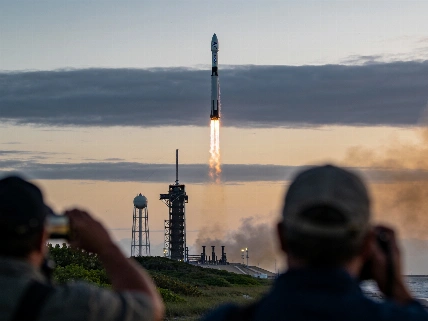
The Nancy Grace Roman Space Telescope, NASA's next major space observatory, is scheduled to launch from Kennedy Space Center in Florida on Sunday, August 30. Riding aboard a SpaceX Falcon Heavy rocket, Roman is designed to address some of the most challenging questions in astrophysics, including the nature of dark matter, the structure of the Milky Way, and the detection of exoplanets beyond our solar system. The mission represents a significant step in the agency's strategy to complement the capabilities of the Hubble and James Webb space telescopes, rather than replace them.
Mission Architecture and Launch Details
Roman's launch is planned for 7:26 a.m. EDT from Launch Complex 39A, with a backup window available the following day if weather delays occur. The spacecraft, standing approximately 12.7 meters tall and weighing around 8,000 kilograms, will be deployed into space a few hours after liftoff. Its destination is the Sun-Earth L2 Lagrange point, about 1.6 million kilometers from Earth, where it will join other major observatories such as JWST and ESA's Gaia and Euclid missions. The primary mission is set for five years, with the possibility of extension if the spacecraft remains healthy.
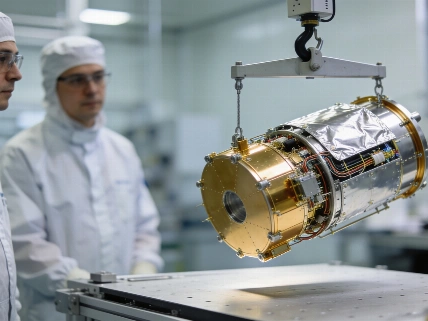
Roman's design features a 2.4-meter primary mirror and two main instruments: the Wide Field Instrument, a 288-megapixel infrared camera with a field of view vastly exceeding Hubble's, and a coronagraph capable of blocking starlight to directly image exoplanets. The observatory will transmit roughly 1.4 terabytes of data to Earth each day, enabling large-scale surveys and targeted studies of cosmic phenomena. The mission's $4.3 billion budget is less than half the cost of JWST, and Roman is launching ahead of its original 2027 schedule after final assembly and testing were completed in December 2025.
Scientific Objectives and Instrumentation
Roman's wide-field infrared imaging will allow astronomers to conduct deep surveys of the universe, mapping the distribution of galaxies and dark matter, and searching for the signatures of dark energy. Its coronagraph will enable direct imaging of exoplanets, a method that complements the transit and radial velocity techniques used by previous missions. By blocking the glare of host stars, Roman can detect fainter planetary companions and study their atmospheres, although planets hidden directly behind their stars will remain inaccessible.
The observatory is expected to identify tens of thousands of new exoplanets, potentially increasing the known population by an order of magnitude. In addition to exoplanet discovery, Roman will contribute to the measurement of cosmic expansion and the mapping of the Milky Way's structure. Its daily data volume and survey speed will support a range of investigations, from the census of distant galaxies to the study of supernovae and black holes. The mission's open data policy ensures that all processed survey data will be made publicly available without proprietary periods.
Commissioning Timeline and First Images
After launch, Roman will require several weeks to reach its operational orbit at L2. Once in position, the spacecraft will undergo a commissioning phase lasting approximately 90 days, during which its instruments will be powered up, calibrated, and tested. Only after this period will the telescope begin routine science operations. NASA has indicated that the first science-quality images are likely to be released in early 2027, following the precedent set by JWST, which took about seven months from launch to deliver its first full-color images.
Weather remains a potential risk for the scheduled launch, with a 50% chance of thunderstorms forecast for August 30. If necessary, the backup window on August 31 offers a reduced risk. The launch and subsequent milestones will be covered by live streams and updates, and the mission's progress will be closely watched by the astronomical community. For context on how launch vehicle transitions can affect mission planning, see this analysis of SpaceX's evolving rocket fleet: SpaceX's plans to retire Falcon 9 as Starship nears operational status.
What Sets Roman Apart
Roman's combination of wide-field infrared imaging and advanced coronagraphy distinguishes it from previous space telescopes. Its ability to survey large areas of the sky at high resolution will enable statistical studies of galaxy evolution, dark matter distribution, and the frequency of planetary systems. The mission's direct imaging of exoplanets, while technically challenging, offers a new window into planetary atmospheres and system architectures. Roman's data will also support investigations into the so-called "cosmological crisis" over the universe's expansion rate, providing independent measurements that may help resolve current tensions between different observational methods.
As with any new observatory, Roman's full scientific impact will depend on its performance in space and the creativity of the astronomical community in exploiting its capabilities. The mission's open data approach is intended to maximize scientific return and foster collaboration across disciplines. While Roman is not expected to replace Hubble or JWST, its unique combination of survey power and direct imaging will fill critical gaps in our understanding of the cosmos.
Spacecraft commissioning is a critical phase for any space observatory. After launch and deployment, the spacecraft must reach its intended orbit and gradually activate its systems. Commissioning involves powering up instruments, calibrating detectors, aligning optics, and verifying that all subsystems function as intended. Only after successful commissioning can routine science operations begin. This process ensures that the data collected are reliable and that the observatory can achieve its scientific objectives. Delays or anomalies during commissioning can affect the timeline for first light and the release of initial science results, as seen with previous missions such as JWST.