
Apollo Program
14 reportsFor readers assessing Apollo Program, the relevant threads are navigation and communications; returned images and measurements; and lunar mission architecture. The account anchors lunar mission architecture in approved mission documents and uses engineering milestones to test whether the pattern extends beyond one dataset; uncertainty persists because proposed schedules and capabilities may change during development.
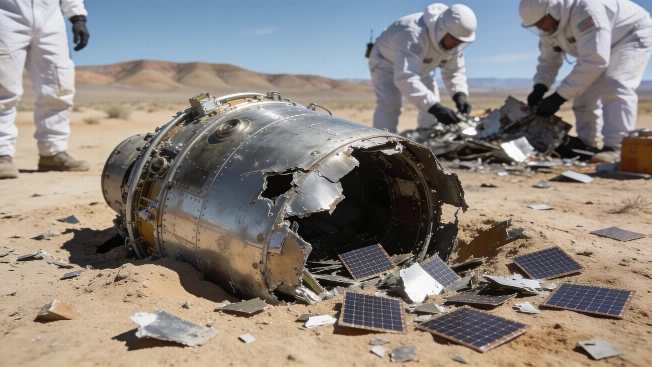
Genesis Sample Capsule Carash Exposed a Critical Spacecraft Design Flaw
NASA's Genesis mission was meant to return solar wind samples from deep space but ended with its capsule shattered in the Utah desert after a parachute system failure. The mission's outcome forced a reexamination of spacecraft safety and sample recovery methods
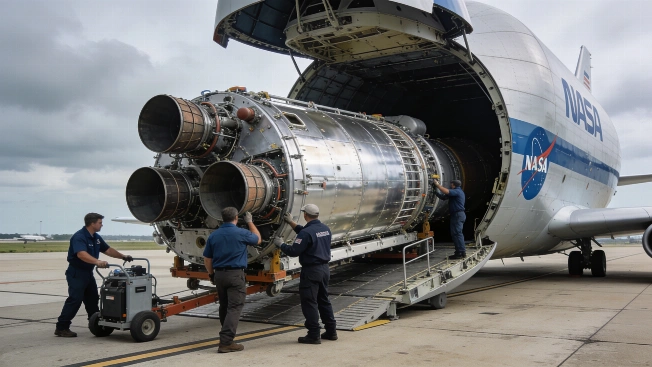
NASA's Super Guppy Transformed Space Hardware Transport in 1965
NASA's Super Guppy cargo aircraft completed its first test flight in 1965, enabling the agency to move oversized rocket stages and spacecraft components across the United States for missions including Apollo and Artemis
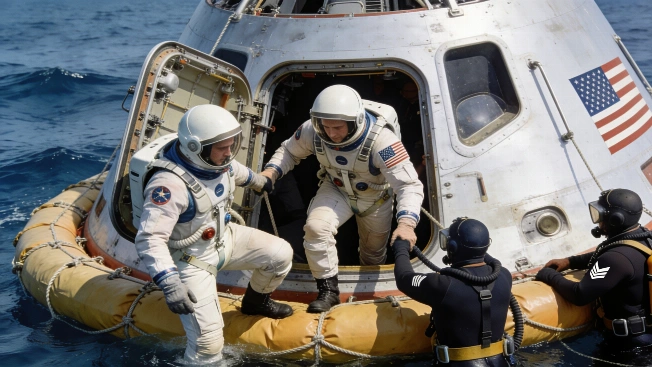
Gemini 5 Mission Sets New Space Endurance Record for NASA in 1965
NASA's Gemini 5 mission demonstrated that astronauts could survive eight days in orbit, providing crucial evidence for the feasibility of future lunar missions and marking a turning point in human spaceflight duration
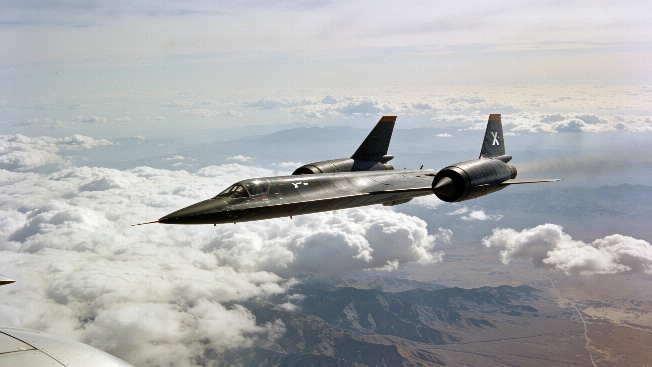
X-15 Rocket Plane Sets 1963 Altitude Record Above Kármán Line
On August 22, 1963, the X-15 rocket plane piloted by Joe Walker reached an altitude exceeding 108 kilometers, providing rare data on hypersonic flight and spacecraft reusability during a pivotal era for space research
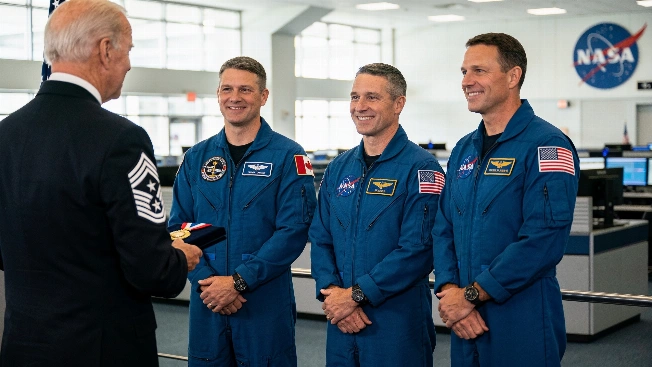
NASA Artemis II Astronauts to Receive Congressional Space Medal of Honor
NASA's Artemis II crew, who completed a lunar flyby in April, will be awarded the Congressional Space Medal of Honor at Johnson Space Center, recognizing their role in advancing human spaceflight beyond low Earth orbit
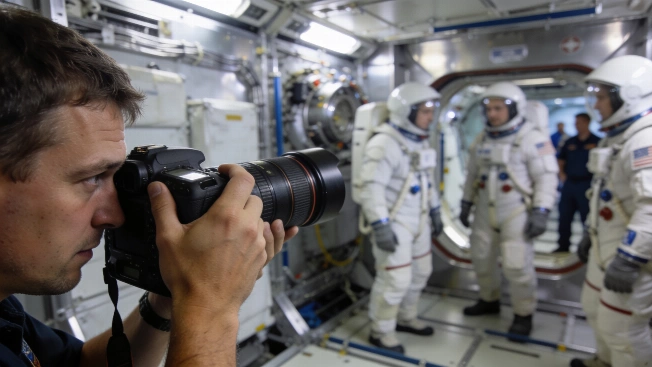
NASA Johnson Photographers Document Human Spaceflight Milestones
NASA's Johnson Space Center photography team has recorded decades of astronaut training, mission operations, and engineering tests, providing a visual record of human spaceflight and the people behind major missions using a range of imaging techniques
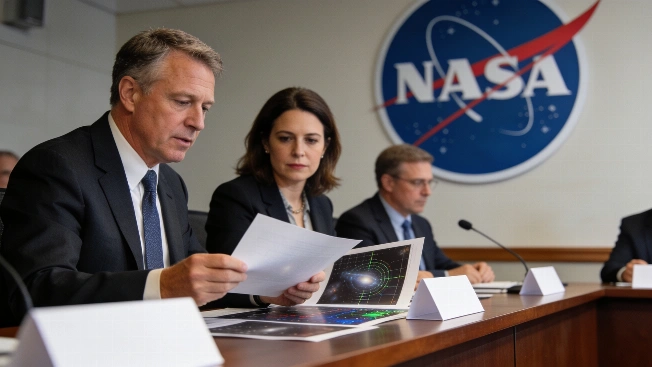
Pentagon's UAP Data Releases Mark Shift in Official Transparency
Recent Pentagon releases of unidentified anomalous phenomena (UAP) files, supported by NASA and advisory experts, signal a new phase in government transparency and data sharing on unexplained aerial observations
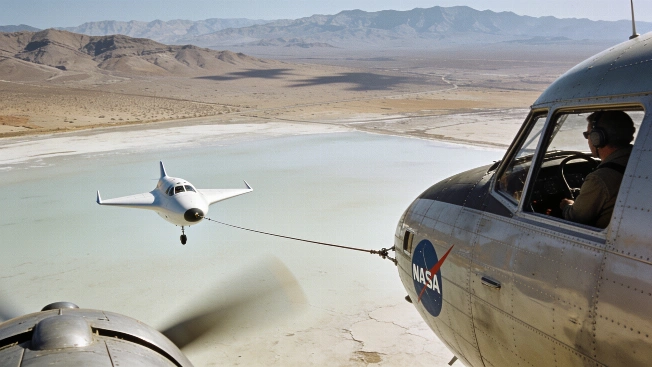
NASA's M2-F1 Lifting Body Demonstrates Controlled Glide Landing in 1963
NASA's M2-F1 prototype, a wingless lifting body aircraft, completed its first unpowered glide flight on August 16, 1963, providing early evidence that spacecraft could return to Earth with controlled landings rather than ballistic descent
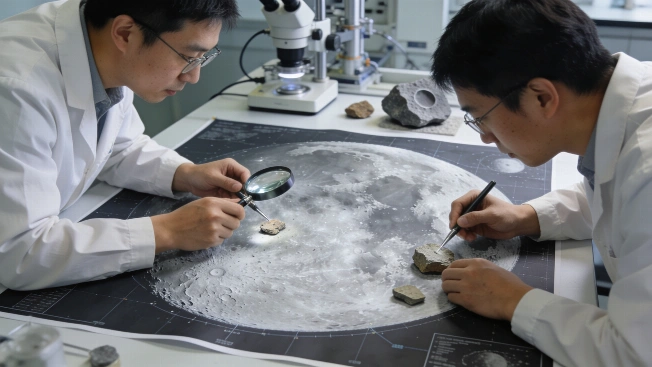
China Unveils Detailed Lunar Map and New Geologic Timeline
Chinese researchers have released a new 1:5 million scale map of the Moon, updating lunar geologic eras and far side data using recent sample-return missions and reprocessed spectral analysis
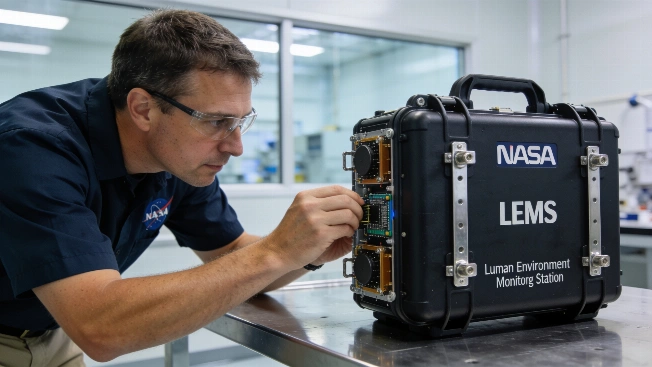
NASA Prepares LEMS Seismic Station for Artemis Lunar Surface Deployment
NASA engineers have completed the Lunar Environment Monitoring Station (LEMS), a compact seismic instrument suite designed for long-term deployment by Artemis astronauts near the Moon's south pole, aiming to monitor moonquakes and meteorite impacts.
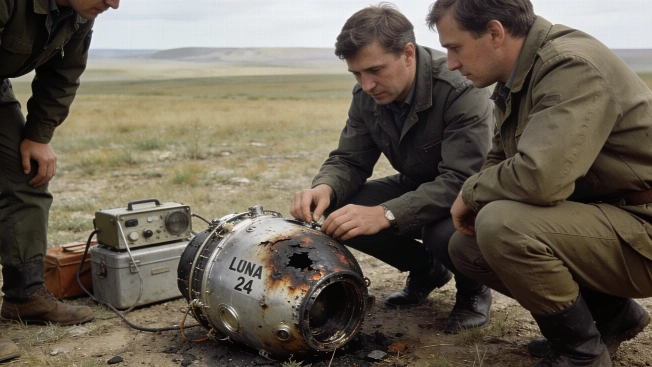
Luna 24's 1976 Moon Sample Return Marked End of Soviet Lunar Missions
On August 9, 1976, the Soviet Luna 24 probe launched from Baikonur, aiming to collect and return lunar soil. The mission's samples revealed traces of water and closed a chapter in robotic Moon exploration.
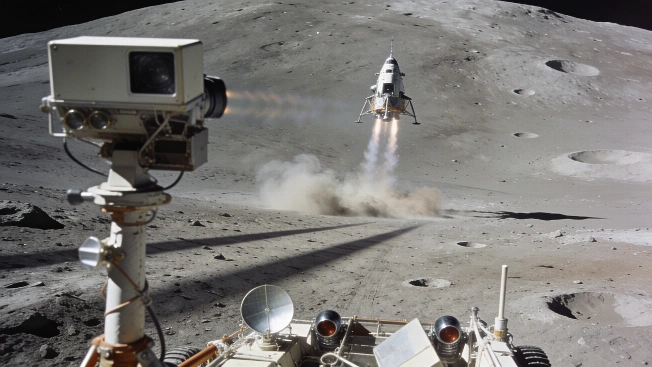
Apollo 15's Moon Liftoff Became Television's First From Another World
On Aug. 2, 1971, Apollo 15 transmitted the first live television view of a spacecraft leaving the moon, using a rover-mounted camera that revealed both the mission's ingenuity and its limits
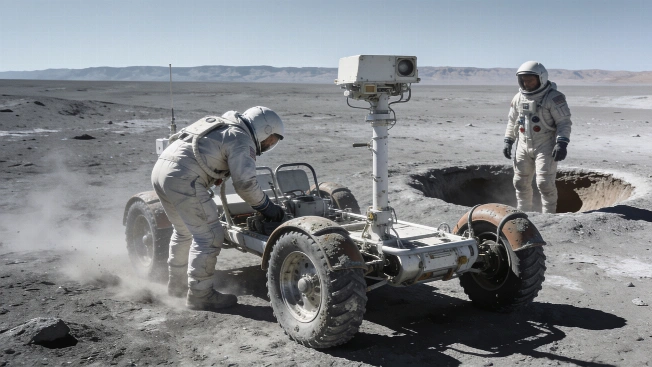
Apollo 15's Lunar Rover Turned Moonwalking Into Exploration
Apollo 15's Lunar Roving Vehicle gave astronauts their first way to travel extensively across the moon's surface, extending scientific exploration beyond the immediate landing site in July 1971

NASA Moon Tree Planted in Manhattan Grew from Lunar-Orbiting Seed
A young American sweet gum tree in Madison Square Park was grown from a seed that orbited the Moon aboard NASA's Artemis I mission, highlighting the intersection of space exploration and urban ecology