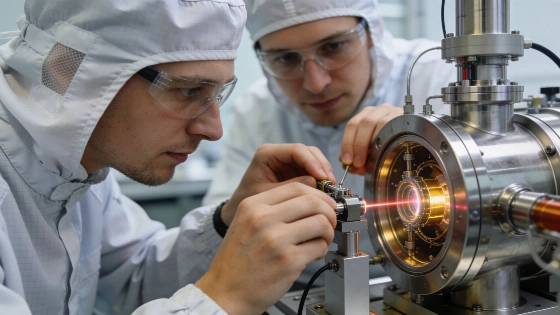
NASA has awarded Infleqtion a $20 million contract to advance a quantum gravity gradiometer, supporting hardware integration and microgravity testing for future Earth observation from orbit
NASA has awarded Infleqtion a $20 million follow-on contract to accelerate the Quantum Gravity Gradiometer Pathfinder (QGGPf) mission, a project led by NASA's Jet Propulsion Laboratory. This funding brings total NASA investment in the program to $40 million and supports the transition from laboratory development to integrated hardware and subsystem fabrication, with a focus on preparing the sensor for space-relevant conditions.
Neutral-Atom Sensing Platform
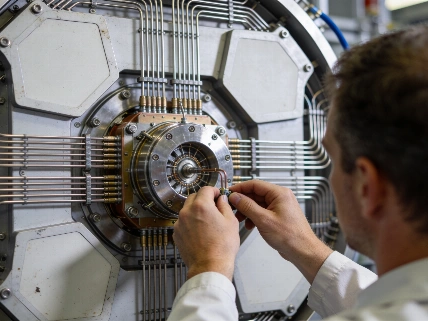
The QGGPf mission is built around a neutral-atom quantum sensor that uses atom interferometry to detect minute variations in Earth's gravitational field. Infleqtion is tasked with designing and assembling the core atomic physics package, which includes vacuum chambers, laser systems, and control electronics engineered to cool rubidium atoms to temperatures near the pico-Kelvin regime. This extreme cooling is necessary to achieve the coherence and sensitivity required for quantum-enhanced gravity measurements in space.
Microgravity Testing and Engineering Challenges
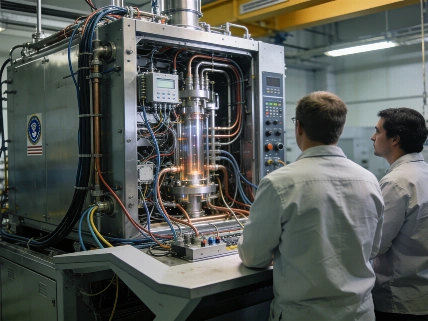
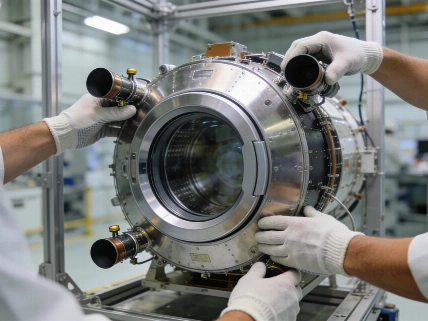
As part of the contract extension, Infleqtion will construct an Engineering Development Unit (EDU) that integrates the sensor head and flight electronics. The EDU will undergo drop-tower experiments at the Einstein Elevator facility in Hannover, Germany, simulating microgravity conditions to evaluate the sensor's performance in an environment analogous to low-Earth orbit. These tests are designed to validate the quantum measurement protocol and identify sources of noise or drift that could limit sensitivity during actual spaceflight.
Previous quantum sensing missions, such as NASA's Cold Atom Lab on the International Space Station and the GRACE and GRACE-FO satellite platforms, have demonstrated the value of precision gravity mapping. However, the QGGPf aims to push sensitivity further by leveraging quantum interference effects in ultracold atoms, potentially enabling higher-resolution mapping of underground water, ice sheet dynamics, and subsurface geological structures.
Program Timeline and Roadmap
The current funding supports engineering and ground testing through 2027, with NASA and Infleqtion targeting completion of full instrument hardware within three years. A low-Earth orbit flight demonstration is planned for 2030, contingent on successful ground-based validation and integration. The QGGPf is positioned as a key step in NASA's broader quantum sensing strategy, aiming to transition neutral-atom instruments from laboratory and ISS-based experiments to dedicated satellite constellations for continuous Earth observation.
For context on the broader quantum sensing landscape, the National Science Foundation has also invested in next-generation quantum sensor research, as seen in its support for biomedical quantum sensing initiatives described in this recent coverage.
Technical and Engineering Limitations
While the QGGPf project represents a significant advance in quantum sensor engineering, several technical challenges remain. Achieving stable operation of ultracold atom systems in space requires robust thermal management, vibration isolation, and long-term calibration strategies. The sensitivity of atom interferometers to environmental noise, including magnetic fields and mechanical disturbances, must be addressed to ensure reliable gravity gradient measurements. Additionally, translating laboratory-scale prototypes into flight-ready hardware involves overcoming constraints in mass, power consumption, and autonomous operation.
Independent verification of the sensor's performance in orbit will be essential before quantum gravity gradiometers can be deployed as operational Earth observation tools. The current roadmap is ambitious, and the transition from engineering development to space deployment will depend on the outcomes of ground-based microgravity testing and system integration.
Quantum sensing refers to the use of quantum states-such as superposition and entanglement-to enhance the precision of measurements beyond what is possible with classical sensors. In atom interferometry, clouds of ultracold atoms are manipulated with lasers to create interference patterns that are exquisitely sensitive to gravitational gradients. The coherence of these quantum states, and the ability to control environmental noise, determine the ultimate sensitivity and utility of the sensor. While quantum sensors have demonstrated laboratory advantages, translating these gains to robust, field-deployable systems remains a central engineering challenge for the field.