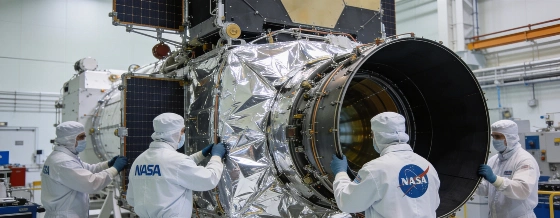
NASA's Nancy Grace Roman Space Telescope is set for launch after nearly two decades of development, overcoming a threatened cancellation and major funding cuts to become the agency's next flagship observatory for dark energy, exoplanets, and cosmic structure
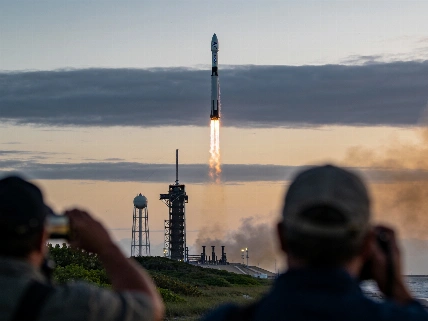
NASA's Nancy Grace Roman Space Telescope is poised for launch, marking the culmination of almost twenty years of engineering, assembly, and testing. The observatory, designed to investigate dark energy, dark matter, and exoplanets, faced significant risk of cancellation during the previous year's U.S. federal budget cycle. Despite these challenges, the mission is now scheduled to lift off from Kennedy Space Center in Florida, carried by a SpaceX Falcon Heavy rocket, and will travel to the Sun-Earth Lagrange Point 2 (L2), a gravitationally stable region approximately 1.5 million kilometers from Earth.
Mission Objectives and Instrumentation
The Roman Space Telescope is equipped to conduct wide-field imaging and spectroscopy in visible and near-infrared wavelengths. Its primary scientific goals include mapping the distribution of dark matter through gravitational lensing, measuring the expansion history of the universe to constrain dark energy models, and surveying for exoplanets using microlensing techniques. The observatory's field of view is about 50 times larger than that of the James Webb Space Telescope, enabling large-scale surveys of galaxies and cosmic structure.
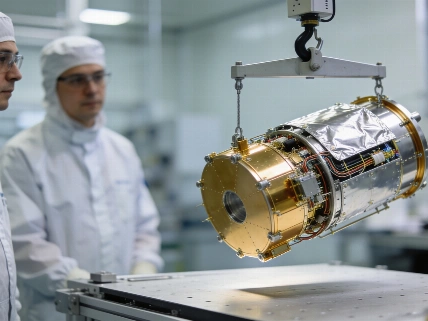
Roman's main instrument, the Wide Field Instrument, will capture high-resolution images and spectra across a broad swath of sky, while a coronagraph technology demonstration will test advanced methods for directly imaging exoplanets around nearby stars. The mission's design allows for both targeted investigations and statistical surveys, supporting a range of astrophysical research from stellar populations to the search for habitable worlds.
Budget Threats and Accelerated Timeline
In 2025, a leaked U.S. presidential budget proposal for fiscal year 2026 called for a 24% reduction in NASA's overall funding, with science programs facing cuts of up to 50%. The proposal initially allocated no funding for new space telescopes beyond Hubble and the James Webb Space Telescope, placing Roman's future in jeopardy just as the spacecraft neared completion. The uncertainty led to staff departures and forced the mission team to accelerate assembly and testing, working extended shifts to maximize progress before any potential funding shortfall could halt operations.
Congress ultimately rejected the most severe cuts, restoring NASA's science budget and allowing Roman to proceed. To avoid renewed risk in future budget cycles, mission management advanced the launch schedule by several months, aiming to complete integration and testing within the current fiscal year. The telescope was declared complete in April, eight months ahead of its original schedule and under budget, a rare outcome for a flagship-class observatory.
Launch and Early Mission Milestones
Roman is scheduled to launch at 7:27 a.m. EDT (11:27 UTC) on August 30, with the Falcon Heavy providing the necessary energy to send the spacecraft directly toward L2. After separation from the rocket, Roman will spend about 30 days traveling to its operational orbit, performing trajectory corrections and system checkouts along the way. Key milestones include the deployment of solar arrays, activation of communication systems, and a critical mid-course maneuver to ensure precise arrival at L2.
Once at L2, Roman will undergo a commissioning phase to calibrate its instruments and verify performance. Only after successful commissioning will the observatory begin routine science operations, collecting data for its core cosmology, exoplanet, and astrophysics programs. The mission is designed for a minimum five-year primary science phase, with the possibility of extension depending on spacecraft health and funding.
Scientific and Policy Context
The Roman Space Telescope's development highlights the vulnerability of large-scale scientific missions to shifting political priorities and budgetary constraints. The mission's survival depended on both technical progress and advocacy within the scientific community and Congress. The episode echoes recent developments in commercial launch policy, such as SpaceX's transition from Falcon 9 to Starship, which has reshaped the landscape for U.S. space missions and is discussed in detail in Science Report's coverage of SpaceX's evolving launch strategy.
Roman's successful completion and imminent launch represent a significant milestone for NASA's astrophysics program, providing a new platform for wide-field surveys and precision cosmology. However, the mission's history underscores the ongoing tension between scientific ambition and the realities of federal funding cycles, a dynamic likely to influence future observatories and space science initiatives.
Understanding the Sun-Earth Lagrange Point 2 (L2) is essential for appreciating Roman's operational plan. L2 is a gravitationally stable location on the far side of Earth from the Sun, about 1.5 million kilometers away. Spacecraft at L2 can maintain a fixed position relative to Earth and the Sun, minimizing fuel use for station-keeping and providing a thermally stable environment with continuous solar power and unobstructed views of deep space. This makes L2 an ideal site for sensitive astronomical observatories, including Roman, the James Webb Space Telescope, and other planned missions seeking to avoid interference from Earth's atmosphere and thermal emissions.