NASA's Nancy Grace Roman Space Telescope, named for the agency's first chief astronomer, is nearing launch. The mission aims to investigate dark matter, dark energy, and exoplanets with advanced infrared instruments
The Nancy Grace Roman Space Telescope, NASA's next flagship observatory, is approaching its scheduled launch, marking a significant milestone in space-based astronomy. Designed to address some of the most challenging questions in cosmology and exoplanet science, the mission honors the pioneering astronomer whose vision shaped modern space observation.
Nancy Grace Roman's Scientific Impact
Nancy Grace Roman was appointed as NASA's first chief astronomer in 1959, only a year after the agency's founding. She was instrumental in establishing NASA's space astronomy program, laying the foundation for missions that would transform our understanding of the universe. Roman's leadership was central to the development of the Hubble Space Telescope, earning her the title "mother of Hubble." Her advocacy for large-scale space observatories helped secure congressional support for projects that were initially met with skepticism due to their technical and financial demands.
Roman's early interest in astronomy was shaped by her parents-her mother, a music teacher, and her father, a geophysicist. By age 11, she had formed an astronomy club and was determined to pursue a scientific career, despite the limited opportunities for women in the field at the time. She attended Swarthmore College and later completed graduate studies at the University of Chicago, where she became the first woman on the academic staff at Yerkes Observatory.
Building NASA's Astronomy Program
After academic appointments and research at the U.S. Naval Research Laboratory, Roman joined NASA to create its first astronomy program. Her responsibilities extended from recruiting astronomers and collaborating with engineers to navigating the complexities of federal funding and policy. Roman's approach involved direct engagement with the astronomical community to align NASA's mission objectives with the scientific priorities of researchers nationwide.
During her tenure, Roman oversaw the planning and execution of early space-based observatories, advocating for the scientific value of missions even as crewed spaceflight dominated public attention. She recognized the importance of political strategy in advancing scientific goals, balancing technical requirements with the realities of agency and congressional decision-making. Her efforts ensured that astronomy remained a core component of NASA's mission portfolio.
From Hubble to Roman: A Legacy in Space Telescopes
Roman's most enduring legacy is her role in making the Hubble Space Telescope a reality. The concept of a large space telescope had circulated since the 1940s, but it was Roman's persistent advocacy and organizational skill that brought the project to fruition. She coordinated efforts across NASA and the broader scientific community, presenting the case for Hubble to Congress and securing the necessary funding. Hubble's launch in 1990 revolutionized astronomy, providing high-resolution images and data that reshaped our understanding of cosmic evolution and structure.
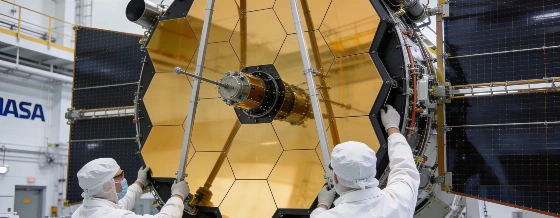
The Nancy Grace Roman Space Telescope is designed to build on this legacy. Scheduled for launch in August 2026, the observatory will carry a 2.4-meter primary mirror and advanced infrared detectors. Its wide-field instrument will enable large-scale surveys of dark matter, dark energy, and exoplanets, complementing the capabilities of Hubble and the James Webb Space Telescope. The mission's scientific objectives include mapping the distribution of galaxies, measuring the expansion history of the universe, and detecting planets around distant stars using gravitational microlensing.
Roman's influence on space science is reflected not only in the missions she helped realize but also in the institutional structures she established. Her work continues to shape the priorities and methods of space-based astronomy, as seen in the ongoing development of new observatories and instruments. For context on how new telescopes are reshaping our view of the cosmos, see this report on recent findings from the James Webb Space Telescope.
Scientific Goals and Mission Status
The Roman Space Telescope's primary science objectives focus on three areas: probing the nature of dark energy, mapping the distribution of dark matter, and conducting a census of exoplanets. Its wide-field instrument will survey large regions of the sky with high sensitivity in the near-infrared, enabling precise measurements of cosmic acceleration and the large-scale structure of the universe. The mission will also employ a coronagraph to directly image exoplanets and circumstellar disks, testing advanced starlight suppression technologies.
As of mid-2026, the spacecraft has completed integration and environmental testing. Launch is scheduled for August 28, 2026, aboard a commercial heavy-lift rocket from Cape Canaveral. Following deployment, the observatory will undergo a commissioning phase before beginning science operations. The mission is planned for a minimum of five years, with the potential for extension depending on instrument performance and available funding.
Roman's legacy is evident in the mission's collaborative approach, drawing on lessons from previous observatories and incorporating input from the international astronomical community. The telescope's data will be made publicly available, supporting a wide range of research from cosmology to planetary science.
The Roman Space Telescope's launch represents a convergence of decades of scientific ambition, technical innovation, and institutional commitment. Its success will depend not only on engineering and instrumentation but also on the continued engagement of the global research community.
Understanding the significance of the Roman Space Telescope requires familiarity with how space-based observatories operate. Unlike ground-based telescopes, which are limited by atmospheric distortion and absorption, space telescopes can observe a broader range of wavelengths with higher sensitivity and resolution. The Roman telescope's wide-field infrared imaging will allow astronomers to conduct deep surveys of the universe, mapping the distribution of galaxies and measuring cosmic expansion with unprecedented precision. These capabilities are essential for testing models of dark energy and dark matter, as well as for discovering and characterizing exoplanets beyond the reach of previous missions.