
arXiv
50 reportsThe record associated with arXiv is clarified through kept accessible, submission screening, and version history. For version history, the primary record comes from independent replication, with manuscript versions providing a separate test; the result is bounded by the possibility that a posted manuscript can change substantially before formal publication.

LuGo Cuts Quantum CFD Gate Counts by More Than 95 Percent
ORNL's LuGo framework moves heavy initialization onto Frontier before quantum state mapping and reduces a fluid-dynamics circuit from about 2 million gates to 91,000 across several hardware platforms
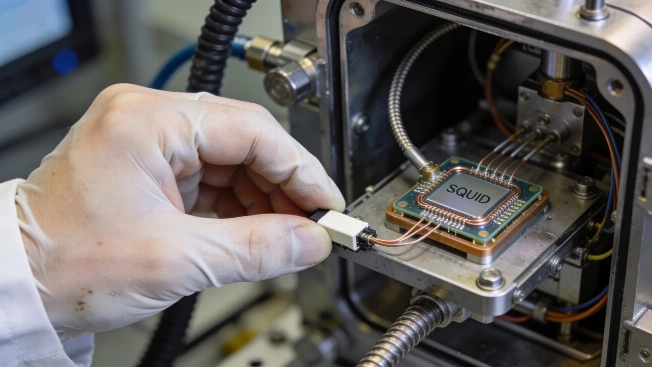
DC-Biased SQUID Stabilizes Multi-Photon Cat Qubits
Alice & Bob and ENS Lyon used a microvolt-scale DC-biased SQUID to control photon conversion between superconducting resonators and demonstrate multi-photon dissipation for cat-qubit stabilization.
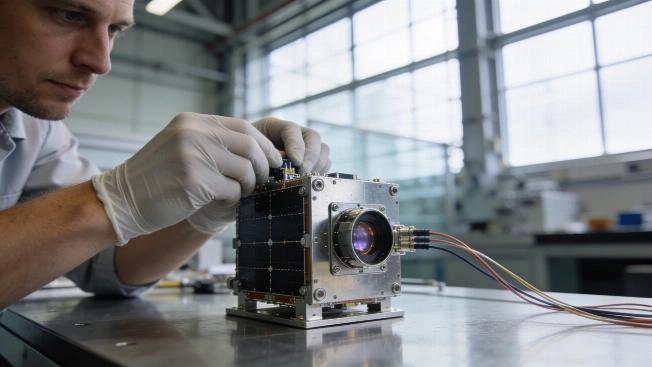
Quantum Photonic Processor Survives Its First Orbit Test
A University of Vienna payload has demonstrated two-photon interference and programmable matrix execution in orbit, showing that integrated photonic quantum hardware can operate beyond the laboratory.
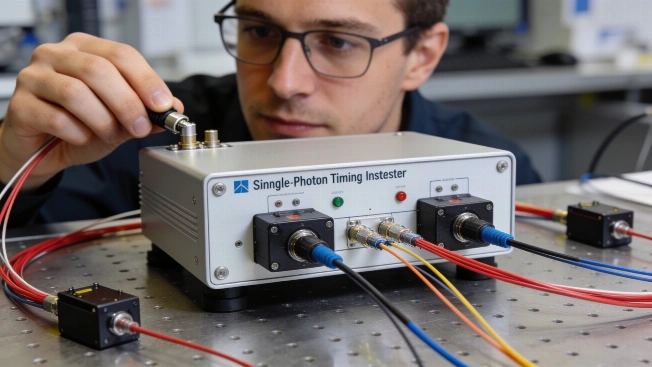
Quantum Effects 2026 Awards Four Routes Toward Useful Quantum Hardware
Quantum Effects 2026 has recognized four application-focused projects spanning quantum annealing hardware, open-source software, atomic magnetometry and photon timing for networked QKD, with the winners set for public presentation in Stuttgart on 6-7 October 2026.

IonQ QCBM Beats Classical Radar Change Detection Baselines
IonQ reports that a 20-qubit trapped-ion quantum generative model improved radar change detection on a high-resolution airfield dataset while matching classical methods on volcanic InSAR imagery
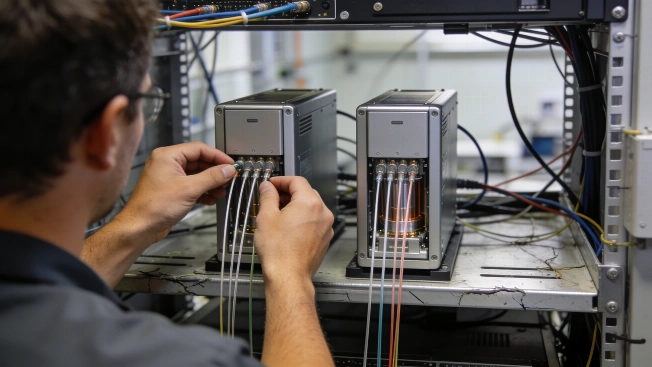
memQ Releases Compiler for Heterogeneous Quantum Networks
memQ has released an open-source compiler that converts monolithic quantum circuits into network-aware execution graphs and models entanglement costs across heterogeneous QPUs

IonQ Hardware Tests Quantum Optimization for Gas Networks
Classiq and Israel Natural Gas Lines used hybrid quantum-classical optimization to search gas pipeline pressure settings. IonQ Forte-1 produced physically valid candidates close to the classical optimum, but the feasibility test did not demonstrate quantum advantage.
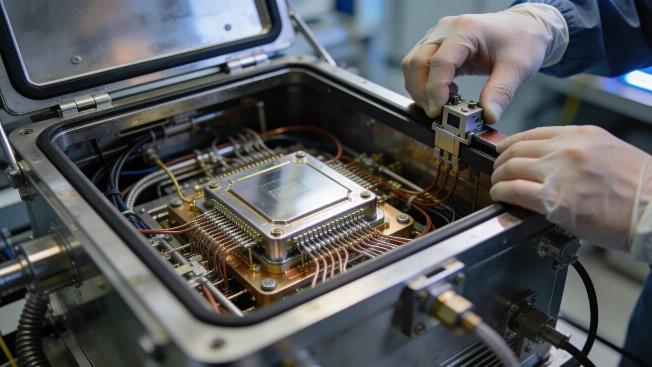
Q-CTRL Outperforms IBM Error Suppression on 156-Qubit Heron
An arXiv benchmark on IBM's 156-qubit Heron processor finds Q-CTRL led exact-output sampling while Qedma delivered the lowest estimator error at a much higher QPU time cost
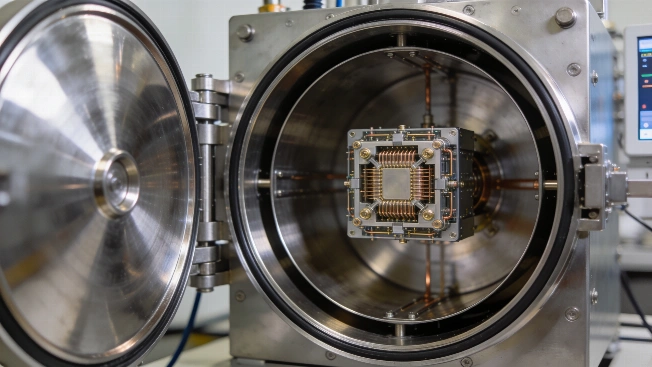
Q-CTRL Executes a 100-Qubit Quantum Fourier Transform
Q-CTRL has run a functional Quantum Fourier Transform on up to 100 physical qubits in an IBM Heron R3 processor while testing a compilation method designed to limit routing and noise.
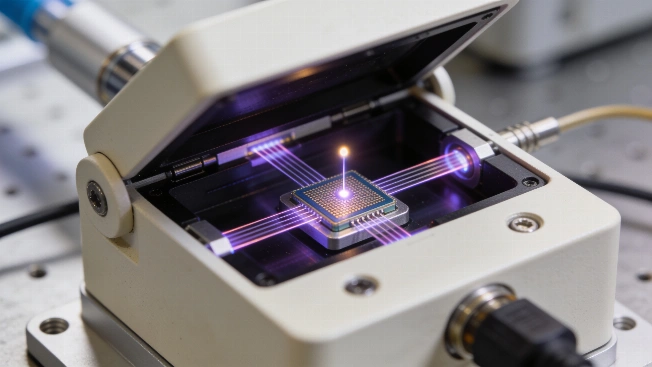
Standing Wave Cooling Brings Trapped Ions Near Ground State
Cornell researchers used a 397 nm standing wave on a fabricated ion-trap chip to cool a single 40Ca+ ion near its motional ground state in 150 microseconds
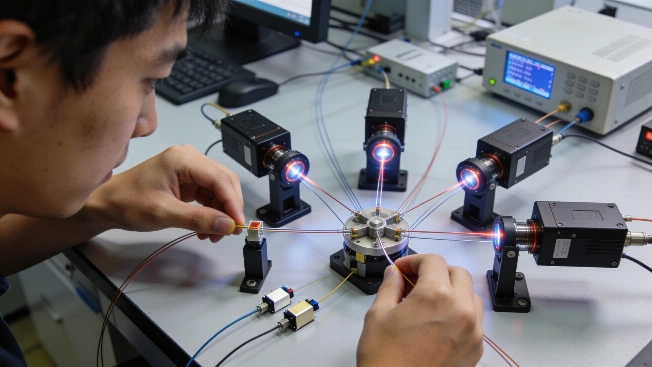
Nanjing Team Brings Asynchronous Quantum Conferencing to 59.6 dB Loss
Nanjing University has demonstrated a three-user measurement-device-independent quantum conferencing network that retains O(η) loss scaling and uses timestamped event pairing and software phase correction instead of global laser locking.
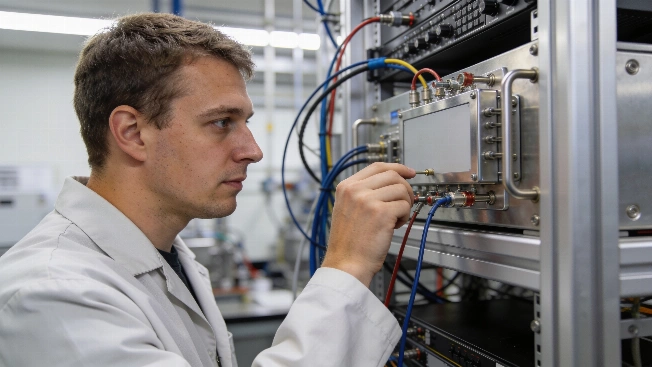
Microsoft Builds Maryland Hub for Quantum Hardware Verification
Microsoft has opened a 15,000-square-foot Maryland center where DARPA can physically test Majorana 2 and research partners can develop quantum hardware, control systems, and software-without yet establishing a useful fault-tolerant machine.
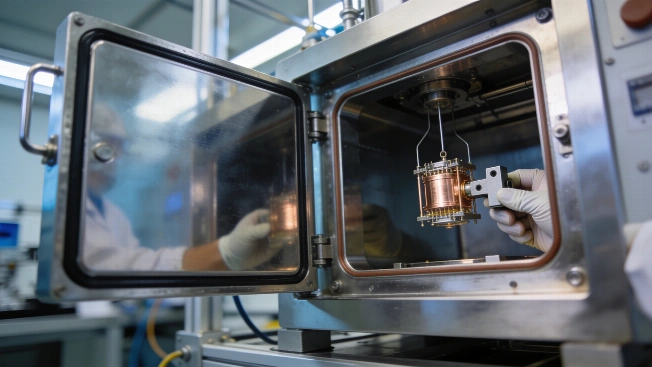
IBM Hybrid Error Mitigation Cuts Quantum Sampling Overhead 63-Fold
IBM researchers tested a hybrid protocol on a 27-qubit superconducting processor and recovered Ising-model magnetization while reducing inferred error-mitigation sampling overhead by up to 63-fold
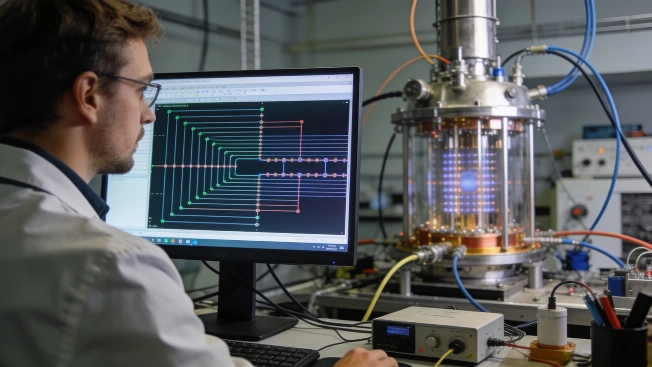
Erasure Noise Simulator Targets Quantum Error Mitigation in Qiskit Circuits
Oxford Quantum Circuits has launched erado, a Python library that simulates erasure noise and post-selection in Qiskit circuits. The tool enables researchers to probe error mitigation strategies before running algorithms on superconducting quantum hardware.
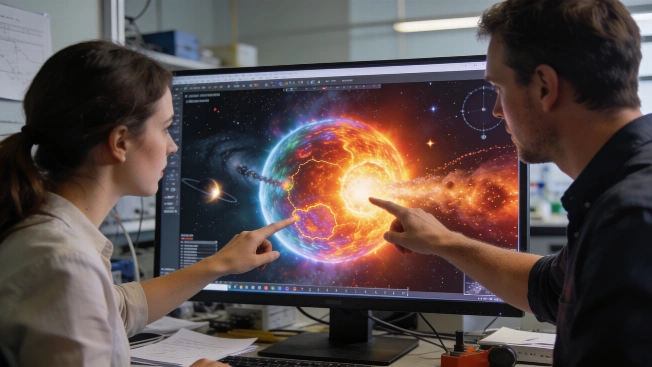
Vampire white dwarfs can collapse into neutron stars under precise conditions
Researchers have modeled how certain white dwarfs feeding on companion stars can collapse into neutron stars if their mass and accretion rate fall within a narrow range, revealing a rare but physically distinct pathway for stellar evolution.
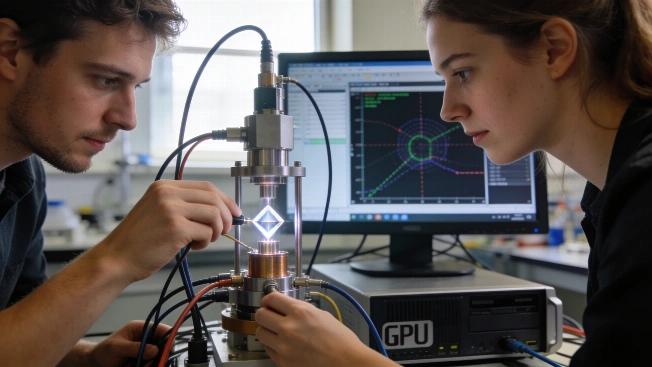
GPU-Accelerated Digital Twin Maps Quantum Sensor Error Sources
A team led by MITRE has developed a GPU-accelerated simulation tool that pinpoints how different physical mechanisms limit sensitivity, accuracy, and robustness in quantum sensors.

Researchers suggest searching the Moon for alien technology fragments
A new study proposes that tiny fragments of ancient alien technology might be preserved in the Moon's surface. The authors outline how future lunar samples and advanced analysis could help search for these microscopic technosignatures.

High Energy Photon From Distant Gamma Ray Burst Challenges Physics Limits
A photon with record-breaking energy from the gamma ray burst GRB 221009A reached Earth despite theoretical barriers. New analysis suggests a possible explanation involving axion-like particles and Lorentz invariance violation
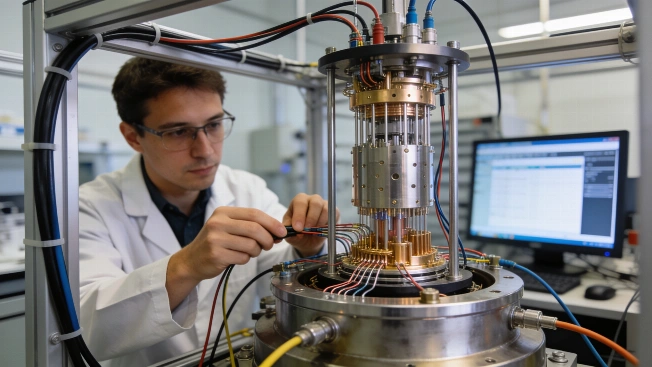
Quantum Preconditioning Cuts Classical Solver Time by Orders of Magnitude
Rigetti Computing and Purdue University have experimentally shown that quantum-derived correlation matrices can accelerate classical mixed-integer programming solvers, reaching near-optimal solutions for hard-constrained combinatorial problems up to 100 times faster
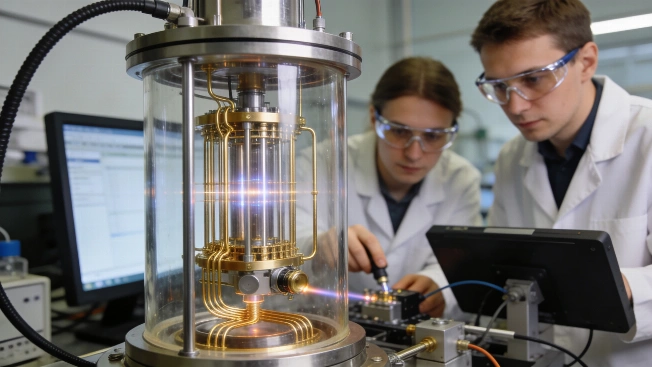
IonQ, NVIDIA, and qBraid Cut Quantum Simulation Errors by Over Half
A new collaboration between IonQ, NVIDIA, and qBraid demonstrates a 54% reduction in logical error rates for deep Trotterized quantum chemistry simulations using trapped-ion hardware and active mid-circuit error detection

Cloud 9 Galaxy May Be the Closest Starless Galaxy Candidate Yet
Astronomers using the Gran Telescopio Canarias and Hubble Space Telescope have identified Cloud 9, a galaxy near Messier 94, as a leading candidate for a starless galaxy dominated by dark matter and gas
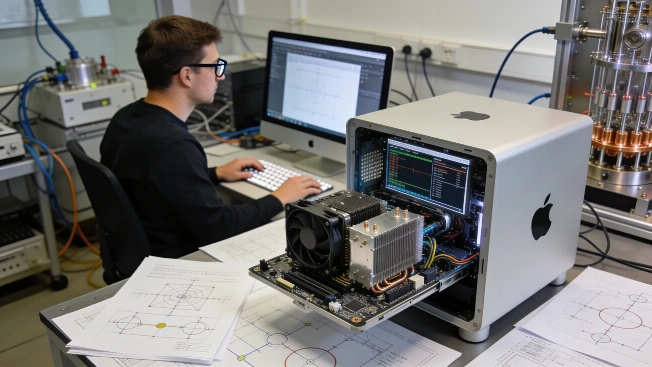
IonQ Runs Real-Time Quantum Error Correction on Apple M4 Max CPU
IonQ researchers have demonstrated a real-time quantum error correction decoding pipeline for large-scale trapped-ion quantum computers, processing MegaQuOp-scale workloads on a single Apple M4 Max CPU and addressing classical decoding bottlenecks

Quantum Gravimeter Demonstrates GPS-Free Navigation in Coral Sea Trial
Q-CTRL has field-tested a quantum gravimetric navigation system on open water, achieving 1-nautical-mile accuracy without GPS by combining cold-atom interferometry and classical sensors in a real maritime environment
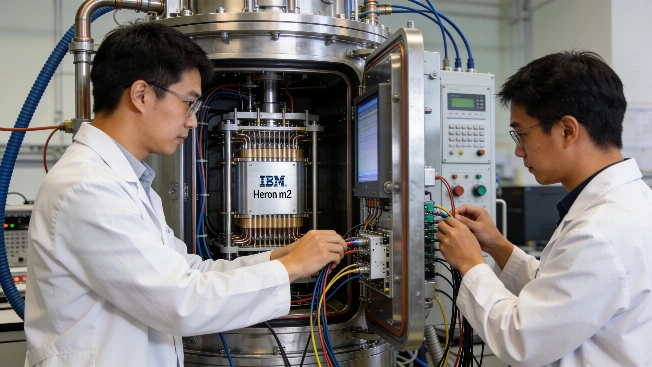
Singapore Team Compresses Qubit Use for Drug Docking on IBM Quantum Chip
Researchers at A*STAR and NUS have demonstrated a hybrid quantum-classical approach that reduces the number of qubits needed for molecular docking, running verified experiments on IBM's 156-qubit Heron r2 processor
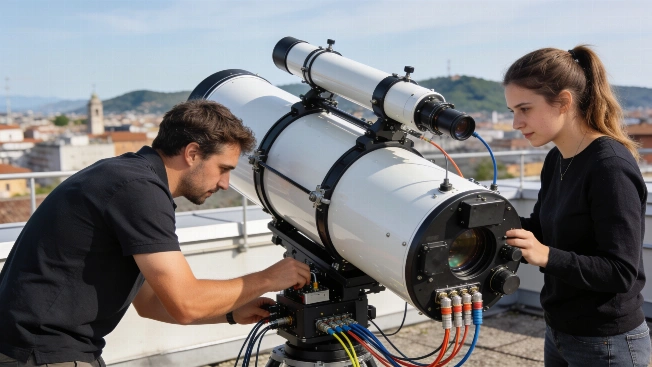
Field Test Links Quantum Key Distribution Over 18 km Free-Space Channel
A team in Italy has demonstrated real-time quantum key distribution across an 18-kilometer free-space link using room-temperature detectors, integrating adaptive optics to overcome atmospheric turbulence and coupling the signal into standard fiber
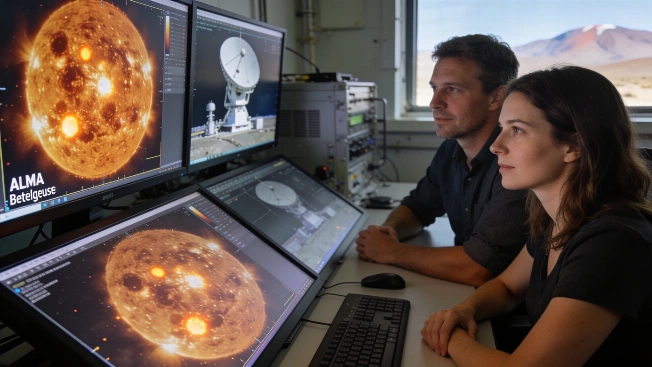
ALMA Reveals Persistent Hotspots on Betelgeuse's Turbulent Surface
Astronomers using the Atacama Large Millimeter/submillimeter Array have mapped Betelgeuse's surface in unprecedented detail, revealing long-lived hotspots and complex plasma flows that challenge current models of red supergiant stars
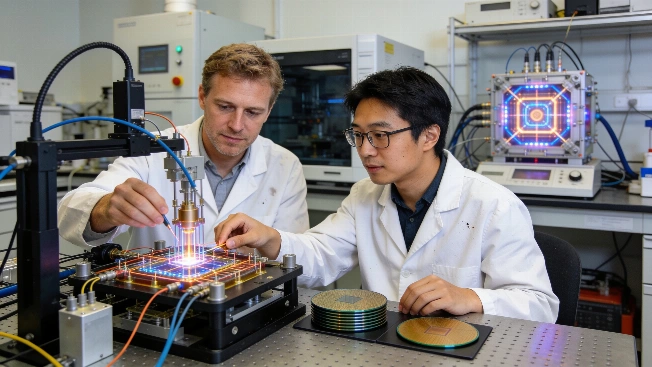
Quantum Simulation Targets EUV Lithography Blur in Canada-Japan Project
Xanadu and Mitsubishi Chemical are advancing quantum simulation for semiconductor fabrication, aiming to address radiation-induced blur in extreme ultraviolet lithography with support from Canadian and Japanese research funding
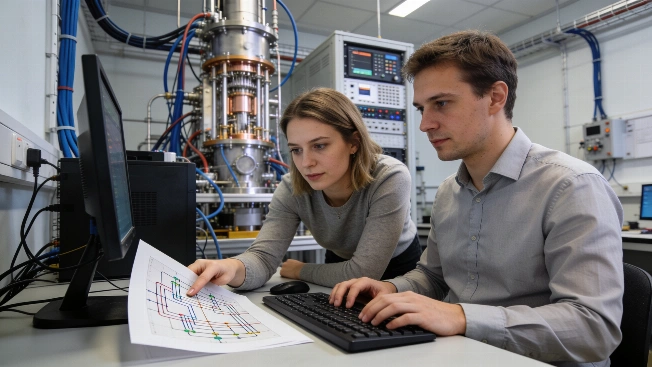
AI Models Now Optimize Quantum Algorithms for Real Hardware
Recent advances show AI systems are now directly optimizing quantum algorithms for cryptography and hardware compatibility, with measurable improvements in circuit efficiency and potential impact on quantum workforce development
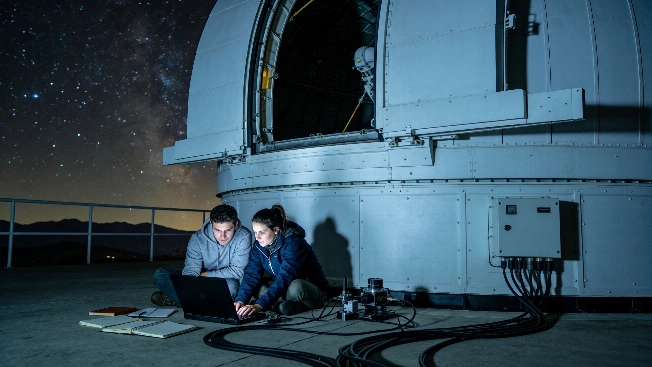
Discovery of GJ 523b Challenges Theories of Rocky Planet Formation
Astronomers have identified GJ 523b, a rocky exoplanet over 23 times Earth's mass, using TESS and ground-based spectroscopy, raising new questions about how such dense worlds form and retain-or lose-their atmospheres

NASA Backs Spherical Aerobots to Probe Titan's Subsurface Caves
A NASA-funded study is developing small, spherical flying robots designed to explore the hydrocarbon caves and sinkholes of Saturn's moon Titan, using solid-state ion propulsion to overcome terrain that would defeat conventional rovers
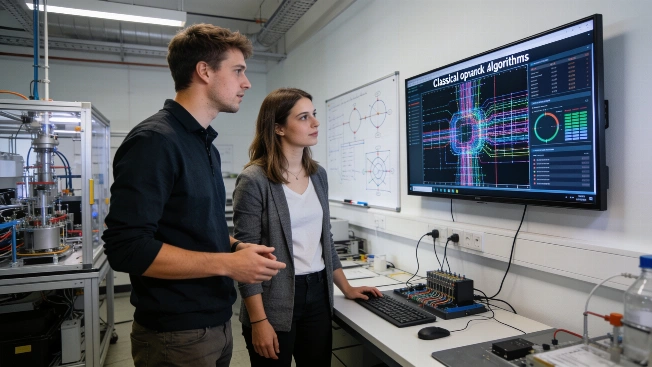
Quantum Optimization Benchmarking Library Sets New Standard for Fair Comparison
A global consortium has released the Quantum Optimization Benchmarking Library, providing a model-independent framework to compare quantum, classical, and hybrid algorithms on hard combinatorial problems. The open-source platform aims to clarify claims of quantum advantage.
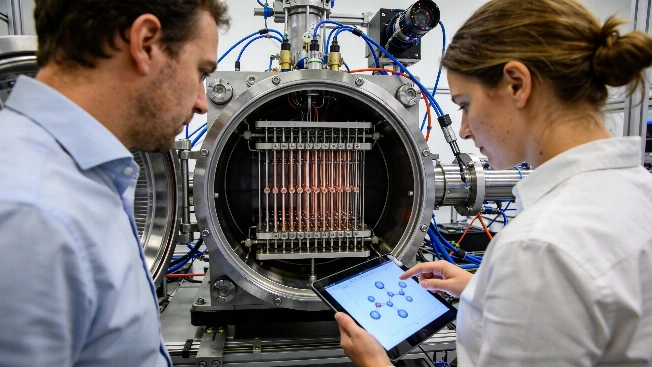
AI-Generated Quantum Circuits Tested on 98-Qubit Trapped-Ion Hardware
A collaboration between Quantinuum, NVIDIA, and Pfizer has demonstrated an AI-driven framework for generating quantum circuits, executing them on a 98-qubit trapped-ion processor to model pharmaceutical molecules

Webb Telescope Resolves Closest Black Hole Pair in Early Universe
Astronomers using the James Webb Space Telescope and ALMA have identified two supermassive black holes just 4,900 light-years apart in a galaxy merger 1.3 billion years after the Big Bang, offering new insight into rapid black hole growth
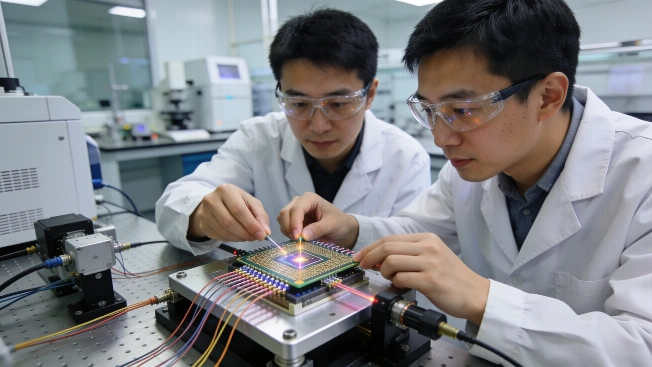
16-Qubit Photonic Quantum Processor Demonstrated on Silicon Chip
A team from Hefei Guizhen Chip Technology and USTC has built a 16-qubit measurement-based quantum computing system on a silicon photonic chip, achieving high-fidelity operation using high-dimensional path encoding
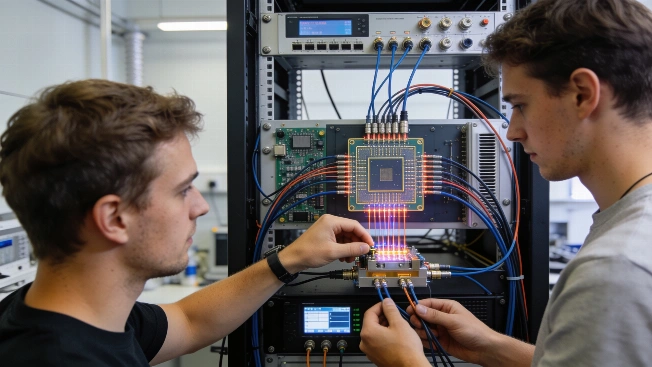
QuiX Quantum Releases Alquor 2.0 Photonic Processor Platform
QuiX Quantum has launched Alquor 2.0, a rack-mountable photonic processor platform based on silicon nitride integrated circuits, aiming to support quantum optics and information processing research with improved stability and automation
Part 1 of 2