
Soft Robotics
28 reportsThe main lines of inquiry around Soft Robotics include real-world operating limits; sensing and perception; and planning and control. Complementary views of planning and control come from safety and failure data and controlled tests, but the conclusion remains bounded because the strongest interpretation still recognizes that laboratory demonstrations may not generalize to cluttered or unpredictable environments.
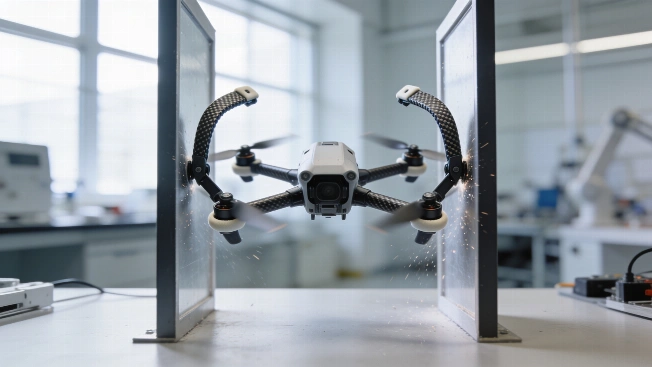
Soft drone folds through gaps half its width
A quadrotor from NTNU and ETH Zurich crossed a 15-by-20-centimeter opening after contact folded its spring-loaded arms. Lab tests also measured a sub-1-percent power penalty in open flight
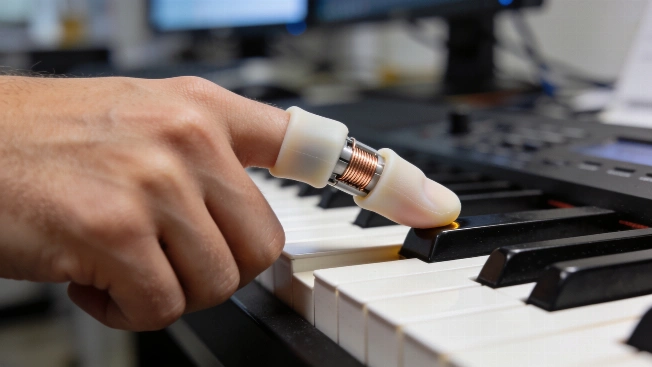
CoilLCE Gives Soft Robots More Precise Muscle Control
A Penn team embedded copper coils in soft actuator fibers so resistance readings can guide heating in real time. Piano-playing fingers and gaze-shifting eyes demonstrate the system
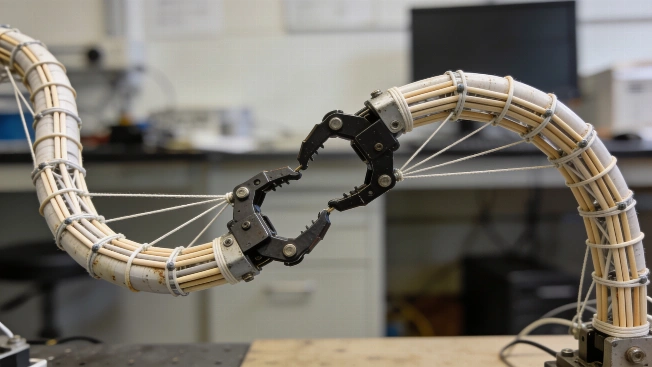
Tensegrity robots use dual claws to build flexible teams
Colorado State University's tensegrity machines use flexible cable-and-rod bodies and claws at both ends to grip objects or dock with other units. Tests show coordinated transport, but most operations still need human pilots
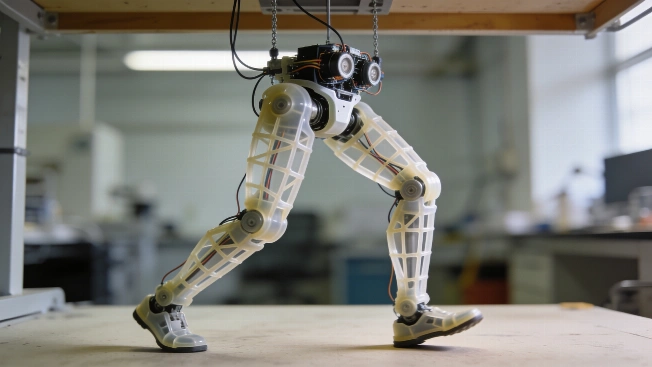
Printed TPU Gives Robotic Legs Muscle-Like Flexibility
University of Tokyo researchers shaped one flexible plastic into components with different mechanical behavior. Motors and cables drive the legs, but demonstrations still rely on suspension to support the robot
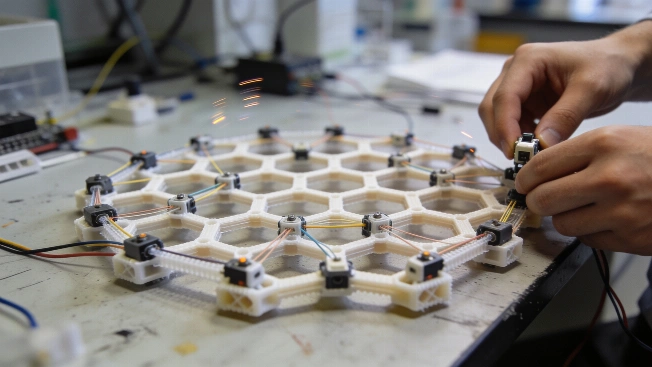
A robotic material finds its own rhythm across 37 units
A laboratory honeycomb of 37 active units turned small vibrations into coordinated movement without an external clock. The experiment shows self-organized motion, but not a robot ready for practical tasks.

WorMa Robot Shifts Water Weight to Conquer Rough Terrain
NYU's WorMa prototype moves 300 grams of water between its head and tail to adjust traction on slopes and steps, and improve swimming while keeping its basic undulating motion
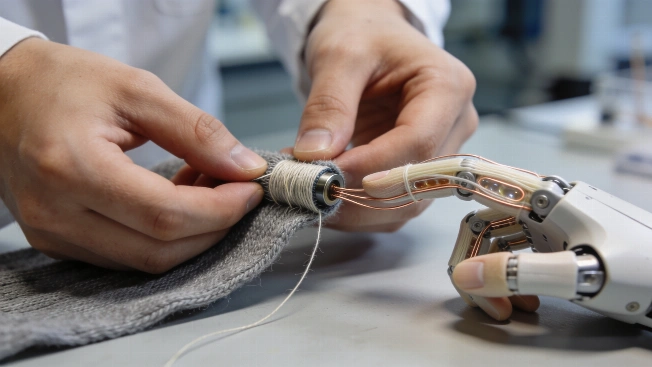
FiberMotor puts linear motion into a thread-like motor
EPFL researchers developed FiberMotor, a 1 to 3-millimeter electrostatic actuator made from two hollow fibers and copper electrodes. Applying voltage makes one fiber slide inside the other, producing quiet linear motion in both directions for textiles and soft robotic devices.
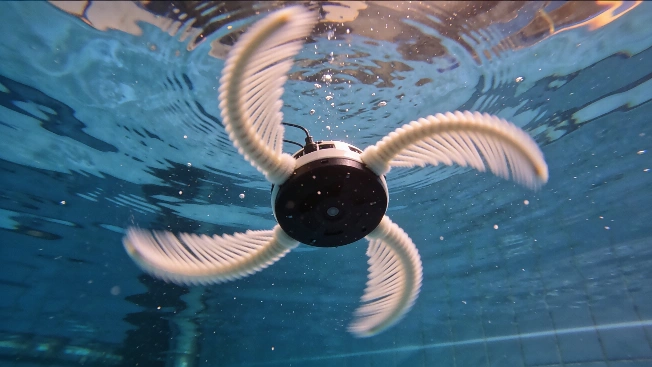
Two Actuators Give a Feather Star Robot Three-Dimensional Control
A North Carolina State University prototype uses two actuators and four elastic wings to move vertically and horizontally, then rotate underwater, using its structure instead of additional motors.
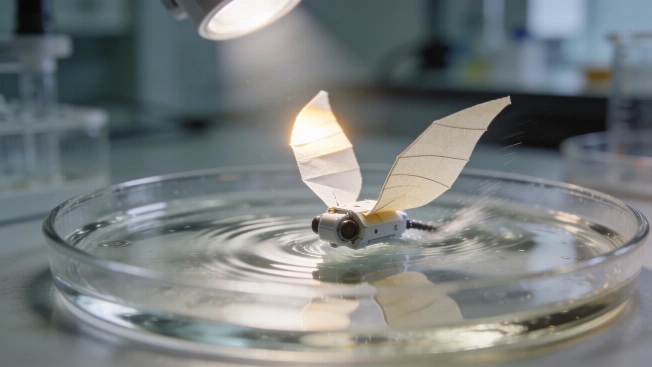
MIT Builds a Muscle-Powered Robot Thin Enough to Swim Mazes
MIT engineers have built a paper-thin biohybrid robot that swims through water using light-responsive muscle cells. Its maze test demonstrates controlled locomotion with minimal biological material, but not autonomous operation.
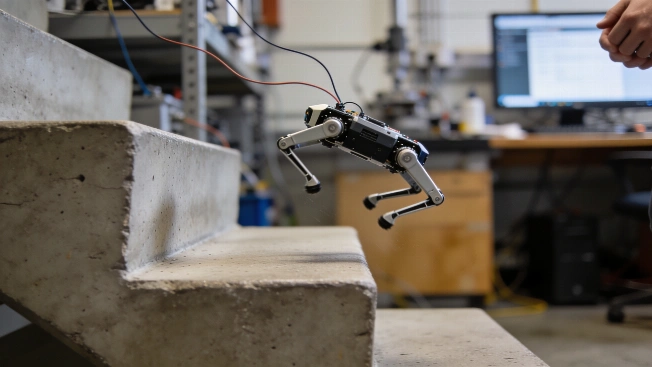
DirectHop Shows How Tiny Robots Could Hop Over Obstacles
University of Washington engineers built DirectHop, a roughly one-gram robot that can hop over a stair-like obstacle, recover after landing and prepare for another jump without relying on a spring.
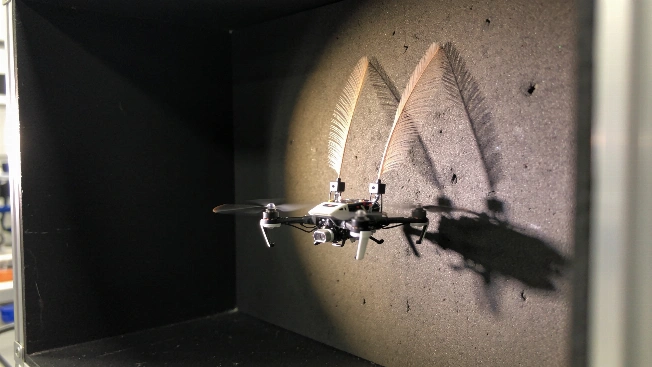
Tiny Drones Navigate Dark Spaces With Artificial Whiskers
Researchers at Delft University of Technology demonstrated a tiny drone that uses pressure-sensitive artificial whiskers to handle clear-wall test environments without relying on visual information.

Fluffy Robot MOFU Tested for Lifelike Movement in Animacy Study
A Japanese team built MOFU, a spherical robot that expands and contracts its body to test whether volumetric movement makes machines seem more alive. Nearly 500 participants rated its lifelikeness in controlled video experiments.
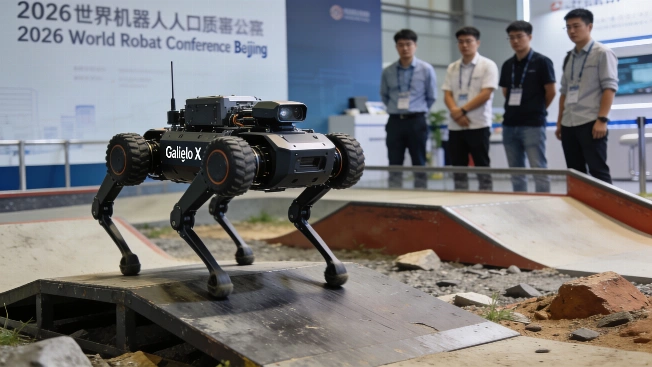
Galileo X Robot Platform Unifies Wheels, Legs, and Off-Road Mobility
Galileo Robotics has introduced Galileo X, a modular ground robot platform combining wheeled and legged movement with off-road mobility in one system. The company aims to simplify deployment in warehouses, rough terrain, and complex environments.
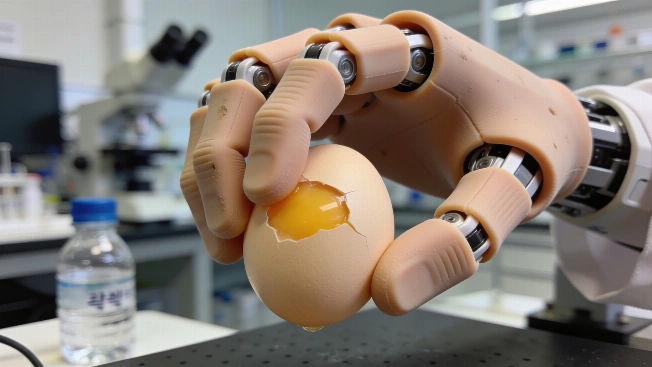
3D-Printed Soft Robotic Hand Shows Delicate Grip and Strength in Lab Tests
A research team at KAIST has built a 3D-printed soft robotic hand that can cradle fragile objects and lift heavy ones, using AI to improve the material's stretchability and durability for advanced manipulation tasks.

Drone Uses Tactile Sensing to Perch on Branches and Save Power
Researchers at TU Delft have built a drone that uses tactile sensors to locate and grip branches, allowing it to perch in cluttered environments and conserve battery power by shutting down its motors once attached.
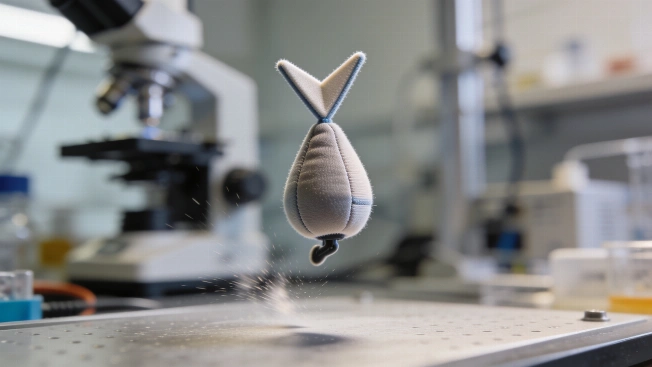
Soft Robots Demonstrate Continuous Jumping Using Infrared Light
Engineers at North Carolina State University have built soft robots that can repeatedly jump when illuminated by infrared light, using a self-resetting mechanical design that eliminates the need for motors or external resetting devices.
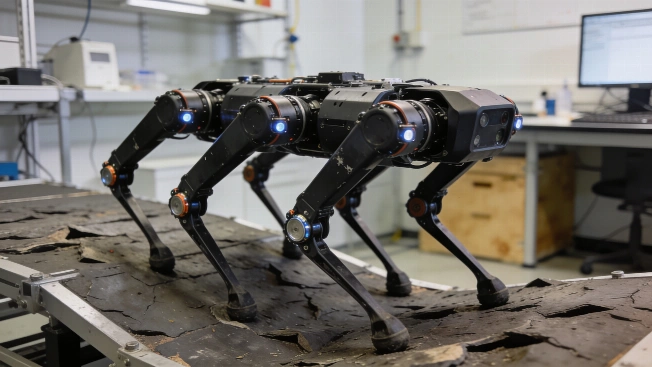
Six-Legged Robot Learns Adaptive Walking From Stick Insect Movements
A research team has developed a six-legged robot that uses AI to learn walking strategies from stick insect movement data, enabling it to adapt to uneven terrain and physical damage in laboratory tests.

Chinese Robotics Firms Demonstrate Humanoids for Aviation and Security Tasks
At the 2026 World Robot Conference in Beijing, Chinese companies are presenting humanoid and quadruped robots for industrial and aviation roles, alongside security applications. Demonstrations highlight technical progress and the ongoing challenges of real-world deployment.
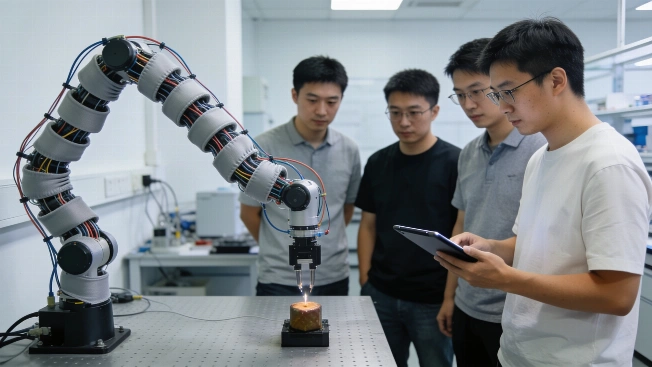
Feagine's Fi0 Model Tested for Cross-Body Robot Task Transfer
Feagine Robotics has introduced Fi0, a foundation model designed to transfer task knowledge across different soft robot arms, aiming to reduce retraining when hardware changes. Early tests used three tendon-driven manipulators with varying morphologies

DEEP Robotics Deploys Quadruped Robots for Hazardous Fire Response
DEEP Robotics has begun deploying its X30 quadruped and Lynx M20 wheeled-legged robots for initial reconnaissance in hazardous firefighting and emergency environments, aiming to reduce human exposure during early assessment and support operations.
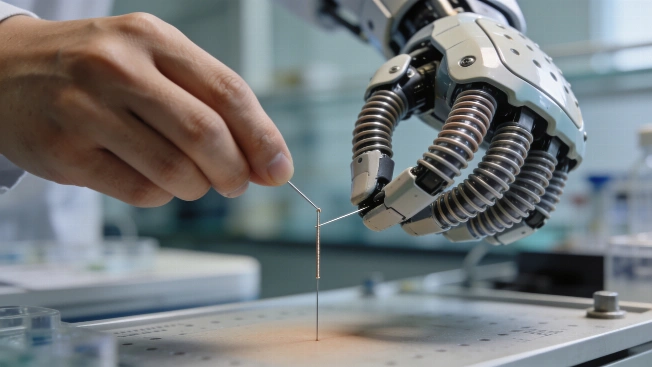
China Tests BioflexBot Hand for Precision Tasks With Simple Design
Researchers in China have built BioflexBot, a robotic hand that uses compressed air and a coiled spring to perform precise tasks such as threading needles and opening bottle caps, with the aim of reducing hardware complexity and cost.
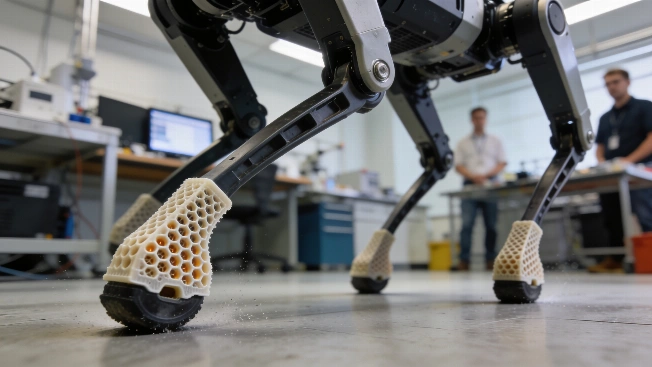
3D-Printed Porous Feet Cut Power Use in Quadruped Robot Tests
A research team at Seoul National University of Science and Technology has tested 3D-printed porous feet on a quadruped robot, reporting up to 6.2% lower battery consumption during walking tasks with a learning-based controller.
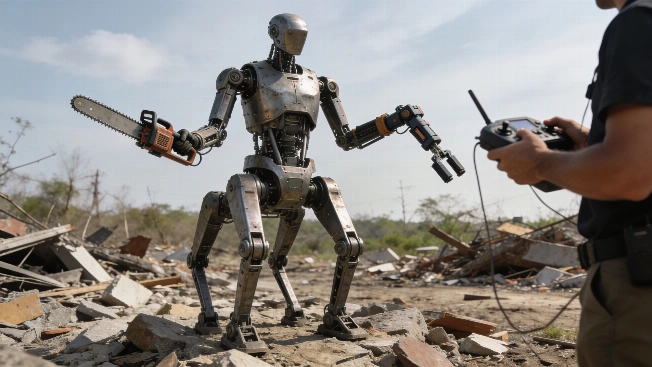
Centaur-Inspired Robot Threehalves Demonstrated for Hazardous Environments
A steel, centaur-like robot called Threehalves has drawn attention for its four-legged design and modular tool system. It is intended for dangerous tasks in unstable or hazardous settings where conventional robots struggle.
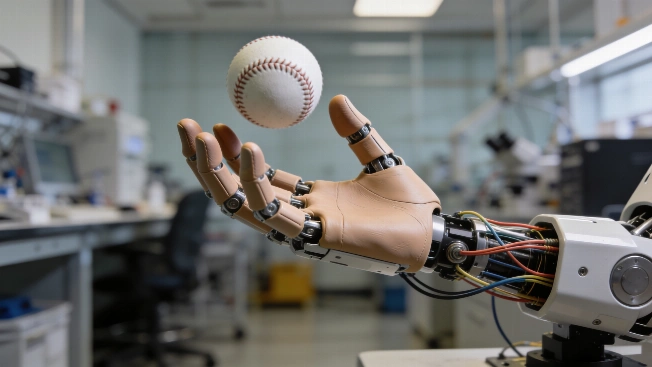
Foundation Robotics Tests Dexterous Hand Catching Baseball in Mid-Flight
Foundation Robotics has demonstrated a tendon-driven robotic hand catching a baseball in mid-flight, showing how mechanical design and sensor integration support adaptive grasping for industrial humanoid robots.
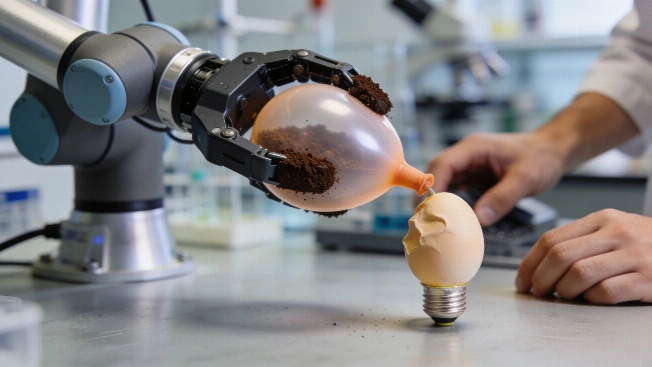
Coffee-Filled Soft Gripper Shows Low-Cost Robotic Handling Advance
A soft robotic gripper using a latex membrane and coffee grounds has demonstrated the ability to securely grasp fragile and irregular objects without cameras or complex sensors, offering a low-cost alternative for robotic manipulation tasks
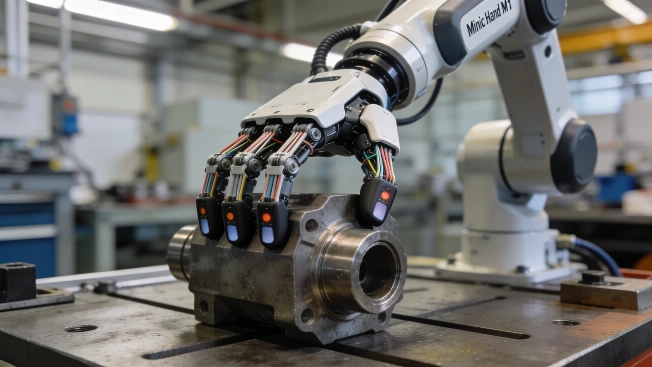
Swiss Startup Mimic Robotics Reveals Sensor-Rich Robotic Hand for Factories
Mimic Robotics has introduced the Mimic Hand M1, a tendon-driven robotic hand designed for industrial automation. It features tactile sensing and a human-like joint structure intended to improve the manipulation of diverse objects in real-world settings.
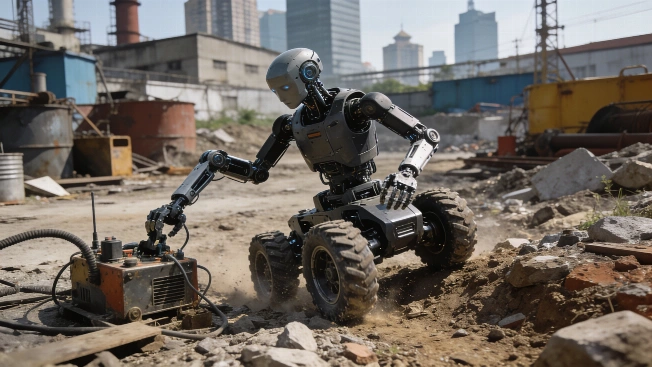
Hybrid wheel-leg robot from China targets industrial and rescue tasks
Run Robotics has demonstrated a wheel-leg hybrid robot at WAIC 2026, pairing rapid wheeled movement with robotic arms for inspection and firefighting, as well as emergency response in complex environments. Most of its components are domestically sourced.
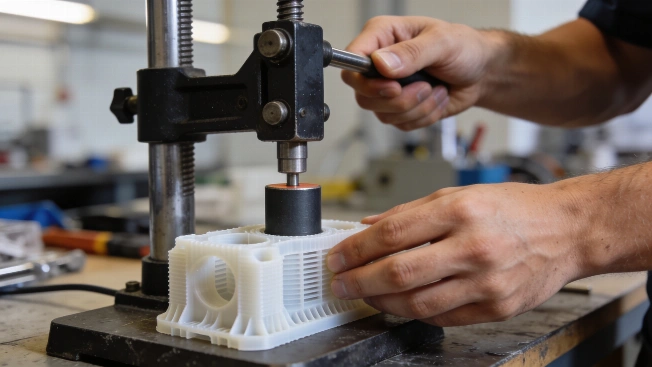
Evaluating Seven Methods for Embedding Magnets in 3D-Printed Parts
A recent demonstration compared seven techniques for installing magnets into 3D-printed components, assessing their mechanical reliability, ease of assembly, and long-term durability without relying on adhesives