
Autonomous Drone
9 reportsFor readers assessing Autonomous Drone, the relevant threads are sensing and perception; planning and control; and safety testing. Conclusions concerning sensing and perception remain tied to real-world trials, safety and failure data, and transparent methods; laboratory demonstrations may not generalize to cluttered or unpredictable environments.
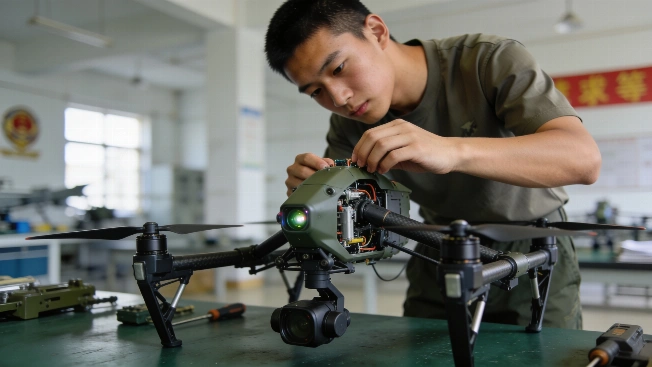
China Builds PLA Colleges Around Drones and AI
China's PLA has established new colleges for unmanned systems, artificial intelligence, engineering support and military oversight, signaling a long-term effort to turn emerging technologies into formal training and maintenance capabilities.
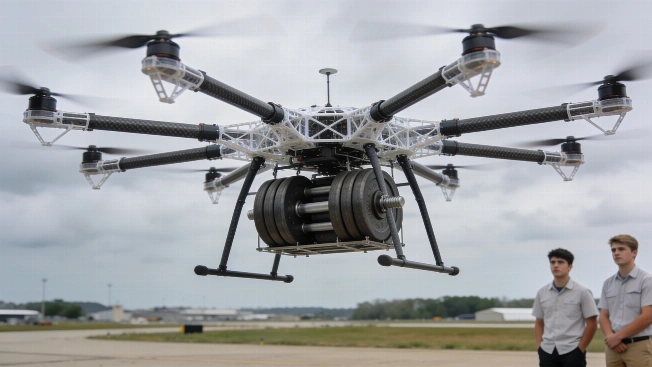
Texas A&M Drone Carries More Than Twice Its Own Weight
Texas A&M aerospace students flew a 50-pound battery-powered drone carrying 110 pounds over four nautical miles in 12 minutes at the first DARPA Lift Challenge, demonstrating the limits and promise of lightweight heavy-lift engineering.
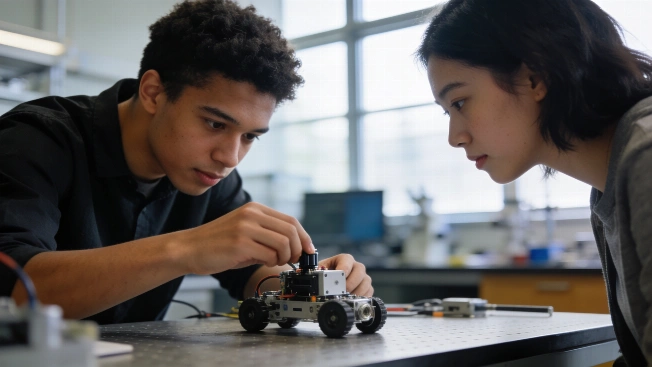
NASA Reopens ORBIT Challenge for 2027 With Up to $500,000 in Student Prizes
NASA has reopened registration for the 2027 ORBIT Challenge, offering university and college teams up to $500,000 to develop research-based solutions for Earth and future space missions.
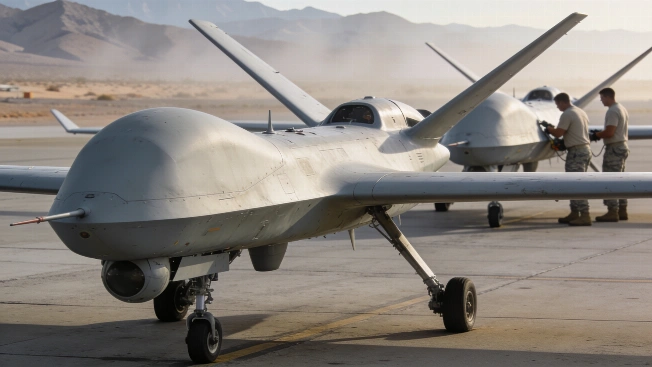
US Air Force Begins Testing Its First Collaborative Combat Aircraft
The United States Air Force has received Anduril's YFQ-44A and General Atomics' YFQ-42A for experiments on how semi-autonomous aircraft can operate with crewed fighters in contested airspace
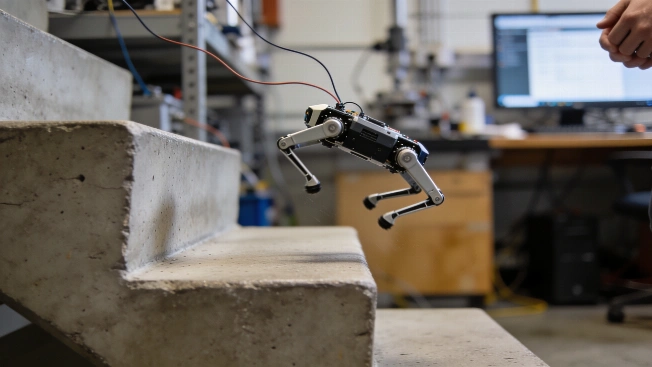
DirectHop Shows How Tiny Robots Could Hop Over Obstacles
University of Washington engineers built DirectHop, a roughly one-gram robot that can hop over a stair-like obstacle, recover after landing and prepare for another jump without relying on a spring.
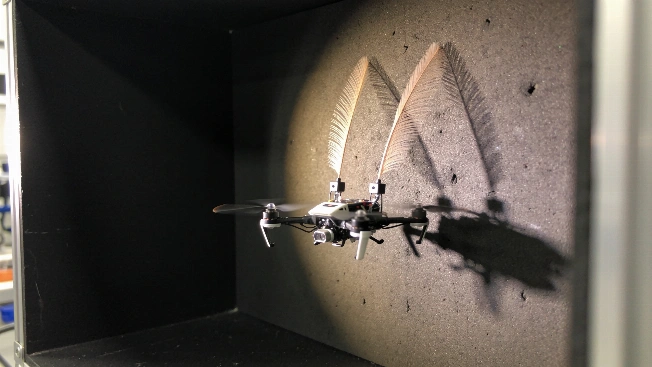
Tiny Drones Navigate Dark Spaces With Artificial Whiskers
Researchers at Delft University of Technology demonstrated a tiny drone that uses pressure-sensitive artificial whiskers to navigate clear-wall test environments without relying on visual information.

Drone Uses Tactile Sensing to Perch on Branches and Save Power
Researchers at TU Delft have built a drone that uses tactile sensors to locate and grip branches, allowing it to perch in cluttered environments and conserve battery by shutting down its motors once attached
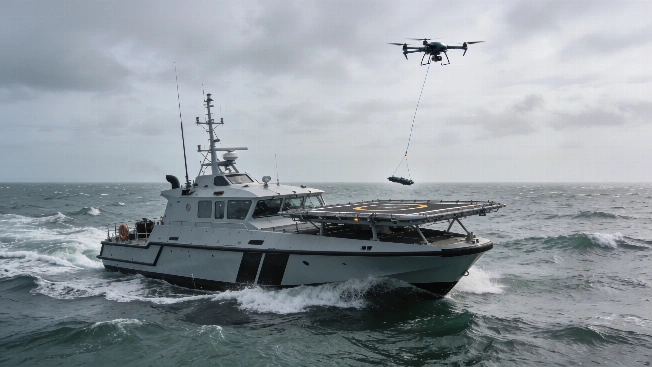
Royal Navy Tests Robotic Boat for Autonomous Drone Launch at Sea
A UK-led demonstration has tested a robotic surface vessel that autonomously launches and recovers a tethered drone at sea, aiming to extend maritime surveillance without direct human intervention
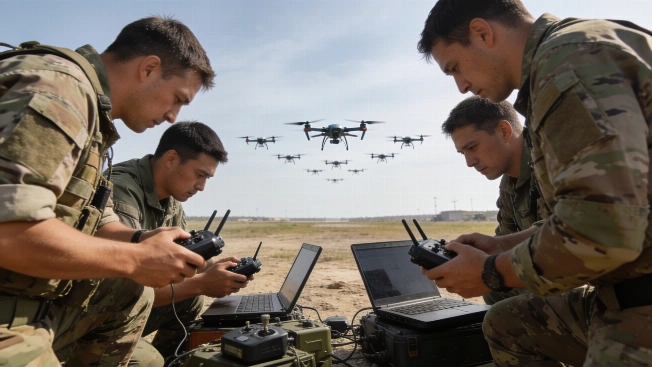
AI-Driven Drone Swarms Advance, Raising New Military and Safety Questions
Recent demonstrations show how AI enables military drone swarms to coordinate, navigate without GPS, and share sensor data. These advances highlight both technical progress and unresolved risks in autonomous battlefield systems