A recent demonstration compared seven techniques for installing magnets into 3D-printed components, assessing their mechanical reliability, ease of assembly, and long-term durability without relying on adhesives
Integrating magnets into 3D-printed parts is a common requirement in robotics, prototyping, and modular hardware, but achieving a secure and lasting fit remains a technical challenge. According to a recent demonstration by Slant 3D, seven distinct methods for embedding magnets in thermoplastic prints were evaluated, each with specific trade-offs in mechanical strength, assembly complexity, and long-term stability.
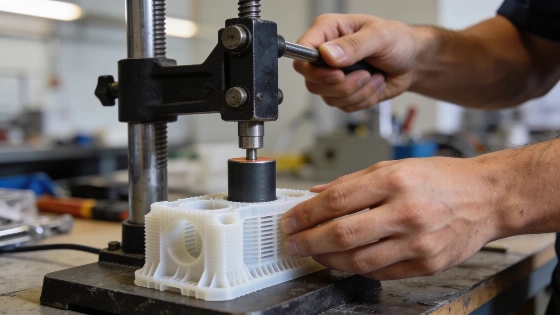
Traditional friction-fit approaches, where a magnet is pressed into a printed cavity, often fail over time due to thermal creep-a gradual deformation of the plastic under stress and temperature fluctuations. This can cause magnets to loosen, especially in applications subject to repeated mechanical loads or environmental changes. The demonstration found that cylindrical magnets, when installed with an arbor press rather than by hand, provided improved retention compared to flat magnets, but still faced limitations under sustained stress.
Alternative Insertion Techniques
To address the drawbacks of friction fits, several alternative insertion methods were tested. One approach involved designing side slots in the print, allowing magnets to be inserted after printing without interrupting the build process. While this simplifies assembly, it introduces a plastic barrier between the magnet and its target, reducing magnetic coupling strength. Another method used a constriction or lip within the cavity, requiring the magnet to be pressed past a small obstruction. This increased retention force but also raised the risk of damaging the print or the magnet during installation.
Spherical magnets were also evaluated, as their geometry allows for self-alignment with opposing magnets and can be locked in place using similar constriction techniques. However, the demonstration noted that spherical magnets are less common in industrial supply chains and may not be suitable for all applications.
Material and Design Considerations
The demonstration highlighted that embedding two magnets in a magnetic lock is generally discouraged. Magnets are brittle and prone to chipping or cracking under repeated impact. Instead, using a steel ball bearing or washer on one side of the assembly provides a more durable and cost-effective solution, as these components can withstand mechanical stress better than most commercial magnets.
Attempts to embed magnets during the fused deposition modeling (FDM) print process-by pausing the print and inserting the magnet mid-build-were found to introduce significant risks. Magnets can interfere with print bed sensors, damage nozzles, or cause print failures if not precisely positioned. The demonstration advised against this method unless the printer and materials are specifically configured to handle embedded hardware safely.
Quantitative Findings and Limitations
Across the seven methods, the demonstration reported that friction-fit cylindrical magnets installed with an arbor press achieved the highest initial retention force, but retention declined by up to 30% after repeated thermal cycling. Side-slot installations maintained consistent retention but exhibited a 10-15% reduction in magnetic coupling compared to direct contact. Methods involving constriction features increased installation force by 20-40%, raising the risk of print or magnet damage. No method fully eliminated the risk of loosening under long-term mechanical or thermal stress.
All tests were conducted on standard PLA and PETG prints using commercially available neodymium magnets. The demonstration did not include independent laboratory verification or long-term field deployment, and results may vary with different materials, magnet grades, or environmental conditions. No regulatory or safety standards currently govern the embedding of magnets in consumer 3D-printed parts, and users remain responsible for assessing application-specific risks.
For robotics and modular hardware, the choice of magnet installation method should be guided by the required retention force, expected mechanical loads, and the consequences of magnet failure. Where safety or reliability is critical, mechanical fasteners or dedicated hardware may be preferable to embedded magnets.
Thermal creep is a gradual deformation of thermoplastic materials under sustained load and elevated temperature. In 3D-printed parts, this can cause press-fit magnets to loosen over time, especially in environments with fluctuating temperatures or repeated mechanical stress. Designers must account for this phenomenon when specifying tolerances and selecting installation methods for embedded components.