
ETH Zurich
8 reportsThe main lines of inquiry around ETH Zurich include graduate education, together with shared facilities and interdisciplinary programs. One line of support comes from replication by outside groups, and a separate test comes from peer-reviewed publications; together they clarify shared facilities, but confidence is limited by the fact that institutional reputation does not substitute for evidence from individual studies.
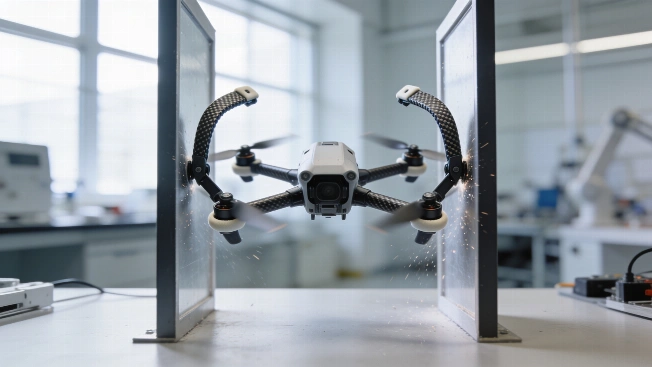
Soft drone folds through gaps half its width
A quadrotor from NTNU and ETH Zurich crossed a 15-by-20-centimeter opening after contact folded its spring-loaded arms. Lab tests also measured a sub-1-percent power penalty in open flight
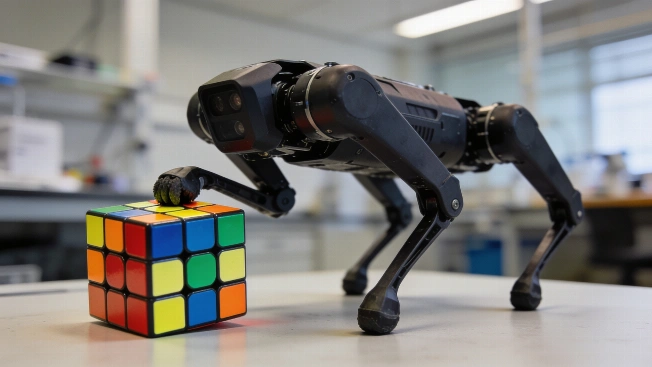
ANYmal-D Uses Its Legs to Solve a Giant Rubik's Cube
ETH Zurich's ANYmal-D completed three out of three attempts on a 4.6-kilogram Rubik's Cube, combining learned foot movements with a solver algorithm. The demonstration tests a specific manipulation task rather than broad industrial capability
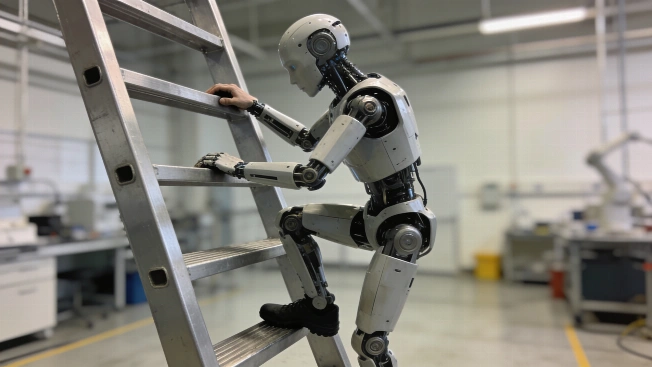
A humanoid robot policy tackles ladders and falls
ETH Zurich's Attention-based Contact Planning policy guides a G1 humanoid through simulated obstacle courses and physical demonstrations. Its 92.5% simulation success rate is promising, but does not establish reliability outside the test environment
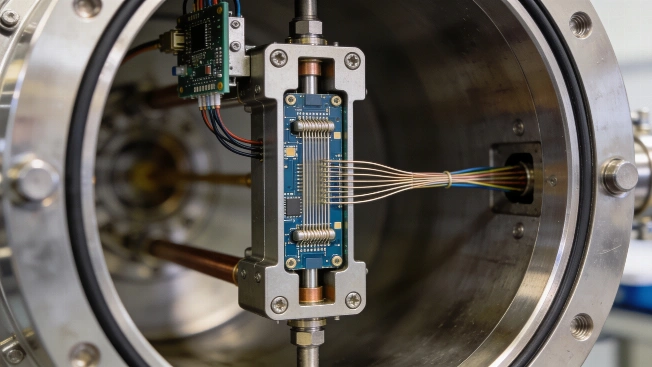
Cryogenic Control Could Ease Wiring in 2D Ion Processors
The Swiss startup's 2D trapped-ion design faces a control-wiring bottleneck as arrays grow. A new agreement targets electronics near the qubits, but the announcement reports no integrated-system performance data
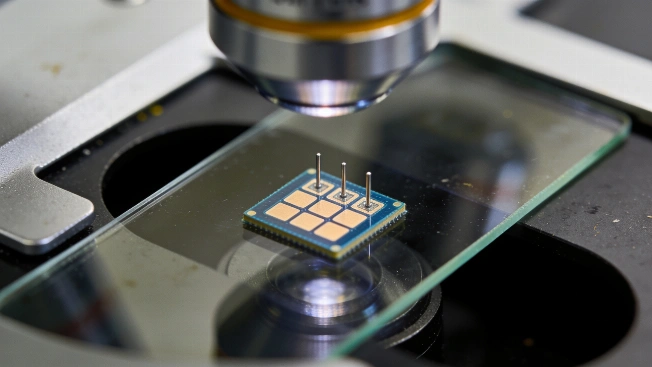
ZuriQ Demonstrates Nine Ion Qubits on a 2D Trap Chip
ZuriQ and Infineon have demonstrated a 3×3 two-dimensional Penning micro-trap with nine individually controlled ion qubits. They are now pursuing larger modules and semiconductor fabrication, with integrated photonics also in view, without claiming to have built a fault-tolerant processor.
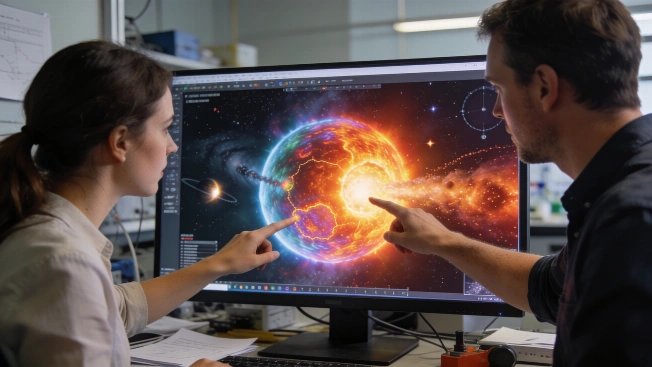
Vampire white dwarfs can collapse into neutron stars under precise conditions
Researchers have modeled how certain white dwarfs feeding on companion stars can collapse into neutron stars if their mass and accretion rate fall within a narrow range, revealing a rare but physically distinct pathway for stellar evolution.
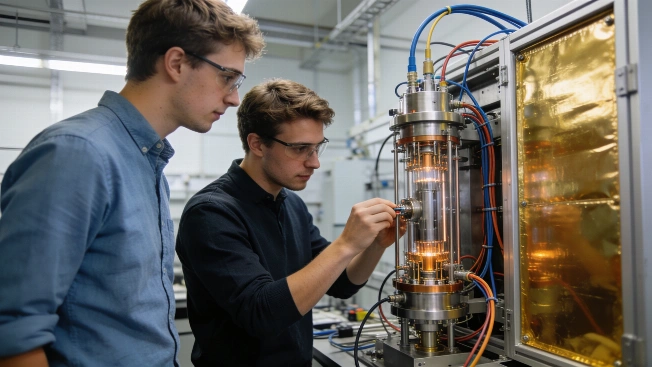
Alice & Bob Joins European Quantum Error Correction Training Network
Alice & Bob will help train PhD researchers in quantum error correction through QuBriC, a €4.6 million Horizon Europe-funded doctoral network focused on able to grow, fault-tolerant quantum computing hardware and software.
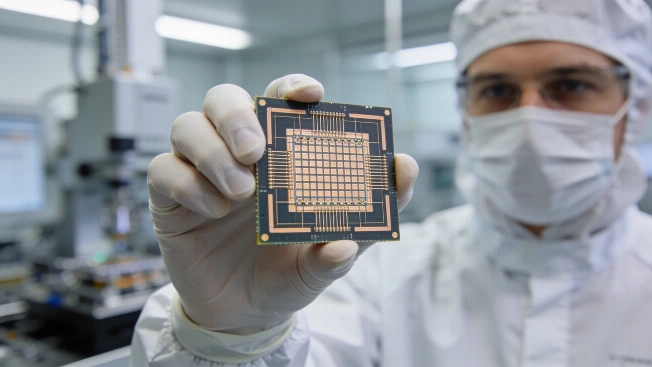
ZuriQ Demonstrates 2D Trapped-Ion Array on Industrial Chip
Swiss startup ZuriQ has built a nine-ion 2D array using micro-Penning traps on a chip fabricated by Infineon, aiming to address scaling limits in trapped-ion quantum computing with $25.5 million in new seed funding