Infleqtion and Cisco have begun joint R&D to connect neutral-atom quantum memory and processing units with telecom-compatible network switches, aiming to address the physical and protocol challenges of distributed quantum computing
Efforts to build a scalable quantum network have moved from theory to hardware integration as Infleqtion and Cisco initiate a technical collaboration to connect neutral-atom quantum devices with conventional networking infrastructure. The project targets a persistent bottleneck in quantum computing: the inability to scale beyond the limits of a single quantum processor by linking multiple quantum nodes through optical channels compatible with existing telecom hardware.
Neutral-atom hardware and optical links
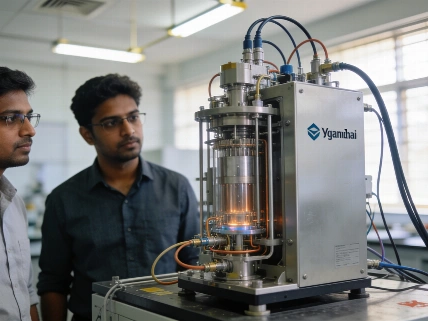
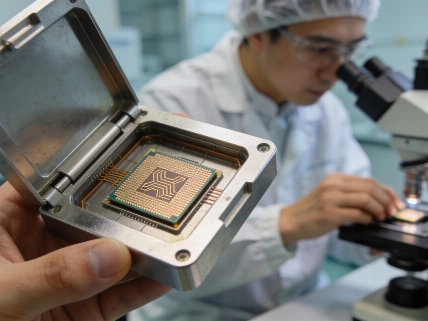
Infleqtion's platform centers on cold-atom quantum processing units (QPUs), atomic clocks, and quantum memory modules based on trapped neutral cesium and rubidium atoms. These systems operate at ultracold temperatures, using optical transitions to encode and store quantum information. The company's hardware includes ensembles of neutral-atom qubits, with optical interfaces designed to support both quantum computation and high-precision sensing. The challenge is to bridge the gap between the atomic transition wavelengths and the telecom bands used in fiber-optic networks, which requires efficient wavelength conversion and low-loss photonic transduction.
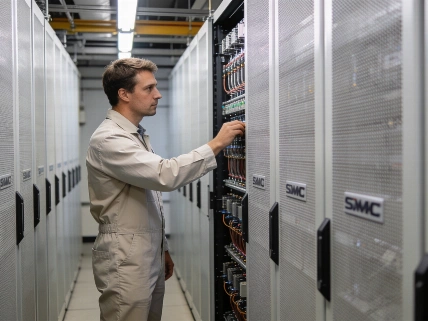
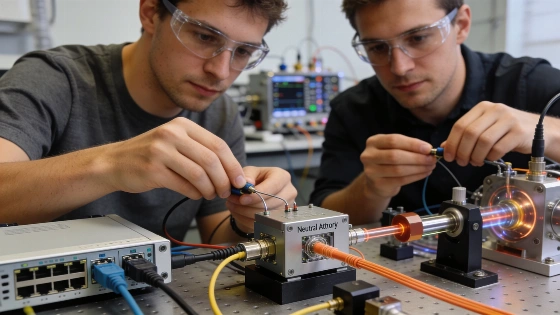
Cisco's contribution comes through its Quantum Labs, which have developed a software-defined networking stack and prototype hardware switches capable of routing quantum state information. The Cisco Universal Quantum Switch is designed to interconnect heterogeneous quantum devices, preserving quantum coherence during state transfer and enabling dynamic routing of entangled states between nodes. The integration aims to support distributed quantum computing clusters, where quantum memory and processing can be shared across physically separated devices.
Protocol integration and software control
One of the central engineering hurdles is the synchronization of quantum operations across networked nodes. Infleqtion's Superstaq quantum software platform will be integrated with Cisco's network control layer, allowing for network-aware compilation and job scheduling. This approach enables computational tasks to be dynamically routed to remote QPUs or distributed quantum sensors, with the system monitoring link fidelity and optical queue latency in real time. The technical roadmap includes protocol-level solutions for entanglement distribution, state transduction, and error management across the network.
While the companies have not disclosed detailed performance metrics, the architecture is designed to support real-time sensor telemetry, multi-node orchestration, and dynamic allocation of entanglement resources. The focus on neutral-atom memory nodes and telecom-compatible routing hardware reflects a broader industry trend toward modular quantum systems, as seen in other recent efforts to link quantum processors to classical high-performance computing clusters. For context, similar integration challenges have been reported in recent experiments connecting trapped-ion quantum processors to supercomputing infrastructure.
Physical and engineering constraints
Establishing a distributed quantum network requires more than just connecting devices. Quantum states are fragile, and both photon loss and decoherence can rapidly degrade entanglement during transmission. The use of atomic clocks and quantum sensors in the Infleqtion platform is intended to provide precise timing and synchronization, but the overall fidelity of state transfer will depend on the efficiency of wavelength conversion, the stability of the optical links, and the ability to correct for errors introduced by the network. The companies have not yet published peer-reviewed results or independent benchmarks for the integrated system, and it remains to be seen how the prototype will perform under realistic operating conditions.
From a technical perspective, the integration of neutral-atom quantum memory with telecom-band photonic channels is a necessary step toward building quantum networks that can operate over metropolitan or even continental distances. However, the engineering required to maintain coherence and entanglement across such links is substantial. The current collaboration is positioned as a research and development effort rather than a demonstration of a deployable quantum network, and the timeline for practical deployment will depend on progress in both hardware reliability and protocol standardization.
Potential applications and industry context
The stated goal of the Infleqtion and Cisco partnership is to develop sovereign quantum communication backbones for sectors such as defense, aerospace, and high-performance computing data centers. By combining atomic quantum memory with telecom-compatible switches, the architecture could, in principle, support secure quantum communication and distributed quantum sensing. However, the transition from laboratory prototype to operational infrastructure will require not only technical advances but also independent validation and standardization across the quantum networking ecosystem.
Industry interest in distributed quantum architectures is growing, but the field remains at an early stage. Most current demonstrations are limited to laboratory-scale links or short-distance fiber connections, and the integration of heterogeneous quantum hardware with classical networking remains a complex challenge. The Infleqtion and Cisco collaboration represents a concrete step toward addressing these issues, but the absence of published performance data and independent replication means that claims of scalability and practical utility should be treated with caution. Until the system is tested under real-world conditions and its error rates, coherence times, and entanglement distribution rates are independently verified, the architecture remains a promising but unproven approach to quantum networking.
Quantum networking aims to distribute entanglement and quantum information between physically separated nodes, enabling new forms of secure communication, distributed sensing, and potentially scalable quantum computing. Achieving this requires not only high-fidelity quantum memories and processors but also reliable photonic interfaces that can convert quantum states between atomic and telecom wavelengths. Maintaining coherence and entanglement over long distances is technically demanding, as photon loss, noise, and imperfect conversion can rapidly degrade quantum correlations. The integration of quantum and classical networking hardware is a critical step, but the ultimate test will be the system's ability to deliver robust, reproducible performance outside the laboratory.