Quantinuum and Aramco have signed a non-binding agreement to evaluate trapped-ion quantum processors for simulating energy sector chemistry and optimization tasks using Quantinuum's QCCD hardware and software stack
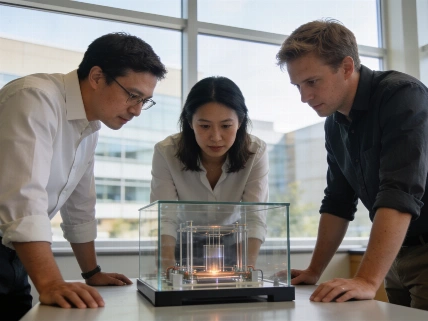
Quantinuum's trapped-ion quantum hardware is now under direct evaluation by Aramco, one of the world's largest energy companies, as both firms formalize a non-binding Memorandum of Understanding to probe the practical limits of quantum computing in industrial energy workflows. The agreement, signed at the LEAP technology conference in Riyadh, gives Aramco structured access to Quantinuum's QCCD-based processors and software stack, with the explicit goal of benchmarking quantum performance on real-world energy sector problems.
Trapped Ion Hardware in Industrial Context
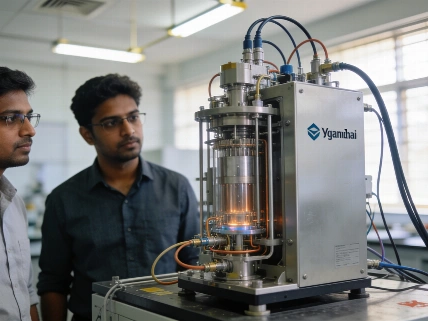
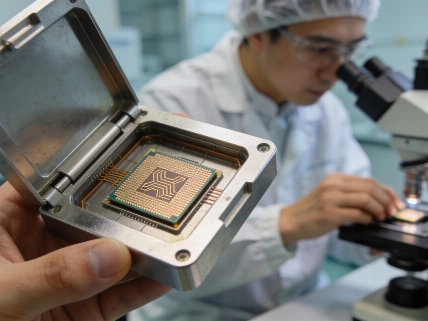
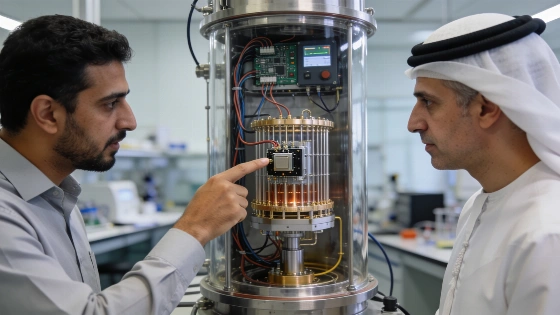
The technical focus centers on Quantinuum's Quantum Charge-Coupled Device (QCCD) trapped-ion architecture, including the high-fidelity Helios system. Trapped-ion qubits are manipulated using electromagnetic fields in ultra-high vacuum, with the QCCD design enabling shuttling and reconfiguration of ions for flexible circuit layouts. Quantinuum's Helios system is positioned as a leading platform for high-fidelity gate operations, but the company has not disclosed specific qubit counts or error rates for the hardware made available to Aramco under this agreement.
Aramco's interest is not theoretical. The company is seeking to simulate complex chemical reactions, reservoir fluid dynamics, and catalytic processes that underpin energy production. These are computationally intensive tasks that challenge even the largest classical supercomputers, especially when quantum effects in molecular systems become relevant. The collaboration will test whether current or near-term trapped-ion devices can deliver meaningful results for these industrial-scale simulations, or whether error rates and circuit depth limitations still preclude practical advantage.
Software Integration and Benchmarking
Quantinuum's Nexus developer platform is being deployed to support Aramco's quantum software development, workflow management, and hybrid integration with classical high-performance computing (HPC) and GPU clusters. The Nexus stack is designed to allow users to build, test, and manage quantum algorithms, with cloud-based access to hardware and simulation environments. For this partnership, the focus is on benchmarking quantum processing unit (QPU) modalities against energy sector workloads, with an emphasis on digital transformation and regional innovation priorities in Saudi Arabia.
While the agreement is non-binding and does not guarantee commercial deployment, it does provide a framework for technical onboarding, knowledge exchange, and algorithmic co-development. Both parties are preparing for the eventual transition from noisy intermediate-scale quantum (NISQ) devices to fault-tolerant quantum computing (FTQC), with early work on algorithmic primitives that could be ported to logical qubit systems as error correction matures. This approach mirrors recent moves by other industrial partners seeking to future-proof their quantum workflows ahead of scalable fault-tolerant hardware.
Regional Expansion and Competing Architectures
The Saudi partnership expands Quantinuum's commercial presence in the Middle East, complementing its existing facility in Qatar. For Aramco, the agreement builds on prior quantum initiatives, including an on-premises neutral-atom QPU deployment with Pasqal in Dhahran. The company is now positioned to compare the performance and engineering trade-offs of neutral-atom and trapped-ion architectures on similar industrial benchmarks, a rare opportunity for direct cross-platform evaluation in a commercial setting.
Quantinuum's strategy of partnering with major industrial players is not new. As reported earlier, the company has also moved to co-develop scalable manufacturing processes for modular trapped-ion hardware with Quanta Computer, aiming to address the persistent gap between laboratory prototypes and enterprise-ready systems. The Aramco agreement, however, is notable for its explicit focus on benchmarking quantum hardware against energy sector workloads, rather than generic algorithmic demonstrations.
Technical Evidence and Remaining Barriers
Quantinuum has not released detailed technical data on the specific QCCD hardware or Helios system parameters being evaluated by Aramco. Key performance metrics such as physical qubit count, gate fidelity, coherence time, and error rates remain undisclosed. Without these figures, it is not possible to assess whether the hardware can support the circuit depths required for meaningful energy chemistry simulations, or whether error mitigation strategies can compensate for current device limitations. The agreement does not include independent verification or peer-reviewed publication of results at this stage.
For now, the collaboration remains a structured technical trial rather than a demonstration of quantum advantage or practical utility. The outcome will depend on whether trapped-ion systems can deliver reliable, reproducible results on industrially relevant problems, and whether the integration with classical HPC infrastructure can overcome the bottlenecks of current quantum hardware. Until detailed benchmarks are released, claims of transformative impact remain speculative.
Quantinuum's willingness to subject its hardware to direct industrial benchmarking by a major energy company signals a shift from controlled laboratory demonstrations to real-world performance testing. If the company can provide transparent, reproducible evidence that its trapped-ion systems outperform classical methods on targeted energy sector tasks, it will mark a substantive advance beyond the marketing-driven quantum race. But without public technical data and independent validation, the field remains defined by cautious optimism and unresolved engineering barriers rather than delivered quantum utility.
Understanding the distinction between physical and logical qubits is essential for interpreting these developments. Physical qubits are the actual quantum systems-such as trapped ions-used to encode information, but they are prone to errors from environmental noise, control imperfections, and decoherence. Logical qubits are constructed by encoding information redundantly across multiple physical qubits using quantum error-correcting codes, allowing errors to be detected and corrected. Achieving fault-tolerant quantum computing requires not only high-fidelity physical qubits but also robust error correction, which imposes significant overhead and engineering complexity. Most current quantum processors, including those based on trapped ions, operate in the noisy intermediate-scale regime, where error rates and circuit depth limitations restrict practical applications. The transition to logical qubits and scalable fault-tolerant architectures remains the central technical challenge for the field.