NEC Corporation has abandoned its superconducting quantum processor development, redirecting resources to quantum-inspired annealing and classical emulation. The move leaves Fujitsu as Japan's main corporate superconducting hardware developer and shifts NEC's focus to software and optimization services.
NEC Corporation has pulled the plug on its superconducting quantum processor program, marking a decisive retreat from hardware development in favor of quantum-inspired software and classical emulation. The company's internal superconducting qubit research, once a symbol of Japan's early leadership in solid-state quantum devices, will be wound down by March 2026. This decision, driven by the high cost and slow path to commercial return, leaves Japan's corporate quantum hardware ambitions concentrated almost entirely in the hands of Fujitsu and state-backed research efforts.
Superconducting Qubit Legacy
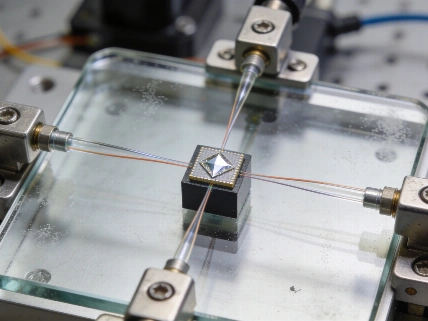
NEC's withdrawal is not a minor course correction. In 1999, researchers at NEC's Tsukuba laboratories demonstrated the world's first controlled solid-state superconducting qubit using a single-Cooper-pair box circuit. That experiment established a technical foundation for the superconducting approach now used by leading global players. Yet, more than two decades later, the company has concluded that scaling up gate-based superconducting quantum processors to a commercially viable level demands capital and timelines that no longer fit its strategic priorities.
According to reporting from Nikkei Asia, NEC's discontinued programs include all direct R&D on physical superconducting hardware, gate-based quantum processing unit (QPU) fabrication, and associated capital allocation. The company will not pursue further hardware iterations or attempt to compete with international deployments such as IBM Quantum System Two, which has established a presence in Japan through cloud-linked installations in Kobe and Kawasaki.
Shift to Annealing and Emulation
Instead, NEC will focus its engineering and research resources on quantum-inspired vector annealing and simulated annealing platforms. These approaches, which do not require quantum hardware, are designed to tackle high-dimensional combinatorial optimization problems-tasks common in logistics, finance, and industrial scheduling. The company will continue to offer enterprise consulting and software services, running quantum-inspired algorithms on classical high-performance computing (HPC) and vector supercomputing systems.
NEC's pivot mirrors a broader industry trend: as the technical and economic barriers to building large-scale, fault-tolerant quantum computers become clearer, some firms are redirecting investment toward software, hybrid algorithms, and classical emulation. This strategy aims to deliver practical optimization benefits without the overhead of cryogenic operation, device calibration, and error correction required by physical quantum processors.
Japan's Hardware Landscape
With NEC's exit, Fujitsu stands as the only major Japanese corporation actively developing superconducting quantum hardware, primarily through its joint venture with RIKEN. State-backed initiatives and international partnerships-such as those involving IBM and Quantinuum-now define the remaining hardware ecosystem in Japan. The competitive landscape is increasingly shaped by public-private alliances and cloud-based access to foreign quantum processors, rather than domestic fabrication of new superconducting devices.
For context, recent efforts to integrate quantum processors with classical supercomputing infrastructure have been reported elsewhere, including hybrid deployments that link trapped-ion quantum hardware to established HPC centers. These integrations highlight the growing emphasis on hybrid quantum-classical workflows, even as the underlying quantum hardware remains limited in scale and reliability.
Technical and Commercial Realities
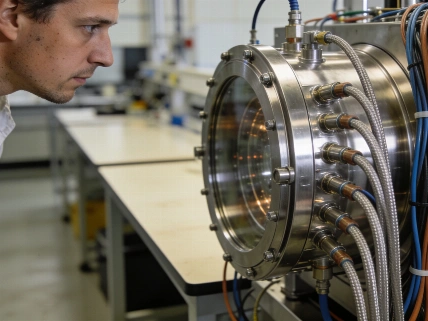
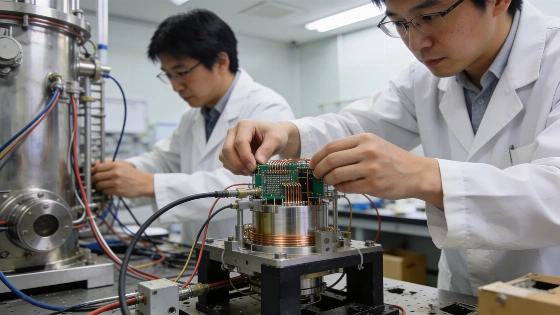
Building a gate-based superconducting quantum processor at scale requires not only advanced nanofabrication and cryogenic engineering, but also sustained investment in error correction, calibration, and control electronics. Current superconducting devices typically operate at millikelvin temperatures and require extensive shielding from environmental noise. Even with state-of-the-art fabrication, device yield and reproducibility remain significant challenges. NEC's decision reflects a sober assessment: the gap between laboratory demonstration and commercially useful quantum computation is wider than many early roadmaps suggested.
By shifting to quantum-inspired annealing and classical emulation, NEC is betting that near-term value lies in software and optimization services rather than in the uncertain race to build a universal quantum computer. This move may narrow Japan's hardware ambitions, but it also signals a pragmatic recognition of the technical and economic realities facing the field. The era when every major technology company needed its own quantum hardware lab is over; what remains is a contest to deliver measurable results, whether through quantum devices or classical algorithms inspired by quantum principles.
Superconducting qubits are quantum bits realized in circuits made from superconducting materials, typically aluminum or niobium, cooled to temperatures near absolute zero. These devices exploit quantum effects such as superposition and entanglement, but their operation is limited by decoherence, noise, and fabrication variability. Achieving useful quantum computation requires not only high-fidelity gates and long coherence times, but also scalable error correction and reliable device yield. While superconducting qubits have enabled many laboratory demonstrations, the transition to practical, fault-tolerant quantum computers remains a formidable engineering challenge.