
Plasma Physics
13 reportsFormal definitions and testable consequences form a case with different strengths and limits. Reports examine how plasma is confined and which instabilities limit performance, keeping definitions, predictions, and observations from being conflated.
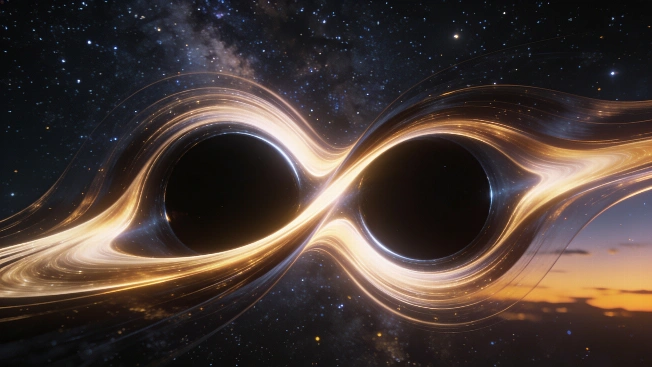
Einstein's Equations Allow a Form of Gravitational Reconnection
A solar flare releases enormous energy as magnetic fields reconnect. Physicists have now described a mathematical counterpart in gravity, while simulations and gravitational-wave observations are still needed to test its role
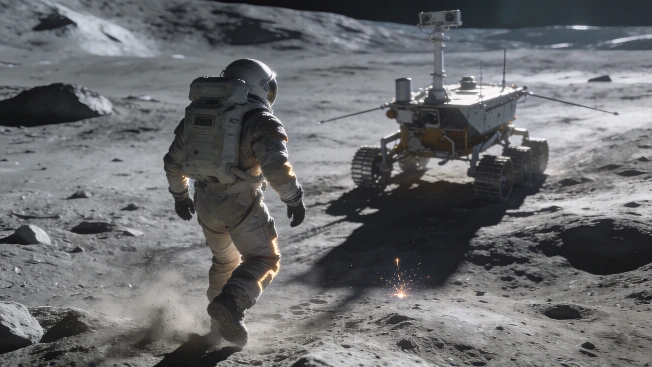
NASA Seeks a Safe Way to Ground Moonwalking Astronauts
NASA has opened a challenge for systems and procedures that can safely bring astronauts to electrical equilibrium before they touch a lander during Artemis operations near the lunar South Pole.
XRISM Tracks Stellar Wind Falling Onto a Pulsar
XRISM has traced iron-rich plasma moving toward the pulsar GX 301-2 at about 540,000 kph, providing spectroscopic evidence that a neutron star captures its giant companion's stellar wind and powers recurring X-ray flares.
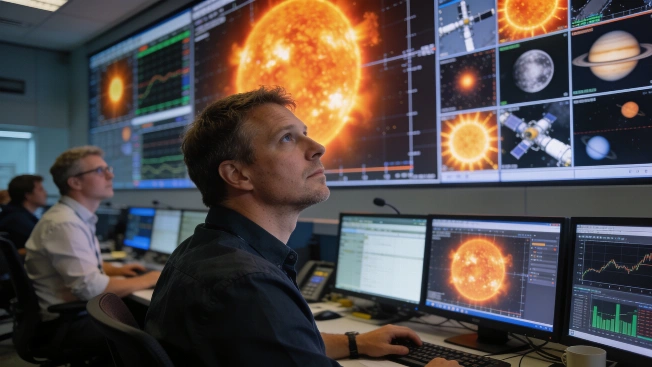
Seventeen Spacecraft Reveal Asymmetric Structure in Solar Ejection
A coronal mass ejection observed in December 2024 was tracked by 17 spacecraft across the solar system, revealing an unexpected double-lobed structure and a marked speed difference between its components
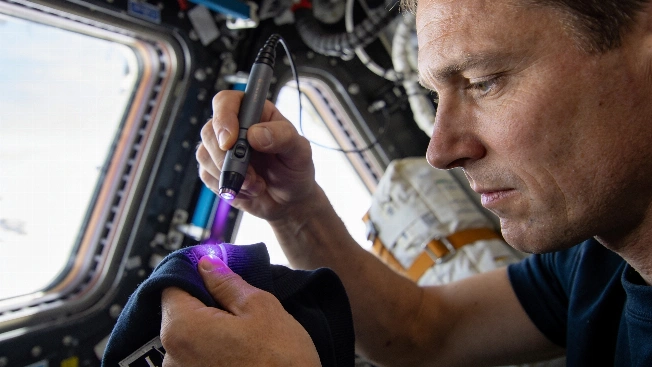
Plasma Laundry Gun Tested for Astronaut Clothing on Long-Duration Missions
Researchers have developed a pen-sized plasma device to sterilize fabrics in space, offering a potential solution for cleaning astronaut clothing without water during extended missions beyond Earth orbit
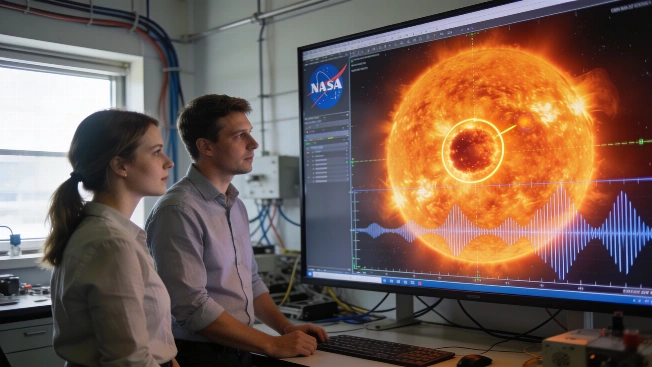
NASA AI Model Predicts Sunspot Emergence Hours Before Surface Appearance
A NASA-led team has developed an AI model that analyzes acoustic and magnetic data from the Sun to forecast the emergence of active regions up to 12 hours in advance, offering new potential for space weather prediction
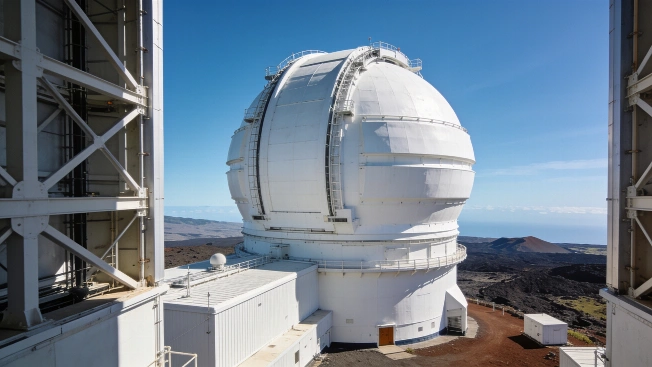
Inouye Solar Telescope Resolves Unprecedented Detail on Sun's Surface
The Inouye Solar Telescope has produced the sharpest images yet of the Sun's surface, revealing dynamic plasma structures and confirming a long-suspected fluid instability in solar plasma.
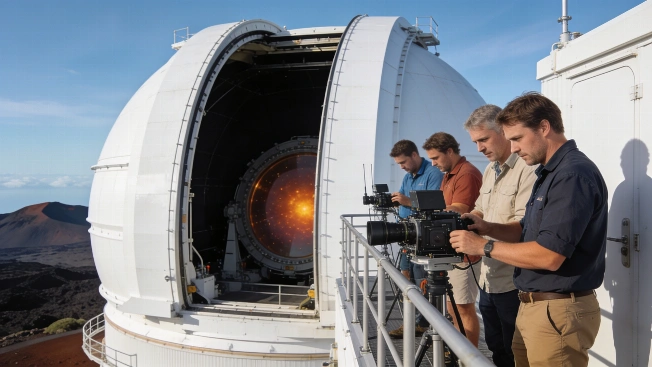
Solar Telescope Reveals Long-Predicted Plasma Vortices on Sun's Surface
High-resolution images from the Daniel K. Inouye Solar Telescope have captured thousands of plasma whirlpools on the Sun's surface, providing direct evidence for a phenomenon predicted over a century ago and offering new understanding into solar atmospheric heating.
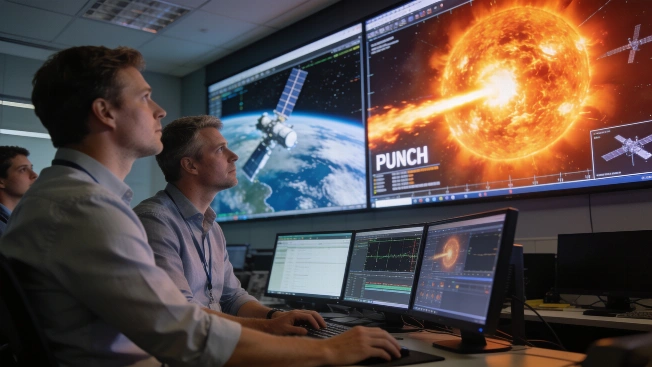
NASA's PUNCH Mission Narrows Solar Storm Arrival Forecasts
NASA's PUNCH mission has enabled scientists to predict the arrival of a solar eruption near Earth to within 30 minutes, using continuous 3D imaging of coronal mass ejections as they travel through the inner solar system.
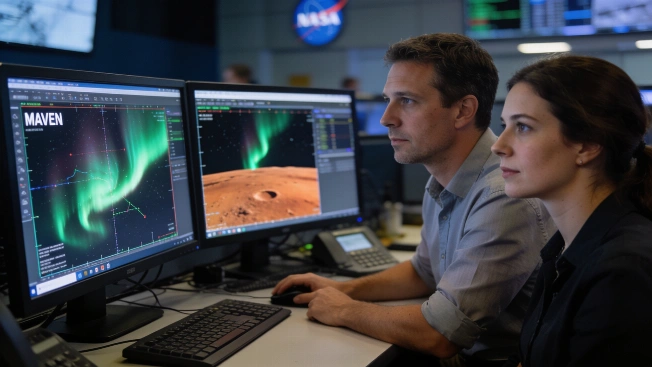
MAVEN Data Reveals Earth-Like Aurora Mechanism on Mars
NASA's MAVEN orbiter has found evidence that localized auroras on Mars are powered by a process similar to Earth's Dungey cycle, offering new understanding into Martian atmospheric loss and magnetic-field interactions.
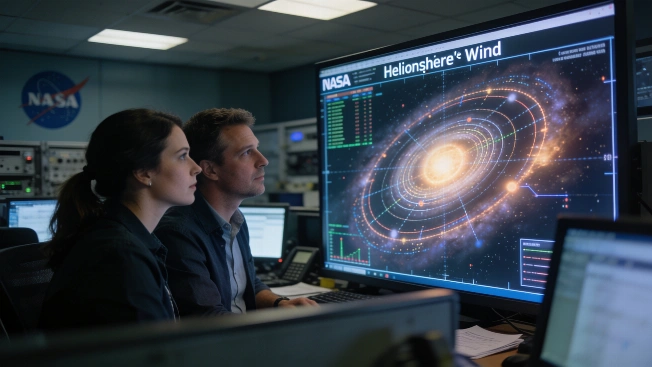
How the Heliosphere Shields the Solar System from Interstellar Space
Researchers are mapping the heliosphere, the vast bubble created by the solar wind that surrounds the Sun and planets, to understand how it protects the solar system from cosmic radiation and shapes planetary environments.
Extreme Solar Storms May Exceed Previous Impact Estimates
A new analysis of solar wind data suggests that the most powerful solar storms could cause greater geomagnetic disturbances on Earth than previously calculated, with implications for satellites and power grids
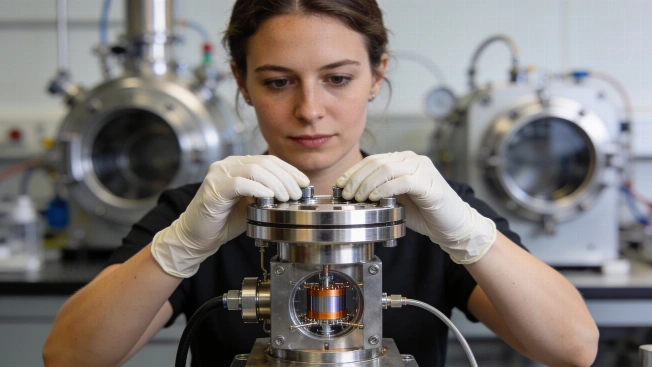
Quantum Sensors and Compact Accelerators Highlight 2026 Instrumentation Briefing
The 2026 Physics World Instrumentation & Vacuum Briefing surveys advances in quantum sensors, ultrahigh vacuum engineering, compact particle acceleration, and real-time radiotherapy monitoring, with a focus on experimental progress and engineering challenges