
Relativity and Gravity
6 reportsQuestions about how gravity is tested experimentally are tested against worked examples and gravitational waves. A second focus is which observations confirm relativity, identifying which examples clarify the concept and which expose its limits.
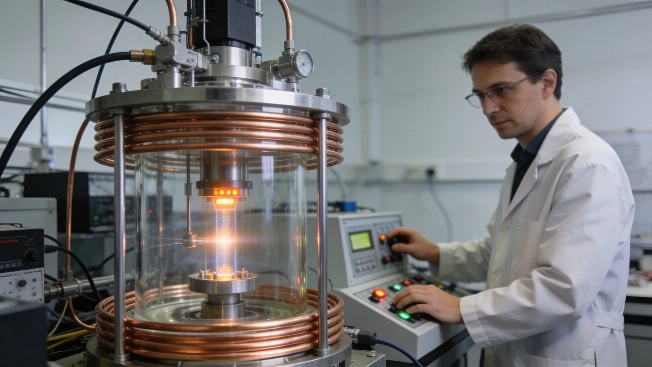
Quantum test reveals Einstein's gravity holds for falling atoms
A new experiment using ultra-cold rubidium atoms has measured how gravity affects quantum waves, providing the first direct test of Einstein's equivalence principle in the quantum regime
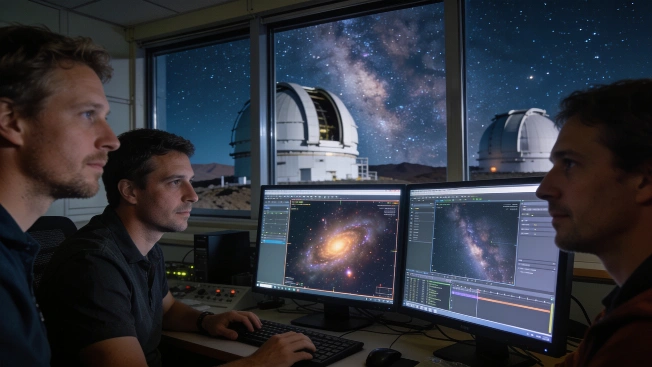
Fastest Known Star Orbits Milky Way's Black Hole in Under 9 Years
Astronomers using the Very Large Telescope Interferometer have identified S301, a star orbiting Sagittarius A* at record speed, offering a new opportunity to test general relativity near the Milky Way's supermassive black hole
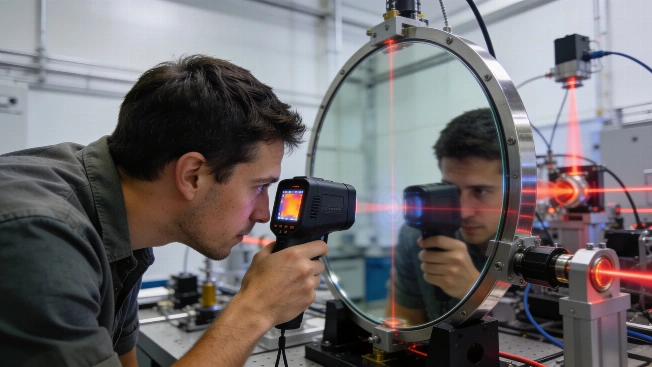
Thermal Cameras Could Sharpen LIGO's View of Distant Black Holes
Researchers have demonstrated that commercial thermal imaging cameras, combined with computer modeling, can correct heat-induced distortions in LIGO's mirrors, potentially expanding the observatory's reach by tens of millions of light-years
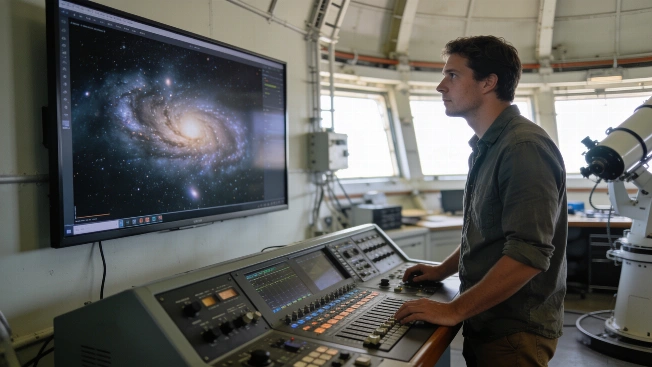
Webb Telescope Uses Gravitational Lensing to Reveal Ancient Galaxies
The James Webb Space Telescope has captured a detailed image of the galaxy cluster MACS J0553.4-3342, using gravitational lensing to magnify galaxies from the universe's first billion years
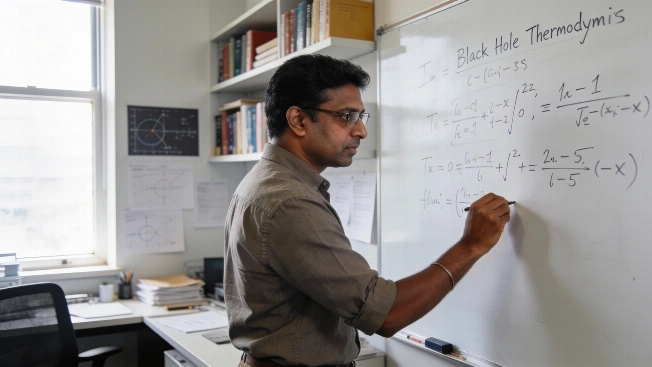
Black Hole Thermodynamics Updated Beyond Hawking's Original Theory
Physicists have proposed a new framework for describing black hole energy loss, extending thermodynamic laws to dynamic black holes and addressing a key limitation in Stephen Hawking's classic model
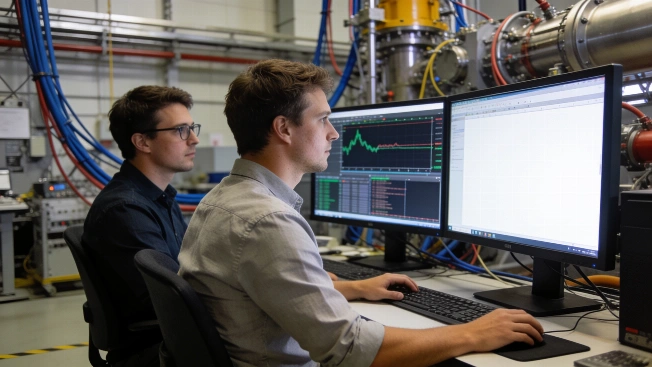
Gravitational Wave Data Reveals Black Hole Event Horizon Properties
Researchers have extracted direct physical parameters from a black hole event horizon using an unusually strong gravitational wave signal, providing new experimental access to a region previously studied only through theory