Two new studies use nuclear experiments and astrophysical modeling to clarify how supernovae forge and distribute elements like titanium and nickel, offering the most precise look yet at the processes that shape the chemical makeup of the universe
Fresh laboratory measurements are forcing astrophysicists to rethink how exploding stars manufacture and disperse the elements that make up planets, bodies, and everything else in the cosmos. For decades, models of supernovae-the violent deaths of massive stars-have struggled to match the observed abundance of certain elements. Now, new experimental data on radioactive titanium and a detailed analysis of nuclear reactions in neutron star systems are narrowing the gap between theory and observation.
Experimental Evidence from Titanium-44
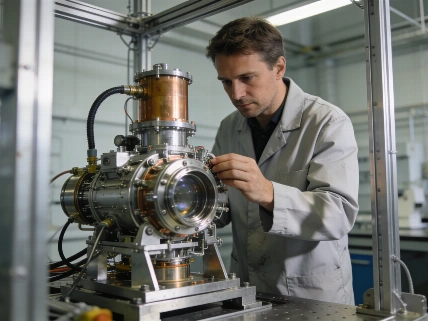
One of the most persistent puzzles in stellar physics has been the production of titanium-44, a radioactive isotope created in the heart of supernova explosions. This isotope lingers for decades after the initial blast, emitting detectable gamma rays as it decays. In a recent experiment, researchers measured the amount of titanium-44 produced under supernova-like conditions and found that these explosions generate about 35% more of the isotope than previous models predicted. This result, published in Physical Review Letters, provides a crucial benchmark for refining computer simulations of stellar explosions.
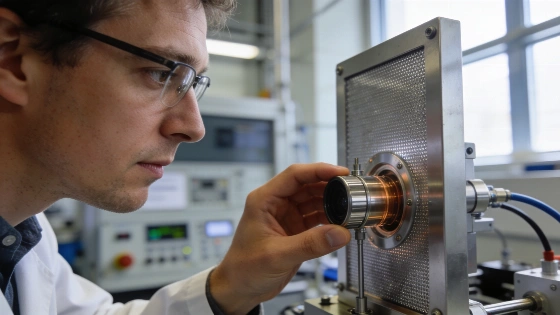
By anchoring models to this new measurement, astrophysicists can now test whether their simulations accurately reproduce the observed distribution of titanium-44 in supernova remnants. The improved agreement between experiment and observation is a step toward resolving why some supernovae appear to produce more or less of certain elements than expected. The experiment required precise control of nuclear reactions and detection of rare decay signatures, highlighting the technical challenges of replicating stellar conditions in the laboratory.
Neutron Stars and the Nickel-Copper Cycle
While core-collapse supernovae dominate the creation of many elements, another class of stellar explosions-Type I X-ray bursts-arises from neutron stars accreting material from companion stars. When this stolen matter slams onto the neutron star's surface, it triggers a thermonuclear explosion that forges heavy elements and emits intense X-ray radiation. A team at the Facility for Rare Isotope Beams (FRIB) in Michigan has now probed the nuclear reactions driving these bursts with unprecedented detail.
Their analysis focused on the so-called nickel-copper cycle, a sequence of nuclear reactions that can temporarily trap material and alter the flow of element formation. The new data show that while the nickel-copper cycle does trap some material during X-ray bursts, its effect is smaller than previously thought. This finding clarifies the role of neutron star explosions in the cosmic origin of elements and helps explain the observed patterns of X-ray emission from these systems.
Implications for Stellar Models
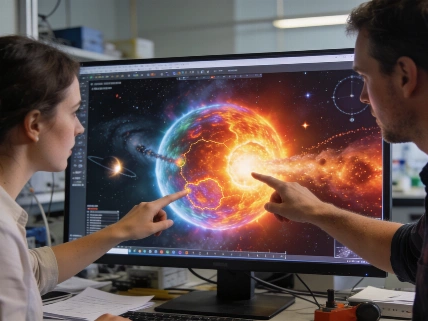
These experimental advances are already reshaping the way astrophysicists model the life cycles of stars. By integrating the new titanium-44 production rates and the refined understanding of the nickel-copper cycle, researchers can better predict the yields of heavy elements from different types of stellar explosions. This, in turn, informs models of galactic chemical evolution and the formation of planetary systems.
Precise measurements matter because even small discrepancies between predicted and observed element abundances can signal missing physics or overlooked processes in stellar models. The new results also provide a reference point for interpreting gamma-ray and X-ray observations from space telescopes, which track the radioactive decay of freshly synthesized elements in supernova remnants and neutron star systems.
Ongoing Challenges and Next Steps
Despite these gains, significant uncertainties remain. Supernovae are complex, multi-dimensional events, and current models still struggle to capture the full range of observed explosion energies and element yields. The interplay between nuclear physics, hydrodynamics, and neutrino transport continues to challenge theorists. Further laboratory experiments and high-resolution astronomical observations will be needed to close the remaining gaps.
As researchers refine their models, they are also comparing their findings with other recent discoveries in the field. For example, the search for starless galaxies and the role of dark matter in shaping galactic evolution, as reported earlier, provide complementary context for understanding how elements are distributed across the universe. The convergence of laboratory, observational, and theoretical work is gradually transforming the study of stellar explosions from a field dominated by speculation to one grounded in reproducible evidence and quantitative prediction.
These new results underscore the value of direct measurement in astrophysics. By anchoring models to laboratory data, researchers are exposing the limits of long-standing assumptions and forcing a more rigorous accounting of the processes that shape the universe's chemical inventory. The path forward will require continued investment in both experimental nuclear physics and high-sensitivity astronomical instrumentation, but the payoff is clear: a more accurate, evidence-based understanding of how stars build the elements that make planets-and life-possible.
Supernova nucleosynthesis refers to the process by which heavy elements are created during the explosive death of a star. In core-collapse supernovae, the intense heat and pressure drive nuclear reactions that fuse lighter elements into heavier ones, including radioactive isotopes like titanium-44. The decay of these isotopes produces gamma rays that can be detected by space-based observatories, providing a direct window into the aftermath of stellar explosions. Laboratory experiments that replicate these nuclear reactions help calibrate astrophysical models, while astronomical observations test whether those models match reality. The interplay between experiment, theory, and observation is essential for unraveling the origins of the elements found throughout the universe.