
Optics and Photonics
91 reportsSpectroscopy and optical fibers make up the scientific record used here. Its limits become clearer when asking how losses limit devices and where quantum effects appear, keeping definitions, predictions, and observations from being conflated.
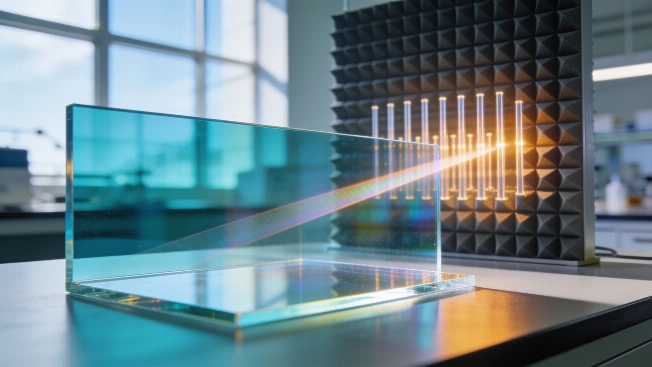
Metamaterials Move From Lab Designs Toward Practical Uses
A UK roadmap published in October 2026 sets out five steps to move metamaterials from academic research toward industry, as work on light control and sound management reveals useful applications alongside persistent manufacturing barriers.
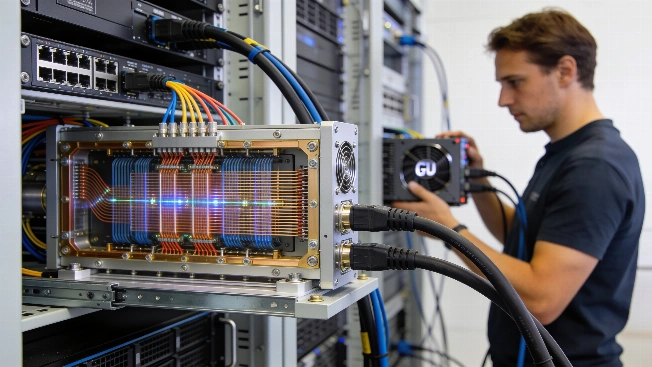
H100 Benchmarks Set Photonic Sampling Frontiers
A new benchmark measures when exact classical samplers fall below one sample per second on a single H100, while showing how GPU scaling and continuous photonic output change the comparison
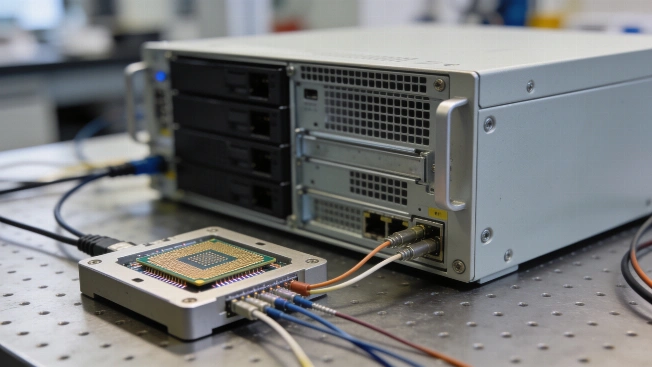
PsiQuantum and AMD Plan Classical Infrastructure for Photonic Quantum Systems
The collaboration brings AMD computing into PsiQuantum's photonic program and adapts the PRISM decoder for Versal chips. The equity investment is planned and a Chicago co-location is still being evaluated
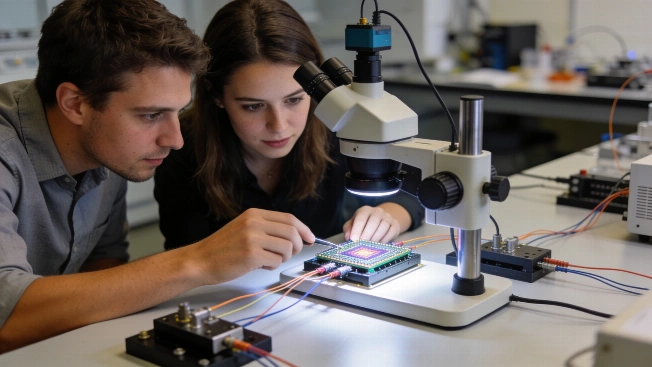
Xanadu Revenue Rises 32% as R&D Spending Jumps
Revenue growth came from DARPA contract deliveries and commercial milestones, while a $140 million Canadian loan and other funding sources support Xanadu's manufacturing plans and research program
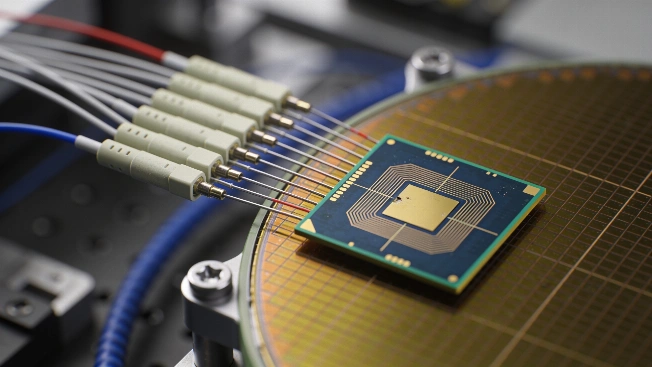
Xanadu and HyperLight Report 7 mdB Photonic Switch Loss
The companies report a 7 mdB switch benchmark across production wafers using HyperLight's TFLN Chiplet platform, a reduction from their 20 mdB milestone in 2025
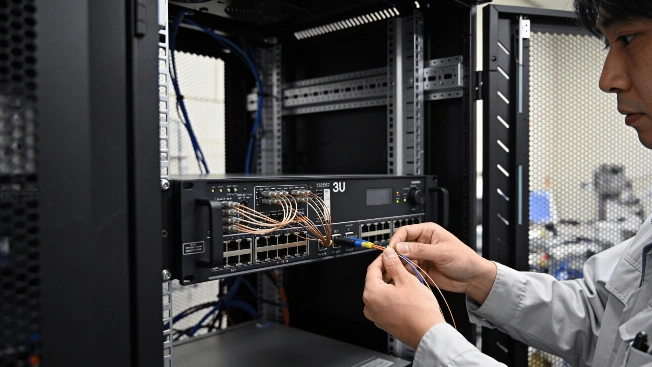
Dutch Mission Sets Targets for a 100+ Qubit Photonic Processor
The three-year program assigns shared engineering targets to Dutch research groups and companies, including sub-10 ns feed-forward control and 0.1 dB coupling loss per fiber facet
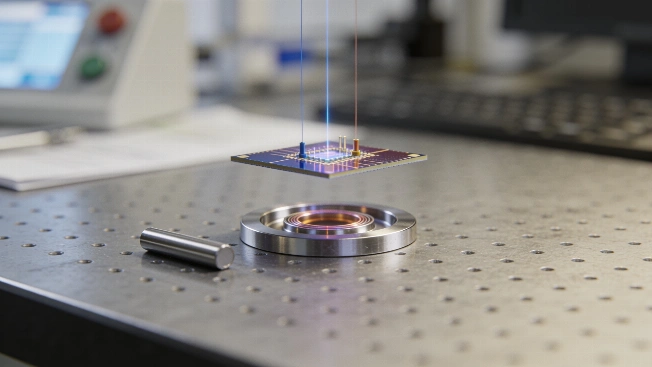
EPFL Device Converts Millimeter Waves to Light at 67%
A thin-film lithium niobate photonic molecule paired with a sub-millimeter resonator reached 67% internal conversion efficiency, while free-space antenna coupling keeps total wireless efficiency far lower

Q-Block Establishes Ottawa Base for Quantum Hardware R&D
The Canadian developer has taken an operational facility at 20 Colonnade Road while keeping manufacturing and assembly in Alberta. Its Ottawa base connects prototype design and software development with Alberta fabrication
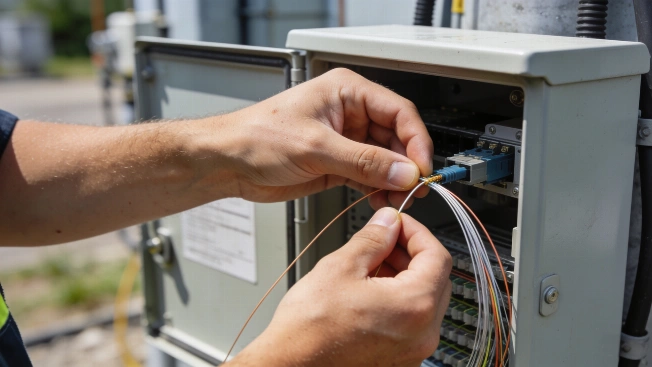
Lumen Pairs Ohio State Fiber Research With PQC SASE Plans
Ohio State researchers will assess how commercial fiber handles non-classical light as Lumen outlines a separate plan to add Fortinet post-quantum cryptography to its managed SASE service

Optical Atomic Clock Runs Aboard Navy Support Vessel
During Maritime Big Play Pacific Infleqtion says Tiqker operated continuously aboard RV Merlin for two weeks and supported BARB-26. The trial tested local timing in a GPS-degraded setting but supplied no numerical stability result
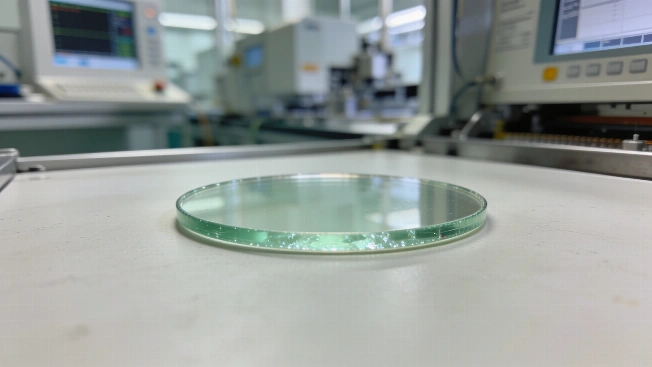
Wolfspeed Offers Transparent SiC Wafers for Quantum Hardware
Wolfspeed says its 150 mm and 200 mm transparent 4H-SiC wafers are commercially available while 300 mm substrates remain at the sampling stage; the announcement does not demonstrate quantum-device performance
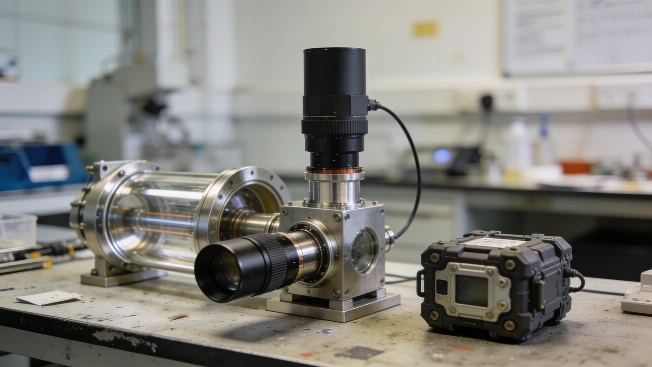
UK Roadmap Targets Sovereign Quantum Space Systems by 2040
The structure sets four investment themes and prioritizes qualification infrastructure as the UK seeks to move laboratory prototypes toward flight-ready systems across a 2035-2040 planning horizon
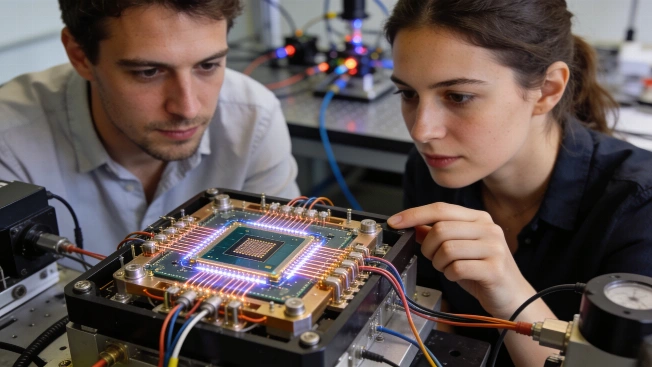
Molecular Qubits Show Single-Spin Optical Readout
At 4.5 K researchers used light to initialize and read individual molecular spins, with coherence reaching 2.2 ms under dynamical decoupling. Chip integration remains a development goal
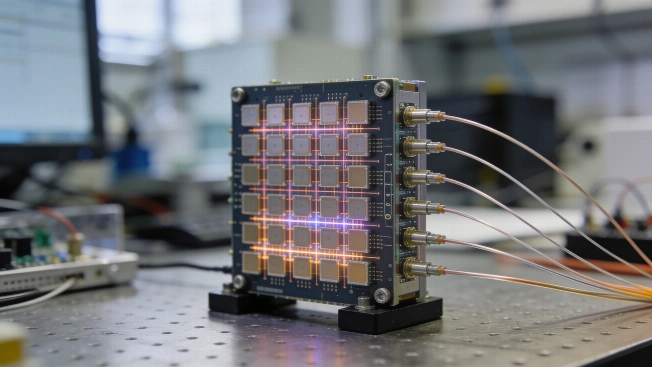
PsiQuantum Adapts Quantum Photonics for AI Cluster Switching
The 8×8 optical switch uses PsiQuantum's low-loss silicon waveguides while omitting the barium titanate layer used in its quantum routing design, targeting interconnect bottlenecks in AI clusters
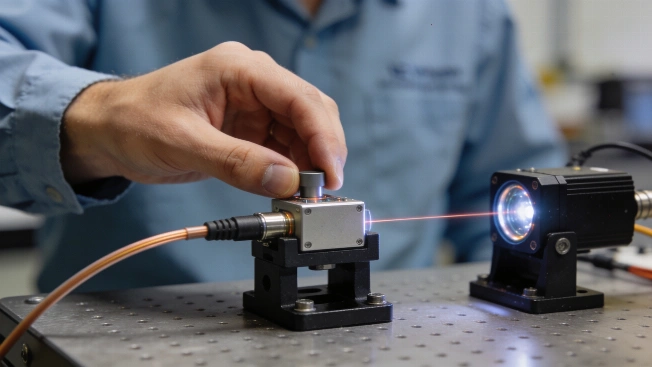
IonQ Gets $7.5M to Extend AFRL Quantum Network
At AFRL's Rome site the planned work would connect trapped-ion hardware with other quantum processors over fiber and open air. The announcement reports no conversion-efficiency or network-rate results

Toshiba Targets Lit-Fiber Quantum-Safe Networks
Toshiba's network design uses optical switching and DWDM to carry quantum-key channels over lit fiber. A Singapore demonstration also linked hybrid keys to enterprise IPsec VPNs
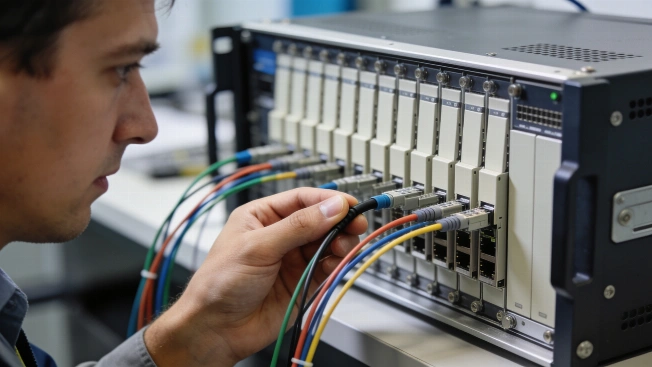
South Korea's Quantum Testbed Plan Sets a 2028 Network Goal
South Korea has begun a three-year effort to extend quantum communications testbeds beyond Seoul, Pangyo and Daejeon. Its 2028 network goal is a plan, not yet a reported performance result
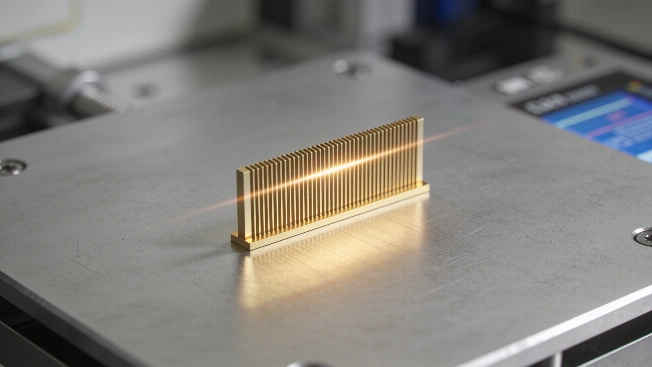
Gold Grating Splits Plasmon Modes by Light Spin
A periodic gold nanostructure produced different plasmon responses to left- and right-circularly polarized light. The proposed mechanism relies on the focused beam and grating geometry rather than built-in structural asymmetry.
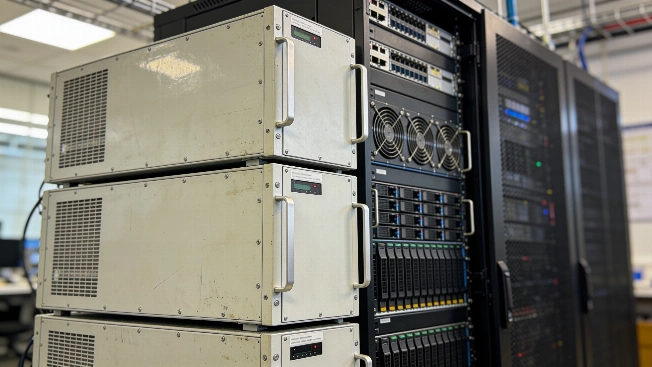
ORCA's PT-3 Brings Photonic Quantum Hardware Into London
A room-temperature PT-3 system is running alongside NVIDIA GPUs at a London new idea lab. ORCA reports results in protein design and energy scheduling, though its announcement leaves basic benchmark methods and comparative details unspecified.
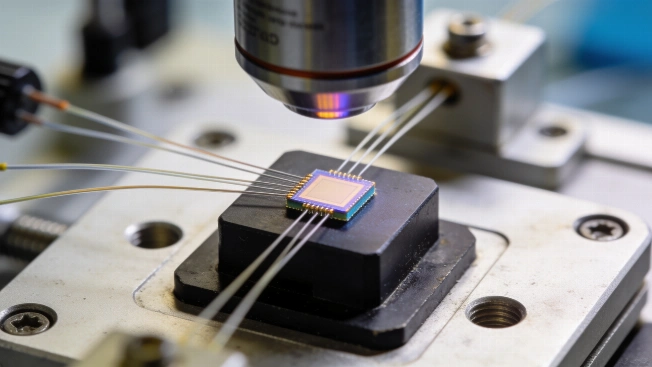
A Photonic Chip Transfers Skyrmion Topology Between Quantum States
An integrated silicon nitride photonic chip transferred a skyrmion pattern from a single-photon state into correlations between two photons. The reported topological number remained measurable under noise even after concurrence fell to zero: a result about state structure, not proof of a functioning quantum network.
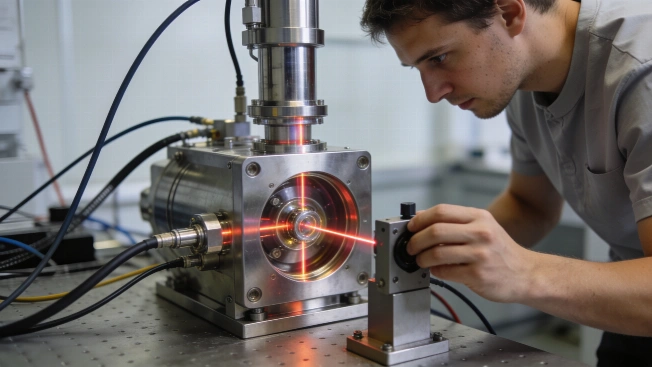
Quantum X Labs Targets Three Quantum Hardware Bottlenecks
Quantum X Labs has reported patent activity in neutral-atom control and quantum-circuit watermarking while developing a platform that combines Ramsey-CPT timing with Rydberg radio-frequency sensing; the available record shows active development, not a demonstrated quantum computer or field-ready instrument.

A Microcomb Chip Solves a Key Problem in Optical Metrology
A foundry-fabricated photonic chip has produced a self-aligned octave-spanning microcomb by driving one resonator with two lasers separated by an octave, demonstrating a potential route to compact precision metrology.
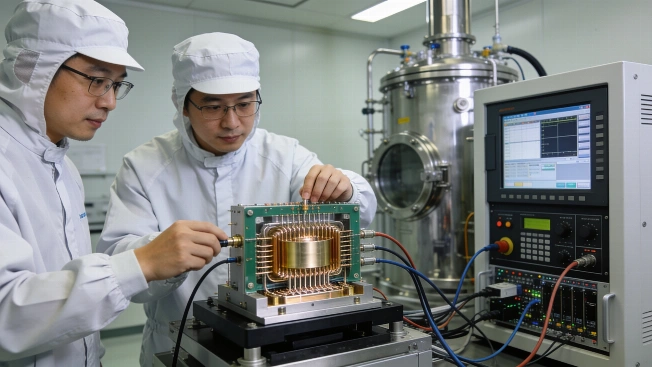
NTT DOCOMO BUSINESS and Classiq Plan Japan's Enterprise Quantum Software Push
On 8 October 2026, NTT DOCOMO BUSINESS and Classiq's Japanese subsidiary signed a memorandum of understanding to market Classiq's quantum software and jointly identify, develop and validate enterprise applications in Japan. The announcement describes a planned collaboration, not a completed deployment, performance result or demonstration of quantum advantage.
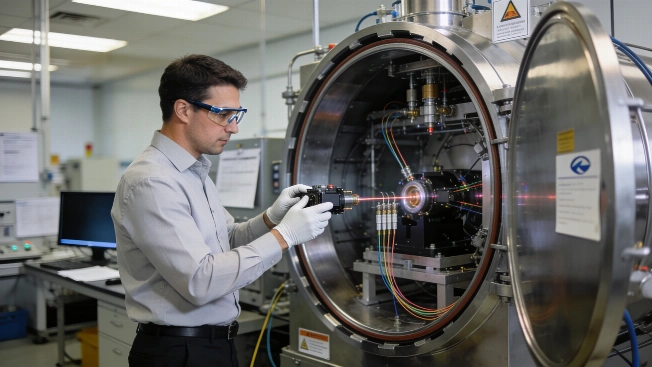
U.S. Backs Photonic Quantum Manufacturing With $150 Million Loan
The Department of War has outlined a $350 million quantum initiative, including up to $150 million in conditional financing for PsiQuantum's Milpitas manufacturing hub and approximately $200 million for independent hardware validation under DARPA's Stage C program.
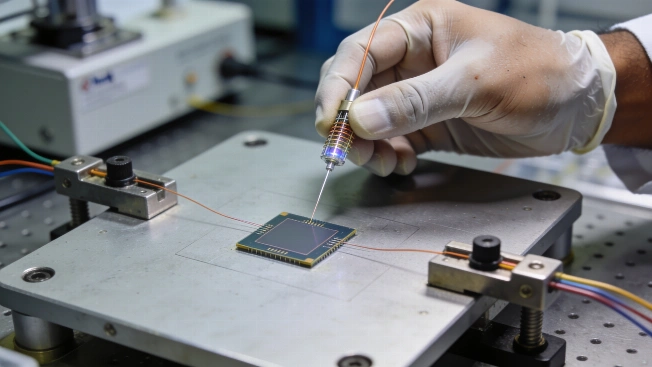
India Advances Silicon Photonics for Quantum Communications and AI
India's five-year silicon photonics programme has entered Phase II, targeting 200 mm wafer design libraries, 1.6 Tbps optical transceivers, microwave photonics above 50 GHz, AI-oriented photonic computing and chip-scale QRNG/QKD circuits.
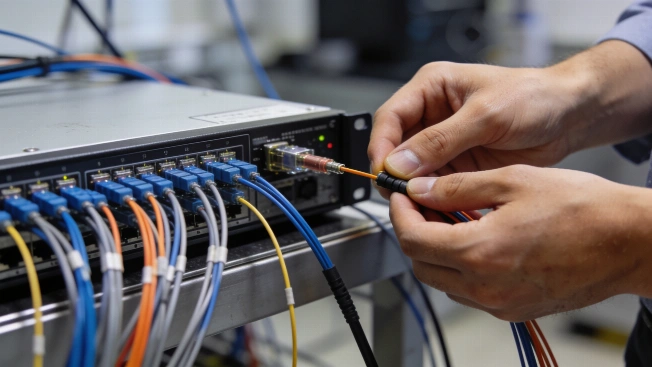
Cisco Targets Quantum Networks With Entanglement Control Software
Cisco has released research prototypes that let quantum software request entanglement across networked QPUs while a compiler accounts for optical loss, switching delays and distributed error-correction constraints.
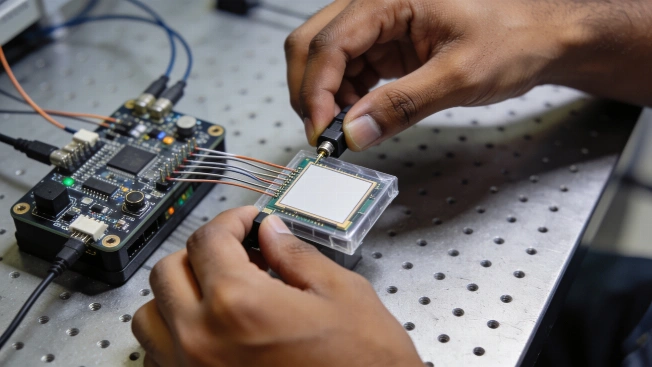
Quanfluence Bets on Photonic Chips for a Full-Stack Quantum System
Bengaluru startup Quanfluence has raised $10 million to bring photonic chips and custom control silicon together with optics and software in one architecture, with a four-qubit processor targeted for the near term and a larger prototype planned for 2029.
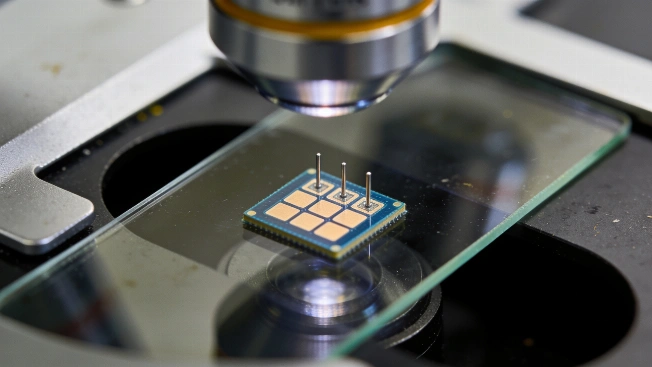
ZuriQ Demonstrates Nine Ion Qubits on a 2D Trap Chip
ZuriQ and Infineon have demonstrated a 3×3 two-dimensional Penning micro-trap with nine individually controlled ion qubits. They are now pursuing larger modules and semiconductor fabrication, with integrated photonics also in view, without claiming to have built a fault-tolerant processor.
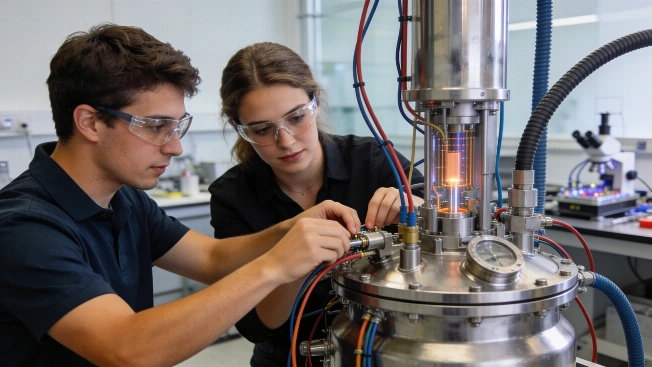
FSU Wins $2.1M to Build Quantum Communication Testbed
Florida State University will build a campus-scale quantum communication testbed linking engineering and high-field facilities to study entangled photons amid turbulence and magnetic fields, with cryogenic cycling also in scope.
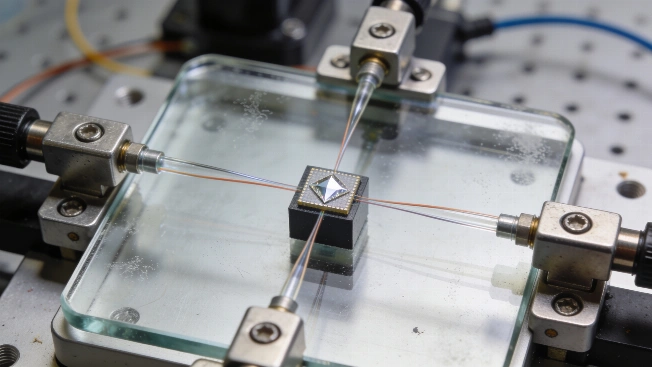
Quantum Sensor Network Research Wins $600,000 NSF Grant
A three-year NSF award, beginning June 1, 2026, will fund a Stony Brook and University of Hawaiʻi collaboration on entangled sensor nodes using squeezed-light photonics and diamond spin centers under realistic noise.
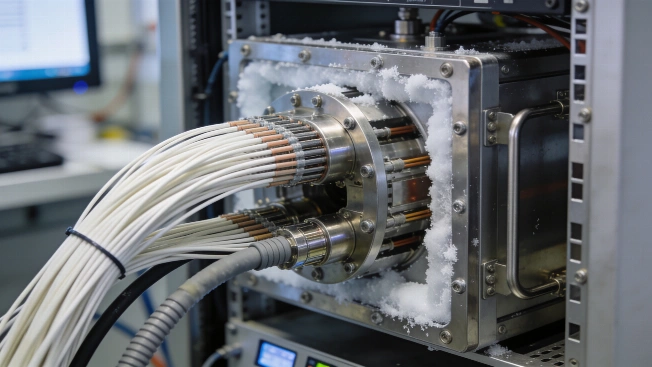
Xanadu and Bluefors Target the Cryogenic Bottleneck in Quantum Scaling
Xanadu and Bluefors announced a multi-million-dollar partnership on September 29, 2026, to develop modular cryogenic infrastructure for photonic quantum systems whose SNSPD detectors must operate near 2 kelvins.
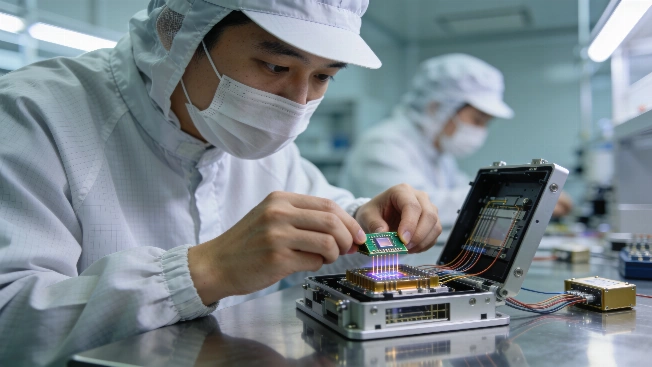
Quandela Targets South Korea for Photonic Quantum Hardware
Quandela has identified South Korea as a potential Asian center for photonic quantum hardware, system integration and joint R&D, while emphasizing that the initiative remains a partner-search and development structure rather than a completed manufacturing agreement.
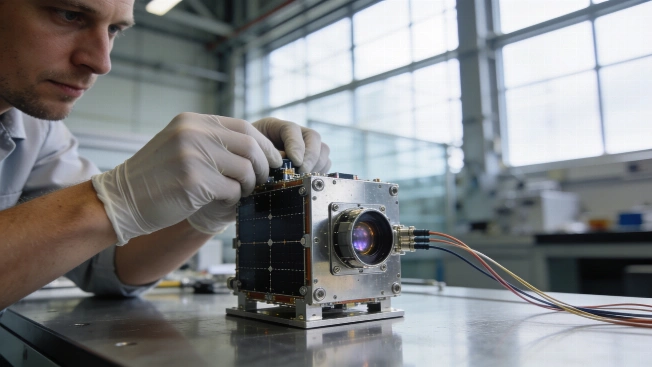
Quantum Photonic Processor Survives Its First Orbit Test
A University of Vienna payload has demonstrated two-photon interference and programmable matrix execution in orbit, showing that integrated photonic quantum hardware can operate beyond the laboratory.
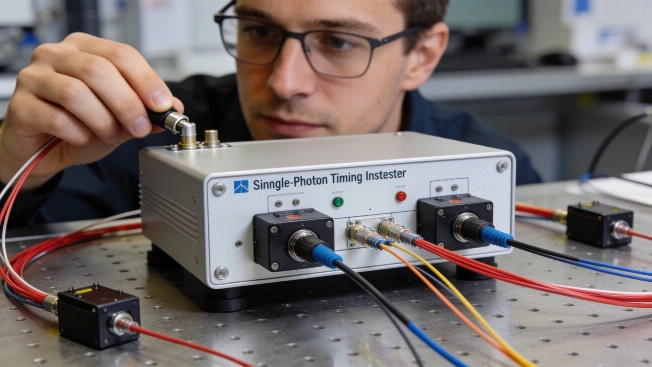
Quantum Effects 2026 Awards Four Routes Toward Useful Quantum Hardware
Quantum Effects 2026 has recognized four application-focused projects: quantum annealing hardware and open-source software, alongside atomic magnetometry and photon timing for networked QKD. The winning projects are set to be presented publicly in Stuttgart on 6-7 October 2026.
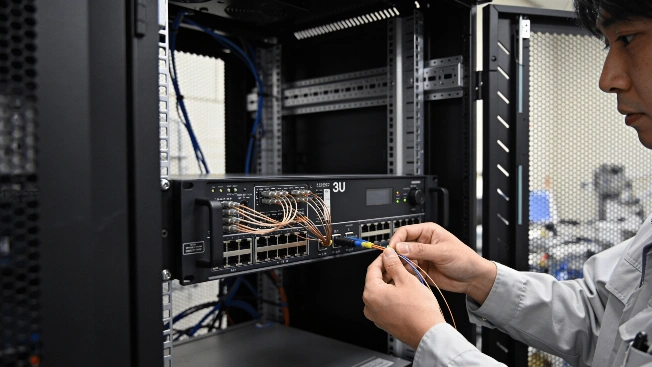
QuiX Quantum Brings Photonic Quantum Hardware to Japan
QuiX Quantum has appointed Sendai-based TEI-C as its exclusive Japanese distributor, giving universities, research institutes and industry local access to Alquor 2.0 photonic processors and PACU control systems.
Part 1 of 3