Universal Quantum has opened its first Asia-Pacific R&D center in Singapore, aiming to advance trapped-ion quantum processor fabrication and algorithm co-design with over SGD 30 million in investment
Universal Quantum has moved beyond European borders with a high-stakes commitment: more than SGD 30 million is being funneled into a new R&D Competency Centre in Singapore, marking the company's first dedicated quantum hardware facility in the Asia-Pacific region. This expansion is not a symbolic outpost but a technical and financial anchor, positioning Singapore as a manufacturing and design hub for advanced trapped-ion quantum processors.
Trapped-Ion Hardware and Local Integration
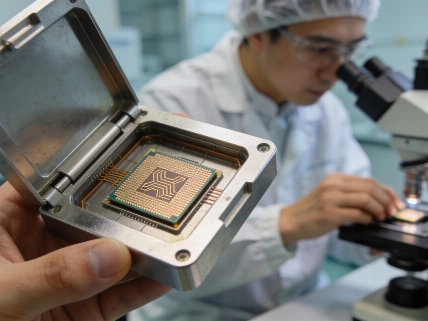
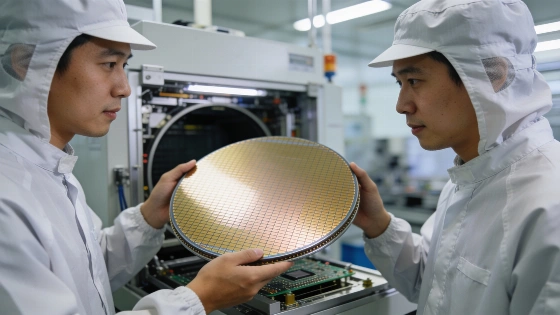
The Singapore center is designed to serve as Universal Quantum's regional headquarters, focusing on the fabrication and packaging of ion-trap microchips. The facility will initially employ 25 specialists, including physicists, semiconductor engineers, and computer scientists, who will leverage local fabrication lines at the Agency for Science, Technology and Research (A*STAR). The technical agenda centers on 300mm wafer processing and micro-assembly, aiming to produce high-density modules for trapped-ion quantum processing units (QPUs).
At the heart of the project is the integration of Universal Quantum's electronic quantum chip architecture with Singapore's established semiconductor packaging ecosystem. The company's stated goal is to address the physical interconnection bottlenecks that have limited the scaling of trapped-ion systems, with the long-term ambition of supporting a million-qubit quantum computer. However, no such system has yet been demonstrated, and the engineering challenges of scaling trapped-ion arrays-such as crosstalk, control wiring, and thermal management-remain substantial.
Strategic Investment and National Collaboration
The center's funding is drawn from both Universal Quantum's corporate reserves and direct investment by EDBI, the venture capital arm of Singapore's Economic Development Board. EDBI has also taken a strategic equity stake in the company. The initiative is coordinated with Singapore's National Quantum Office and the Economic Development Board, embedding the new facility within the country's national quantum program. This move follows a pattern of international quantum hardware developers seeking access to Asia's semiconductor infrastructure and public funding, as seen in reported earlier efforts to deploy neutral-atom processors for specialized simulation tasks.
Universal Quantum's Singapore operation is intended to complement its ongoing €67 million contract with the German Aerospace Center (DLR), which remains focused on European deployment. The company's expansion is also supported by the British High Commission in Singapore, signaling a bilateral technology corridor between the UK and Singapore. The new center is expected to serve as a regional anchor for both hardware development and quantum algorithm design, with a stated focus on applications in pharmaceuticals, logistics, and materials science.
Technical Roadmap and Engineering Constraints
The technical roadmap for the Singapore facility emphasizes the co-design of hardware and algorithms, with the aim of producing fault-tolerant quantum circuits tailored to local industry needs. The company plans to exploit Singapore's advanced semiconductor packaging capabilities to develop microchip modules with high interconnect density. Yet, the transition from laboratory-scale devices to manufacturable, large-scale quantum processors is far from solved. Key engineering hurdles include maintaining ion coherence across large arrays, minimizing error rates, and ensuring reproducible device yield at the wafer scale.
Universal Quantum's approach relies on integrating electronic control with ion-trap arrays, a strategy that could reduce wiring complexity and improve scalability if successfully implemented. However, the company has not released detailed device specifications, error rates, or independent benchmarking data for its current hardware. Without such evidence, claims of imminent million-qubit systems remain aspirational. The facility's initial focus on process development and algorithm design reflects the reality that practical, large-scale quantum computing will require advances in both device engineering and error correction.
Regional Competition and Industry Implications
Singapore's aggressive investment in quantum infrastructure is part of a broader regional competition to attract quantum hardware developers and secure a role in the global supply chain for advanced computing. The presence of local fabrication lines and public funding makes Singapore an attractive site for companies seeking to move beyond laboratory prototypes. However, the technical and economic barriers to building useful, scalable quantum computers remain high, and no trapped-ion system has yet demonstrated practical advantage over classical hardware for industrially relevant tasks.
Universal Quantum's expansion into Singapore is a calculated move to access fabrication resources, public investment, and a skilled workforce. The company's willingness to anchor its Asia-Pacific operations in Singapore reflects both the strengths of the local semiconductor ecosystem and the unresolved challenges of scaling quantum hardware. Until the company publishes detailed device data and independent benchmarks, the significance of this expansion will remain defined by its engineering output rather than its investment headline.
Trapped-ion quantum computers use individual ions-charged atoms-confined and manipulated by electromagnetic fields as physical qubits. These systems are valued for their long coherence times and high-fidelity gate operations, but scaling to large numbers of qubits introduces new engineering problems. Crosstalk between ions, control wiring complexity, and thermal management all become more difficult as device size increases. Achieving fault-tolerant quantum computation will require not only improvements in device fabrication and packaging but also robust error correction and reproducible manufacturing at scale. The distinction between physical and logical qubits is central: while physical qubits are the building blocks, logical qubits encode information redundantly to detect and correct errors, and the overhead for this process remains a major barrier to practical, large-scale quantum computing.