A proposed satellite-based detector could identify nuclear warheads concealed on spacecraft by measuring neutron emissions, offering the first practical method to verify the decades-old ban on nuclear arms in space
The risk of a nuclear weapon detonating in Earth's orbit is not theoretical. In 1962, the United States exploded a 1.45-megaton device 400 kilometers above the Pacific, disabling satellites, disrupting communications, and contaminating near-Earth space with radiation for years. Today, with more than 48,000 tracked objects in orbit and global reliance on satellite infrastructure, the consequences of a single nuclear blast would be catastrophic-yet the world still lacks a reliable way to confirm that no nation has placed such weapons in space.
Detection challenge in orbit
Since the Outer Space Treaty entered force in 1967, prohibiting nuclear weapons in orbit, verification has remained a technical dead end. Unlike terrestrial nuclear tests, which produce seismic and atmospheric signatures, a warhead hidden inside a satellite leaves no obvious trace. Routine satellite tracking cannot distinguish a scientific payload from a concealed weapon, and no international inspection regime exists for on-orbit hardware.
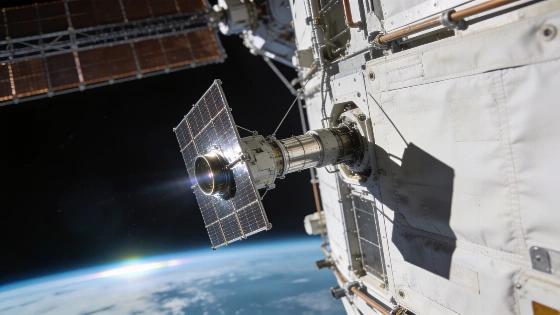
A recent feasibility study led by Massachusetts Institute of Technology physicist Areg Danagoulian proposes a new approach. The concept relies on a compact satellite equipped with neutron-sensitive detectors. By exploiting high-energy protons trapped in Earth's magnetic field, the system would probe nearby spacecraft for the neutron bursts expected when these protons interact with fissile material such as uranium. According to the study, a detector the size of an encyclopedia could identify a nuclear warhead from a distance of 4 kilometers after about a week of observation, with faster detection possible at closer range.
This method, if realized, would represent the first practical tool for verifying compliance with the Outer Space Treaty. However, the approach depends on maintaining close proximity to the target satellite for extended periods-a maneuver that could itself be interpreted as hostile or intrusive by satellite operators.
Historical context and technical risks
The destructive potential of nuclear detonations in space is not speculative. The Starfish Prime test in 1962 destroyed or damaged a third of all satellites then in orbit, including Telstar 1 and Ariel 1, and left a persistent radiation belt that rendered parts of low Earth orbit hazardous for years. The Soviet Union's Project K tests produced similar effects, disrupting power and communications on the ground.
Modern satellites are even more vulnerable. Unlike Cold War-era spacecraft, many current satellites use commercial-grade electronics that are not shielded against intense radiation. A single high-altitude nuclear explosion could disable most unhardened satellites within weeks or months, with direct financial losses estimated at $500 billion and broader economic impacts potentially reaching $3 trillion. The sheer density of satellites today means that collateral damage would be unavoidable, affecting navigation, communications, weather forecasting, and military operations worldwide.
Despite these risks, there have been no confirmed nuclear detonations in orbit since the 1960s. The strategic logic is clear: any nation capable of such an attack would likely destroy its own assets as well. Yet the absence of a reliable detection mechanism leaves open the possibility that weapons could be stationed in orbit undetected.
Policy limits and diplomatic friction
Implementing a satellite-based detection system would require more than technical capability. Approaching another nation's spacecraft for inspection would raise immediate suspicions of espionage or attack, and could be interpreted as a violation of sovereignty. Any effective verification regime would depend on international cooperation and clear protocols for on-orbit inspection-conditions that do not currently exist.
Recent allegations by U.S. officials that Russia may be developing a nuclear anti-satellite weapon have renewed attention to these gaps. In 2022, the Russian military satellite Kosmos-2553 entered a high-radiation orbit, exhibiting erratic behavior that U.S. officials described as consistent with a potential nuclear payload. Russia denied the claim, stating the mission was for electronics testing. The lack of independent verification illustrates the policy vacuum: without a trusted detection method, accusations and denials remain unresolved.
As the number of actors in space grows and launch costs fall, the risk calculus shifts. Nonstate or rogue actors with little to lose may find nuclear weapons in orbit more attractive than established space powers, whose own fleets would be at risk from any detonation. The absence of a credible verification tool leaves the international community reliant on trust and deterrence rather than enforceable norms.
Scientific and operational consequences
The proposed neutron detection method offers a technically plausible path to verifying the presence of nuclear weapons in orbit, but its operational deployment would require unprecedented transparency and cooperation among spacefaring nations. The system's sensitivity, range, and false positive rate remain to be demonstrated in practice, and the diplomatic hurdles to routine on-orbit inspection are formidable.
For now, the Outer Space Treaty remains a promise without a practical enforcement mechanism. The scientific community has long recognized the dangers of nuclear detonations in space, but the lack of verification capability has left a critical vulnerability unaddressed. As new detection concepts emerge, the challenge will be to translate technical feasibility into operational reality-without triggering new conflicts or undermining the fragile trust that has so far prevented disaster.
While the technical details of neutron detection are advancing, the real test will be whether nations are willing to accept intrusive verification in the name of collective security. Until then, the risk of hidden nuclear weapons in orbit remains a policy problem as much as a scientific one. The current situation is a reminder that technological solutions alone cannot substitute for political will, and that the stakes for space safety have never been higher. For a related example of how physical signals can reveal hidden events in space, see this earlier breakdown of infrasound detection following a rocket explosion.
Neutron detection in space relies on measuring high-energy particles produced when cosmic protons interact with fissile material. Specialized sensors can register these neutrons, but distinguishing them from background radiation and cosmic sources requires careful calibration and extended observation. The sensitivity of such detectors depends on their size, shielding, and proximity to the target. In practice, operational constraints-such as orbital mechanics, satellite maneuverability, and international protocols-will determine whether this method can move from concept to routine enforcement. Understanding these technical and procedural limits is essential for evaluating the future of nuclear arms control in orbit.