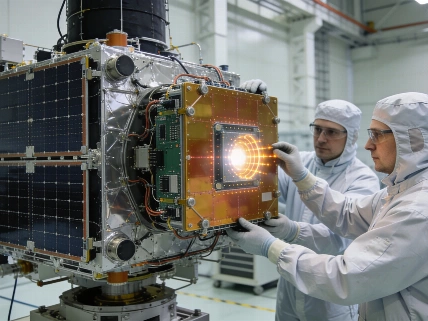
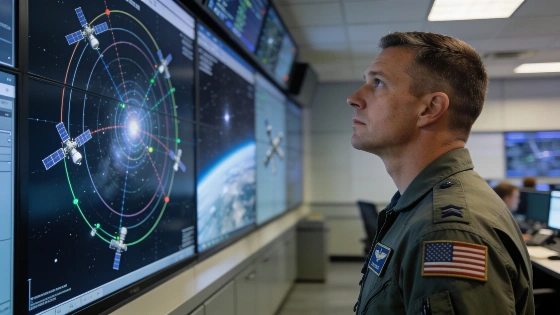
The US Air Force has acknowledged the presence of operational space control weapons in Earth orbit, prompting renewed scrutiny of international agreements and the risk of an orbital arms race
The United States has publicly confirmed it has operational weapons in Earth orbit. The announcement came from US Air Force Secretary Troy Meink on September 15, 2026, at the Air, Space and Cyber Conference near Washington, D.C. This is the first time the US has directly acknowledged such military activity in space, breaking with years of official silence. The move has renewed debate about the limits of international treaties and the risk of an arms race in orbit, especially as tensions with Russia and China remain high, according to Reuters and CNBC.
Official Disclosure and Its Implications
Secretary Meink said the US now has "on-orbit space control weapons capable of defending the Joint Force against hostile adversary action." He did not provide details about the type, number, or technical features of these systems, nor did he say when they became operational or if they have been tested. This is the most direct confirmation so far of American space-based military capabilities. The announcement has already drawn international concern, with many seeing it as a sign of further militarization and a possible trigger for an orbital arms race.
The Outer Space Treaty, signed in 1967 by the US, the Soviet Union, and others, bans nuclear weapons and other weapons of mass destruction in orbit. However, as recent legal reviews point out, it does not prohibit all conventional weapons in space, leaving a legal gap. The US has not said these new systems are nuclear, but the announcement has put new focus on the treaty's limits and the risk of escalation among countries with space programs.
Historical Context and Treaty Limitations
Concerns about military activity in space are not new. The Outer Space Treaty was created during the Cold War to keep the most dangerous weapons out of orbit, but its language leaves room for interpretation. There are no verification rules, and rapid advances in space technology make it hard to monitor compliance or tell the difference between defensive and offensive systems. NASA and the European Space Agency have long supported peaceful use of space and called for international cooperation and transparency.
Efforts to strengthen oversight have stalled, so the treaty remains mostly symbolic. As the US clarifies its own activities, other countries may feel pressure to respond, raising the risk of a buildup. Many space technologies can be used for both civilian and military purposes, making it even harder to separate the two. Studies in journals like Nature have highlighted how difficult it is to distinguish between scientific and military satellites, especially as satellites get smaller and more automated.
Technical and Strategic Uncertainty
Details about the US systems remain classified. "Space control weapons" could mean anything from kinetic interceptors to electronic warfare tools. Without independent verification, it is unclear if these assets are only for defense or could be used to disable or destroy other satellites. There is also no public information about their operational status, as reported by CNBC and Military Times.
The US and other countries have tested anti-satellite (ASAT) capabilities in the past, but open deployment has been rare. The current announcement does not say if the new weapons are launched from the ground or based entirely in orbit, or how ready they are for use. This lack of detail leaves open questions about escalation and the risk of mistakes during a crisis. For context, assembling and maintaining hardware in orbit is complex, as seen during NASA's STS-69 mission, which highlighted the technical challenges of large-scale space operations.
Potential for an Orbital Arms Race
The US disclosure has sparked debate among policymakers and analysts about the risk of an arms race in orbit. With no effective verification system and little progress on new arms control agreements, the chance of other countries deploying similar systems is growing. New military hardware in orbit could threaten civilian and scientific satellites, which are essential for communications, navigation, and Earth observation. Research from institutions like MIT and Stanford has shown that satellite constellations are vulnerable to both physical and electronic threats, underlining the need for stronger international safeguards.
The US says its actions are defensive, but the lack of transparency and the precedent set by this announcement may erode trust and stability in space. Scientists who rely on peaceful use of orbital infrastructure now face more uncertainty as the line between military and civilian activity blurs. The confirmation of US space-based weapons marks a shift in how orbital activity is governed. Without clear verification and with little information about these systems, the international community has few tools to prevent escalation. As space becomes more crowded and contested, the risks tied to militarization will likely increase unless new agreements and technical safeguards are put in place.
Space treaties like the Outer Space Treaty aim to limit weapons in orbit, but their effectiveness depends on monitoring and compliance. Without independent checks, it is hard to tell civilian, scientific, and military hardware apart, especially as technology advances. The lack of enforcement means treaty violations may go unnoticed, raising the risk of mistakes and undermining the stability of space operations.