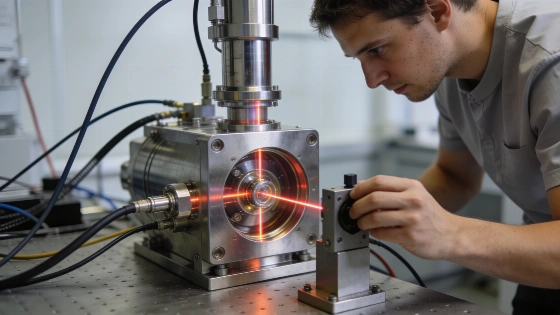
Quantum X Labs has reported patent activity in neutral-atom control and quantum-circuit watermarking while developing a platform that combines Ramsey-CPT timing with Rydberg radio-frequency sensing; the available record shows active development, not a demonstrated quantum computer or field-ready instrument.
Quantum X Labs Inc. (NASDAQ: QXL) is pursuing three different layers of the quantum technology stack at once: the optical hardware needed to move neutral atoms, the atomic systems used for precision sensing, and protections for quantum circuits running on outside machines. The announcements describe patent filings and an active laboratory program rather than a completed quantum computer or a demonstrated field instrument. The distinction is important in a field where institutions such as MIT, NASA, and CERN routinely separate an engineering prototype from a validated system-level capability.
Control Atoms With Light
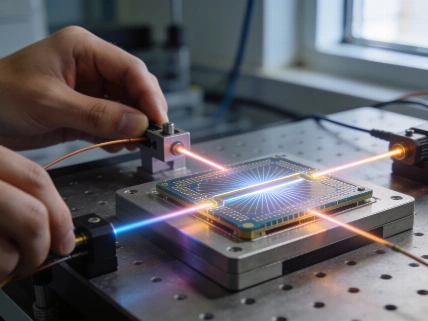
The newest filing comes from Quantum X Labs Ltd. On October 8, 2026, the subsidiary submitted a U.S. patent application titled "Structured-Beam Zeeman Slower and Atomic Push-Beam System." Available independent reporting confirms the application claim, but not a patent grant or a decision by the USPTO. The proposed system is intended for laser cooling, slowing, directing, and transporting neutral atoms in architectures that could use them as physical qubits.
Zeeman slowing is an established atomic-physics technique rather than a standalone demonstration of a quantum processor. A counter-propagating laser applies repeated photon-recoil forces while a spatially varying magnetic field changes the atomic transition frequency along the slowing path. This compensates for the changing Doppler shift as atoms decelerate, helping keep the optical interaction resonant until the atoms reach velocities suitable for subsequent cooling, trapping, and manipulation.
The proposed optical approach differs from relying exclusively on conventional Gaussian beams. It describes structured beams with non-Gaussian spatial intensity distributions intended to shape the optical forces during atomic deceleration, Zeeman slowing, and transfer by an atomic push beam between zones of a system. In principle, tailoring intensity can influence scattering forces and the uniformity of atom transport; in practice, the benefit must be established with measurements because beam shaping can also introduce alignment sensitivity, diffraction effects, and calibration demands.
A patent application establishes an intellectual-property claim. It does not establish that the proposed beam profile has delivered a measured improvement in cooling efficiency, loading rate, atom transport, gate fidelity, or processor scale. The company has also cautioned that filing does not guarantee issuance and that even an issued patent may not create a commercial advantage. The available announcement provides none of those performance figures.
One Platform, Two Sensing Roles
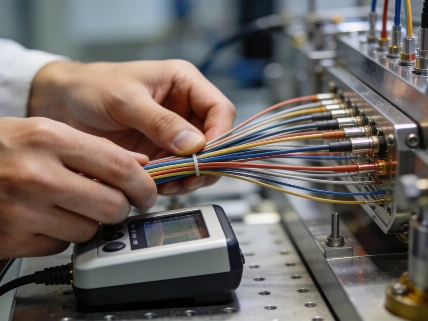
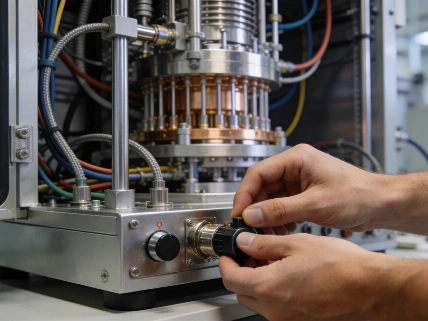
Quantum X Labs' September 28, 2026 announcement describes a separate laboratory effort to combine its patent-pending Ramsey Coherent Population Trapping (Ramsey-CPT) quantum atomic clock platform with Rydberg atom radio-frequency (RF) sensing. The company is aiming to bring timing and electromagnetic-field measurement into one platform for defense and aerospace spectrum operations, including operation in environments where GPS may be unreliable.
Rydberg atoms are atoms excited into highly energetic electronic states whose large electric-dipole response makes them unusually sensitive to electromagnetic fields. Their optical spectra can encode information about RF fields, allowing the atomic medium to act as a field-dependent detector rather than merely as a conventional antenna. The underlying measurement physics has been studied in peer-reviewed work, including research reported in a Nature research paper, but that established literature should not be confused with a performance result from Quantum X Labs.
A Ramsey-CPT clock instead uses optical preparation and separated interaction regions to interrogate an atomic transition and infer a frequency reference from the resulting interference pattern. Combining the two functions could, in principle, allow a platform to monitor RF signals while retaining an atomic timing reference. The company's material describes that integration as an active laboratory program, not as a completed instrument.
The available account does not report sensitivity, bandwidth, calibration uncertainty, operating conditions, comparison with a conventional RF receiver, or results from a field deployment. It also does not provide a sample size, uncertainty budget, confidence interval, or independent replication. Without those measurements, the technical significance rests on the architecture being attempted rather than on a demonstrated sensing advantage. The reported development status likewise does not establish a finished product, achieved accuracy, or completed field trials.
Protecting Quantum Circuits
QuantumQ Security submitted another USPTO patent application on September 24, 2026. Its title is "Watermarking of Quantum Circuits Using Decomposition of Weyl (KAK) Coordinates in Two-Qubit Blocks." The proposed method places verifiable ownership signatures inside the decomposition of two-qubit gates.
The target problem is specific to cloud-based quantum computing. Developers may execute proprietary circuits on hardware operated by a third party or an untrusted service. A watermark embedded in gate decompositions could help trace circuit ownership while attempting to limit additional gates and the noise they introduce in noisy intermediate-scale quantum environments.
Weyl- or KAK-based decompositions are mathematical descriptions of two-qubit operations that separate local single-qubit transformations from a nonlocal interaction component. That structure can provide a systematic language for comparing equivalent implementations, but equivalence at the circuit level does not by itself prove that a watermark will survive compilation, optimization, transpilation, or deliberate removal.
That mechanism is a security and intellectual-property proposal rather than an error-correction method. A watermark cannot make a noisy circuit reliable, and the filing does not show that the technique has been deployed across a commercial quantum cloud or independently tested under representative workloads. A credible evaluation would need to quantify detection accuracy, gate overhead, changes in circuit depth, noise impact, robustness to recompilation, and resistance to watermark removal.
What The Record Shows
The sequence is compact but measurable in its scope: three public announcements across 24 days, from September 24 to October 8, 2026. They cover one USPTO filing from QuantumQ Security, one U.S. patent application from Quantum X Labs Ltd., and one announced laboratory integration involving Ramsey-CPT and Rydberg RF sensing. No qubit count, gate fidelity, readout fidelity, coherence time, sensor sensitivity, frequency stability, circuit depth, runtime, or independent replication is reported in the supplied material.
That absence matters because each claim depends on a different benchmark. Neutral-atom hardware must be judged through loading, transport, cooling, optical stability, and ultimately qubit control. Rydberg sensing must be compared with an appropriate classical RF instrument under defined noise and calibration conditions. Circuit watermarking must be evaluated for ownership detection, gate overhead, noise impact, and resistance to removal without treating a patent concept as a validated security system.
The company's program also sits within a wider industry effort to build quantum capability from hardware upward. As an earlier report on NTT DOCOMO BUSINESS and Classiq showed, partnerships and planned software activity can expand an ecosystem without proving that a useful quantum application has already been deployed. The same distinction applies here: filings protect proposed techniques and laboratory integration tests a platform, while neither is equivalent to a working product.
Quantum X Labs is therefore making a coherent infrastructure bet rather than reporting a single computational milestone. Its filings address how atoms are moved and how circuits might be protected, while its sensing program links atomic timing with RF measurement. The evidence supplied so far supports active development and patent activity, not claims of quantum advantage, fault tolerance, commercial readiness, or a deployable defense capability.
Neutral-atom quantum computers use individual atoms as physical qubits and optical fields to cool, arrange, and control them. A physical qubit is not the same as a logical qubit protected by error correction, and none of the announcements reports logical qubits or a computation. The practical value of the work will depend on measurements that are not yet provided: reproducible atom handling, stable calibration, quantified sensing performance, and a demonstrated security benefit with acceptable circuit overhead. On the evidence available, Quantum X Labs has identified credible engineering problems and filed claims around them, but it has not yet shown that those claims solve the harder problem of turning quantum components into a useful and independently validated system.