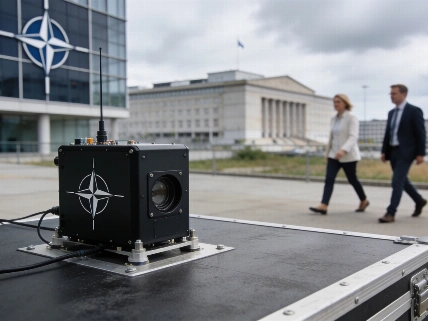
During Maritime Big Play Pacific Infleqtion says Tiqker operated continuously aboard RV Merlin for two weeks and supported BARB-26. The trial tested local timing in a GPS-degraded setting but supplied no numerical stability result
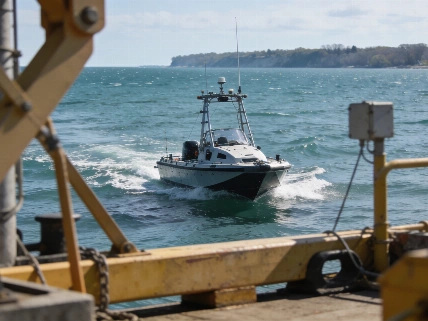
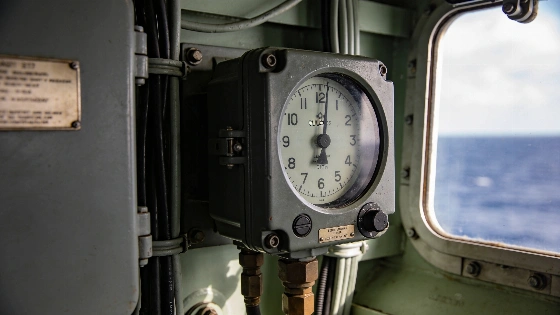
A shipboard clock must keep its reference steady while the deck moves and temperatures shift. Infleqtion says its Tiqker optical atomic clock ran continuously aboard the U.S. Navy support vessel RV Merlin for two weeks during the Maritime Big Play Pacific exercise in the Southern California operating area. The company described the trial as a test of the clock's operation through changing temperatures and sustained vessel vibration.
The Sea Trial
The exercise was sponsored by the Office of the Under Secretary of Defense for Research & Engineering. The U.S. Navy and U.S. Marine Corps took part alongside AUKUS partners the United Kingdom and Australia. Tiqker also supported BARB-26, a Navy exercise focused on subsea and seabed warfare. Infleqtion described the demonstration as an effort to test precision timing beyond laboratory conditions.
Infleqtion frames the deployment as a demonstration of quantum-based positioning, navigation and timing capabilities. The clock provides a local frequency reference that can supply holdover timing for onboard communications synchronization, radar and navigation systems when GPS signals are unavailable, jammed or spoofed. It does not itself determine a vessel's position or replace a navigation receiver; its role is to provide timing that other systems can use during a GPS disruption.
Atomic Reference
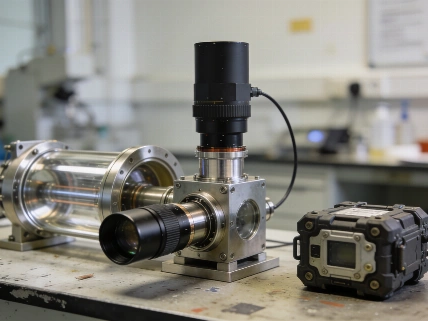
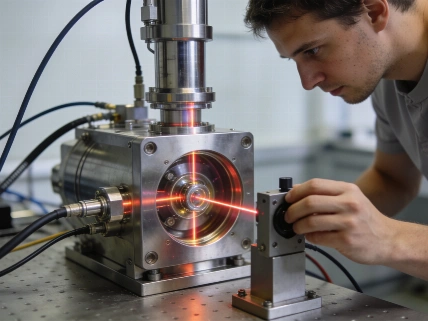
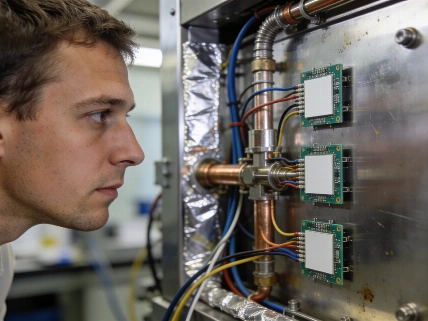
Tiqker is a compact optical atomic clock that uses optical transitions in atoms to generate a local frequency reference. An atomic clock uses a stable atomic transition as its timing reference; an optical clock uses a transition at optical frequencies. Infleqtion says Tiqker's frequency stability is orders of magnitude beyond conventional quartz or rubidium microwave standards.
The company says the continuous run tested thermal management and ruggedized photonics under vessel conditions. The announcement reports the two-week operation but gives no numerical stability, drift or accuracy results from the trial, or a detailed comparison measured aboard RV Merlin.
GPS Denial
Satellite navigation disruption can leave naval forces and autonomous surface or subsea vessels without a dependable external timing reference. A local clock can support onboard timing when GPS signals are unreliable. It does not, by itself, establish a vessel's position or replace every function of satellite navigation.
The operational problem has a wider engineering parallel: a quantum space systems roadmap also addresses the challenge of moving quantum systems toward use beyond the laboratory. Shipboard operation adds its own demands, including sustained exposure to vibration and changing temperatures.
Fleet Integration
The source identifies several considerations for broader naval adoption. Compact clocks would need to fit agreed size, weight and power limits across ships, submarines and uncrewed underwater vehicles. Long-term component drift also needs to be controlled.
Maintenance is another constraint: depot procedures would need to support the clocks without requiring specialist quantum-optics technicians at sea. The trial was conducted aboard RV Merlin, and Infleqtion described it as a technology demonstration rather than a fleet-wide integration decision.