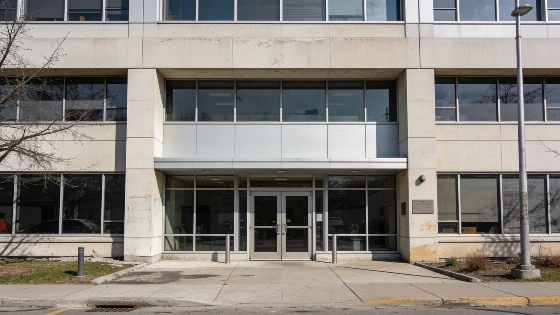
The Canadian developer has taken an operational facility at 20 Colonnade Road while keeping manufacturing and assembly in Alberta. Its Ottawa base connects prototype design and software development with Alberta fabrication
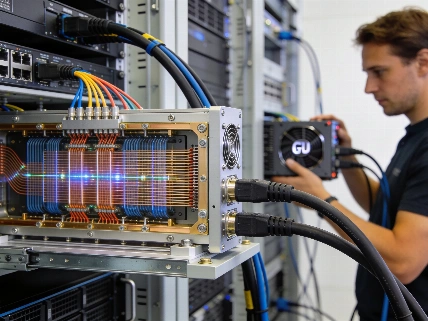
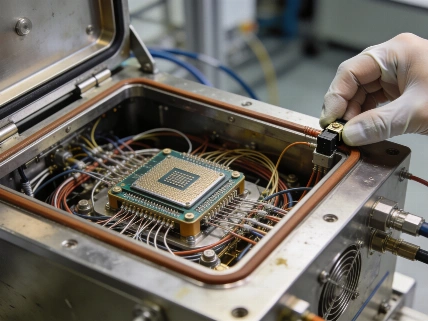
AllanQ is designed for precision timing and frequency standards in GNSS-denied environments. It is one of three quantum platforms Q-Block Computing says it is developing for defence, security and critical-infrastructure applications, alongside LuciaQ for secure photonic networking and PolarisQ for quantum information processing.
Ottawa and Alberta
Q-Block Computing has established its corporate headquarters at 20 Colonnade Road in Ottawa. The facility brings research programs and optical engineering into the same operation, with systems engineering and administrative work also centered there. Alberta manufacturing and assembly facilities remain in place. Quantum Zeitgeist reported the Ottawa headquarters on November 9, 2026, describing the site as a base for specialized research and engineering teams and the Alberta operation as part of the company's manufacturing footprint. Q-Block co-founder and CEO Kyung Choi said that "Q-Block Computing is proud of the systems we are delivering today, and fundamental research remains central to our future direction."
The resulting structure links Ontario prototype design and software development with device fabrication lines in Alberta. A separate quantum-hardware base in Chicago was described in an earlier report, where IBM's system was set to host National Quantum Algorithm Center work before a planned move to IQMP.
Three Hardware Lines
LuciaQ targets secure photonic networking. PolarisQ is designed for quantum information processing. The company says its systems target operational integration in defence and telecommunications security, with critical infrastructure also among the stated application areas. Q-Block's wider product portfolio includes quantum clocks, quantum-communication devices, external-cavity diode lasers and monolithic thermally compensated laser resonators for controlling atoms and photons. A QuantumNews company profile describes its Q-block module as a photonic architecture using distributed precision timing, intended to support scalable quantum systems.
Q-Block describes its hardware as deployable and says its platforms use atomic and photonic modalities. The announcement outlines intended applications but does not provide device-performance measurements. CEO Kyung Choi has also said that the Ottawa-Alberta structure is intended to connect work "from scientific discovery to practical application." The company has said it plans to develop longer-term partnerships with research institutions, government and industry.
Technical Recruitment
Hiring has opened across quantum physics and digital-analog electrical design. FPGA development and photonic packaging are also listed areas. The company directs applicants to the Q-Block Career Portal. The expansion is intended to deepen its Canadian research and engineering capacity while retaining Alberta manufacturing operations.
The expansion comes amid a broader federal push to scale Canadian quantum technology. Budget 2026 proposes directing up to $2.7 billion over five years beginning in fiscal year 2026-27, on a cash basis, toward defence and strategic technology priorities. The plan includes Phase 2 of the Canadian Quantum Champions Program, intended to help quantum companies scale industrial computers for applications such as cryptography, advanced materials, signal processing and pattern recognition. The budget also sets out a planned Quantum Defence Innovation Secure Hub in Calgary, Alberta. These measures are part of the national policy landscape for quantum and defence technologies, as outlined in the Government of Canada's Budget 2026.