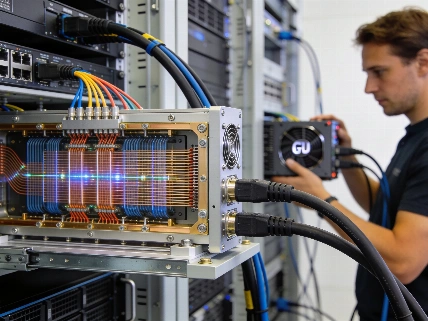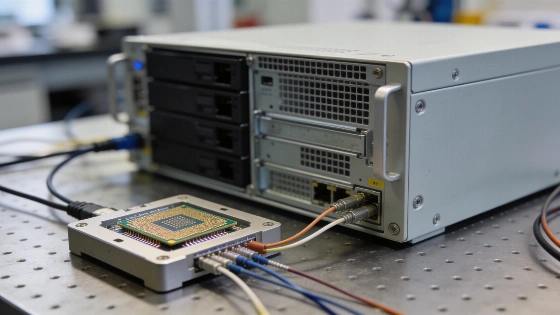
The collaboration brings AMD computing into PsiQuantum's photonic program and adapts the PRISM decoder for Versal chips. The equity investment is planned and a Chicago co-location is still being evaluated
At utility scale, photonic quantum computers must process error syndromes within strict optical clock cycles, placing substantial demands on the classical hardware alongside the quantum processor. On November 12, 2026, PsiQuantum and Advanced Micro Devices (AMD) announced an expanded partnership to co-design computing infrastructure for utility-scale, fault-tolerant quantum computers and hybrid quantum, high-performance computing and AI applications. The arrangement includes a planned AMD equity investment in PsiQuantum.
Decoder and Compute
PsiQuantum has worked with AMD engineers to optimize its machine-learning decoder, PRISM, for low-latency implementation on programmable hardware accelerators, including AMD Versal adaptive-computing technology. The decoder is intended to process syndrome data in the photonic system's control loop without creating a latency bottleneck. The announcement reports no measured decoding latency or benchmark results.
The collaboration builds on earlier work with AMD Versal technology and expands to AMD Instinct GPUs, EPYC CPUs and the ROCm software stack. These components are being co-designed alongside PsiQuantum's silicon-photonics platform. The companies describe a development partnership; the announcement does not report a completed integrated system or its production performance. AMD's planned investment amount and other financial terms were not disclosed.
Drug Discovery Scope
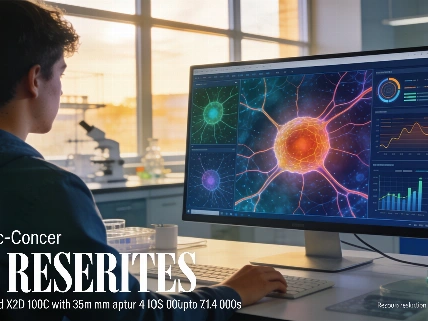
Pharmaceutical research and computational chemistry are stated application areas. PsiQuantum plans to run its computational-chemistry workflows on GPUs for oncology drug discovery under the U.S. Department of Energy's Quantum Genesis Priority Applications initiative. The companies say this work aims to support classical computational workflows while preparing application pipelines for possible future use with fault-tolerant quantum hardware.
That distinction matters: GPU-based simulation is classical computing, while future quantum hardware remains a target rather than a demonstrated part of these workflows. The partnership is framed around hybrid applications combining quantum computing with high-performance computing and AI. A separate quantum-industry agreement covered in an earlier report focused on QML expansion; this announcement centers on compute infrastructure for a photonic platform. In its November 12 announcement, PsiQuantum described the collaboration as aligned with the DOE initiative.
Chicago and Next Steps
The companies are evaluating a co-located presence at the Illinois Quantum and Microelectronics Park in Chicago. PsiQuantum is the park's anchor tenant, but the announcement describes joint deployment there as an option under consideration, not an established facility.
Further technical details on the joint roadmap are scheduled for SC26 in Chicago from November 15 to 20. The announcement supplies no investment amount, deployment decision or system-level performance figures.