The structure sets four investment themes and prioritizes qualification infrastructure as the UK seeks to move laboratory prototypes toward flight-ready systems across a 2035-2040 planning horizon
Quantum devices intended for space must move beyond laboratory conditions: the roadmap identifies radiation tolerance and strict spacecraft size, weight and power limits as part of the qualification challenge. Published by the UK Space Agency (UKSA) on 27 October 2026, the government plan sets a strategic horizon to 2040 and identifies where quantum technologies can contribute to UK space capability between 2035 and 2040. It was prepared for UKSA and the Department for Science, New idea and Technology (DSIT) by Space Professionals Partnership Ltd and Quantum Technologies Associates Ltd.
Four investment themes
The Quantum Technology Roadmap for Space groups its priorities into assured timing, resilient sensing, sovereign communications and long-term computing. Its broader technology scope covers timing, sensing, secure communications and computation, with quantum computing described as a longer-term chance to be pursued alongside wider national quantum programmes. The roadmap describes a phased route from prototypes and ground demonstrations to flight-qualified subsystems and operational services, distinguishing nearer-term systems that could be inserted into space missions from technologies at an earlier stage.
The structure addresses five operational pressures: ability to recover in congested orbits; precision sensing without drift; high-throughput distributed architectures; strict Size, Weight, and Power (SWaP) limits; and autonomous deep-space operations. The report frames these as areas where classical payloads face physical limitations, while emphasizing different deployment timelines across quantum technologies. Its 2035-2040 horizon is a target for developing space capability, not a statement that every proposed system is already flight-ready.
From lab to orbit
The roadmap supports the UK's National Space Strategy, published in 2021, and National Quantum Strategy, published in 2023. Prepared by Space Professionals Partnership Ltd and Quantum Technologies Associates Ltd, it aligns those strategies with a programme to guide public capital, qualification pathways and industrial flight demonstrations. Its stated purpose is to move technologies from prototypes and ground demonstrations toward flight-qualified subsystems and operational services. These are priorities for future work, not confirmation that the proposed demonstrations have flown. The UK Space Agency roadmap also places quantum among the UK's five Critical Technologies under the 2025 Science and Technology Structure.
The roadmap describes the UK's broader "Quantum Leap" as £2 billion of government investment by 2030, coordinated through DSIT's Office for Quantum. That commitment sits within the national quantum programme; the space roadmap does not set out a separate funding envelope for its space applications. The scale of international investment forms part of the backdrop. The report says government investment across North America, Europe and Asia exceeds £43 billion. It also describes a UK environment of more than 300 quantum enterprises and ranks the country fourth globally in patent volume.
Supply chain constraints
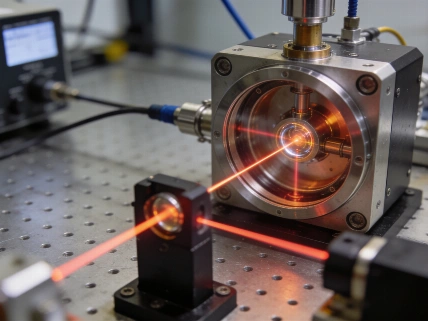
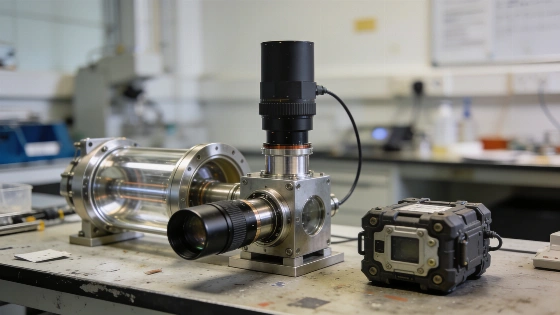
The report warns that a widening gap in sovereign in-orbit demonstrations could leave the UK dependent on foreign space hardware over the long term. It identifies engineering supply as a constraint, including commercial access to space-qualified narrow-linewidth lasers and optical frequency combs. Ultra-high-vacuum chambers and radiation-hardened control electronics are also listed as bottlenecks.
The roadmap calls for enabling foundations to bring quantum technologies into orbit, including supply chains, qualification infrastructure, standards and workforce capability. These are requirements for moving systems toward flight qualification, rather than evidence that domestic supply is already sufficient. The focus on components and test capacity places engineering readiness alongside device development.
Recommended next steps
The roadmap recommends quantum-safe cryptographic migration across ground and satellite segments, as well as flight pathfinders for sovereign optical clocks. It also calls for work on compact cold-atom sensors, expanded domestic environmental qualification and radiation-test facilities, and international interoperability standards to help UK components enter emerging commercial satellite supply chains.
The cryptographic recommendation sits alongside wider government migration planning discussed in related coverage. In the space roadmap, the proposed migration spans both ground and satellite segments.