Ohio State researchers will assess how commercial fiber handles non-classical light as Lumen outlines a separate plan to add Fortinet post-quantum cryptography to its managed SASE service
A quantum signal cannot be restored by treating it like ordinary telecom traffic. Because an unknown quantum state cannot be copied exactly, standard optical amplifiers cannot simply boost it after fiber loss. As Quantum Zeitgeist explains, this constraint makes quantum networking a different problem from increasing conventional data throughput.
Fiber transport
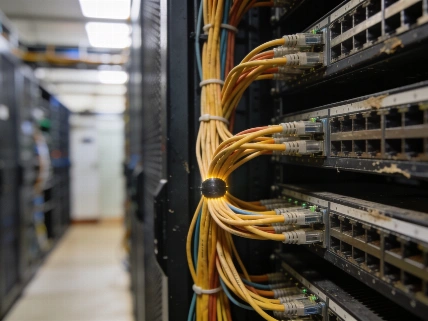
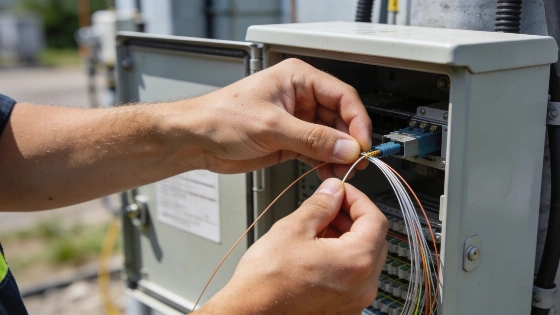
On October 29, 2026, Lumen Technologies announced research with The Ohio State University (OSU) to examine how commercial, field-deployed fiber bundles carry non-classical photonic states. The work is intended to establish empirical channel bounds relevant to optical repeaters and dispersion management, and to inform whether existing fiber infrastructure could connect geographically separated quantum systems.
The project also tests distributed quantum sensing. It will use optical noise backscatter to look for environmental fluctuations and seismic anomalies that can degrade fiber health, alongside research into geophysical monitoring. These are research aims; the announcement does not report measured transmission results or a validated commercial quantum link.
That network question differs from processor testing covered in an earlier QiB1 chip report, which concerned performance across two test sites rather than transmission of quantum states through fiber. Lumen described the initiatives as combining fiber connectivity, programmable control, software intelligence and partner organizations to support future computing.
PQC at the edge
At the software layer, Lumen announced a roadmap to integrate Fortinet's post-quantum cryptography libraries into its managed Secure Access Service Edge (SASE) infrastructure. The libraries use ML-KEM, standardized as FIPS 203, and ML-DSA, standardized as FIPS 204. Lumen's SASE offering is built on FortiGate technology, with the planned capabilities drawing on PQC functions in FortiOS.
The service is intended to give enterprise customers a crypto-agile route for moving corporate wide-area networks away from RSA and elliptic-curve cryptography, without replacing underlying hardware. Lumen frames the effort as a response to harvest-now, decrypt-later risks. The company targeted initial availability for November 2026 and general availability for January 2027; the October announcement described a planned integration, not a completed customer deployment. The timetable was reported by The Quantum Insider.
Workload steering
Lumen also announced an exploratory pilot with Emerald AI, linking Emerald Conductor with Lumen's programmable network and edge locations. The companies plan to examine shifting AI inference workloads among locations information from power availability while accounting for network performance, latency, security and cost. The effort remains at the pilot-evaluation stage; no completed workload migration or measured energy savings were announced. TeleSemana reported on the proposed collaboration.
The three initiatives have distinct statuses: OSU's work is research into quantum connectivity and sensing, the Emerald AI collaboration is an exploratory pilot, and Fortinet-based post-quantum protection has a stated product timetable. The fiber research concerns transporting quantum information; the SASE plan concerns cryptographic protection for conventional enterprise traffic. Together, they address separate infrastructure challenges rather than describing an already operating end-to-end quantum-secure network.