On 8 October 2026, NTT DOCOMO BUSINESS and Classiq's Japanese subsidiary signed a memorandum of understanding to market Classiq's quantum software and jointly identify, develop, and validate enterprise applications in Japan. The announcement outlines a planned collaboration, not a completed deployment, performance result, or demonstration of quantum advantage.
Japan's enterprise quantum push is moving from isolated software trials toward a broader commercial stack. On 8 October 2026, NTT DOCOMO BUSINESS and Classiq Technologies G.K., Classiq's Japanese subsidiary, signed a memorandum of understanding covering the marketing and sale of Classiq's platform and joint work on corporate quantum-computing use cases. The arrangement targets industries such as manufacturing, financial services, logistics, and public infrastructure, but the announcement describes planned collaboration rather than a completed customer deployment.
The formal division of responsibilities is significant. NTT DOCOMO BUSINESS, formerly NTT Communications Corporation, is responsible for proposing and selling the platform and for creating and validating application scenarios. Classiq is responsible for providing the platform, supplying quantum-algorithm expertise, and delivering technical support. The stated objective is to combine Classiq's software technology with NTT DOCOMO BUSINESS's experience deploying advanced technologies in enterprise environments and thereby accelerate Japanese companies' access to quantum-computing resources.
Neither the memorandum nor the accompanying public materials reports a customer benchmark, application result, performance measurement, or demonstrated quantum advantage. The companies describe a process in which business problems will be assessed, quantum algorithms will be developed and executed, and new use cases will be formed and tested. That distinction is essential: an agreement to investigate and validate applications is not evidence that a production workflow has already outperformed the best classical alternative.
Classiq's platform is designed to let users describe algorithmic intent at a higher level than individual quantum gates. Its Qmod modeling language and automated synthesis engine can then translate that intent into circuit topologies adapted to a selected hardware backend. The software also includes agentic artificial-intelligence interfaces, although the announcement does not establish that these interfaces have independently generated useful algorithms or improved the performance of a deployed quantum application.
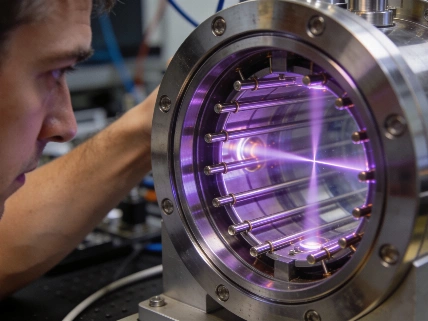
The platform's stated compatibility spans simulators and four hardware categories: superconducting, neutral-atom, trapped-ion, and photonic systems. This is a software-compatibility claim, not evidence that one algorithm performs equally well on all four architectures. They differ in qubit connectivity, native operations, gate and measurement errors, calibration procedures, control systems, operating conditions, and noise mechanisms. A compiler can adapt a circuit to those constraints, but it cannot make the physical constraints disappear.
Its hardware-agnostic approach is therefore the central commercial proposition. In principle, compiling a hardware-independent description for different backends can reduce the need to rewrite application logic as quantum processors evolve. The practical value depends on circuit depth, two-qubit-gate count, connectivity overhead, scheduling, calibration drift, measurement error, and the quality of the classical optimization surrounding the quantum calculation.
That engineering problem is consistent with the way quantum-computing research is evaluated at institutions such as MIT and CERN: a circuit description alone is insufficient without a defined task, a reproducible execution protocol, uncertainty estimates, and a meaningful classical baseline. A larger physical-qubit count does not automatically imply a better computation, and a shorter circuit is not automatically useful unless its output can be verified and its end-to-end cost is competitive.
The partnership is also presented alongside NTT DOCOMO BUSINESS's work on Harvest Now, Decrypt Later risks and post-quantum cryptography validation. Those are related but distinct engineering problems. Post-quantum cryptography is designed to run on conventional computing infrastructure, while gate-based quantum software is intended to control algorithms on quantum processors; adopting one does not validate the other.
NTT DOCOMO BUSINESS's broader infrastructure plan includes Quantum Secure Cloud and a wide-area quantum-cryptography communication network being built with Toshiba Corporation and NEC Corporation. Announced in June 2026, the planned network is described as Japan's first wide-area quantum-cryptography communication network and is associated with the Ministry of Internal Affairs and Communications and NICT.
The proposed 600-kilometer system would use quantum key distribution and secret-sharing across the Tokyo, Nagoya, and Osaka metropolitan corridors. The published description concerns construction through the partnership, not a completed public network or a demonstrated end-to-end service. It does not report a secret-key rate, detector performance, operating continuity, repeater architecture, or independent security evaluation.
Quantum key distribution can use quantum states to establish shared keys, but the security of a real network also depends on authentication, endpoint protection, trusted components, detector assumptions, key-management procedures, and implementation quality. The field's security claims therefore require analysis of the entire system rather than the quantum channel alone. This is why the planned network may provide a testing route for quantum-safe communications without, by itself, establishing immunity to practical vulnerabilities.
Classiq's synthesis engine occupies the layer between an algorithm and the hardware instructions needed to execute it. In principle, that layer can translate a hardware-independent description into a circuit that respects the constraints of a particular processor. The practical value depends on how effectively the compiler manages gate count, circuit depth, connectivity, noise, measurement, and calibration changes on each backend.
Those details matter because a shorter or better-connected circuit can be more valuable than a larger raw qubit count. Yet the announcement supplies no gate fidelities, readout fidelities, coherence times, circuit depths, runtimes, error rates, logical-qubit counts, or classical baselines. It therefore supports a partnership and deployment-planning claim, not a claim of computational superiority. Peer-reviewed venues such as Nature generally require precisely this separation between a platform capability, an experimental result, and a demonstrated advantage.
The same evidentiary caution applies to the proposed security infrastructure. QKD and secret-sharing can address particular parts of key distribution, but they do not replace post-quantum authentication, secure endpoints, or independent evaluation of network operations. Until sustained service data and a transparent security assessment are available, the network should be regarded as planned infrastructure preparation rather than a proven operational safeguard.
NTT DOCOMO BUSINESS brings an enterprise sales channel and infrastructure capability to Classiq's software, while Classiq brings a compiler stack intended to insulate customers from changing quantum hardware. Their arrangement is consequently less a claim that useful quantum computing has arrived than an attempt to make software experimentation, application discovery, and security preparation available before hardware capability is settled.
The distinction is important for prospective customers. A reseller and development agreement can support application discovery and validation, but it cannot substitute for a defined computational task, a reproducible hardware result, or a fair comparison with the strongest classical method. The announcement provides no evidence of peer-reviewed application results, independent replication, logical-qubit execution, fault-tolerant operation, or production quantum workloads.
For now, the measurable facts are organizational and infrastructural: the memorandum covers Japan; the target sectors include manufacturing, financial services, logistics, and public infrastructure; the platform is described as compatible with superconducting, neutral-atom, trapped-ion, and photonic systems; and the planned QKD and secret-sharing network is 600 kilometers long across the Tokyo, Nagoya, and Osaka corridors. The commercial software layer and the planned security network address different parts of the stack, even if NTT DOCOMO BUSINESS intends to present them within one enterprise framework.
Physical and logical qubits are not interchangeable. A physical qubit is an individual controllable quantum system, whereas a logical qubit encodes information across multiple physical components using error detection or error correction. Classiq's compiler can organize circuits for available hardware, but it cannot create missing qubits, extend coherence, correct hardware faults, or establish fault-tolerant computation. That boundary explains why the memorandum matters as a software and deployment effort while falling well short of a demonstrated useful quantum computer.
The strongest reading of the agreement is that Japan is building routes for companies to experiment with quantum software while preparing conventional systems for future cryptographic risk. Until customer applications produce transparent benchmarks and the network demonstrates sustained, independently assessed operation, the initiative remains infrastructure preparation and market development rather than proof of practical quantum advantage. The official memorandum and its planned work programme can be reviewed in the NTT DOCOMO BUSINESS announcement.