A UK roadmap published in October 2026 sets out five steps to move metamaterials from academic research toward industry, as work on light control and sound management reveals useful applications alongside persistent manufacturing barriers.
A UK roadmap published in October 2026 identifies a stubborn gap: metamaterials have enabled working devices, yet much of the research remains in academia. The report sets out steps to help move the field toward commercial use, where manufacturing costs and supply chains can matter as much as a clever design. The UK ranks third globally for metamaterials academic papers but fourteenth for patents, a contrast the Institute of Physics identifies as a sign of weaker translation into marketable technologies.
Designing by structure
Metamaterials get their properties from engineered structures rather than chemical composition alone. Their building blocks, called meta-atoms, can be arranged to alter how light or sound travels. A two-dimensional version is known as a metasurface. The approach gives researchers another way to tailor material behavior, including combinations of strength and low density that may be difficult to achieve by changing composition alone.
The field's origins stretch back decades. In the 1980s, researchers explored mechanical structures with a negative Poisson's ratio: when squeezed in one direction, they contract in another. In the late 1990s, John Pendry of Imperial College London showed how arrays of wires could produce unusual electromagnetic responses. That work helped inspire the idea of guiding light around an object and then returning it to its original path.
The UK roadmap follows an earlier Institute of Physics report in 2025 that described a gap between academic work and market needs. Its preparation involved 90 responses to an IOP survey and workshops attended by 76 experts from 53 organizations, following consultation with the Metamaterials Strategy Action Group between November 2025 and February 2026. Five proposed actions include coordinating the research community and developing funding pathways; the plan also calls for links with adjacent industries and attention to skills. Its five areas are the commercial ecosystem, innovation, manufacturing and scale-up, assurance and standards, and skills. Priorities and coordinated funding are targeted by 2030, while pilot lines, centres of excellence, stronger private investment and established training routes are set out for 2035. The roadmap, developed with the Department for Business, Innovation, Science and Trade and sector partners, is a policy framework rather than a statutory product-approval decision.
Where cloaking falls short
The first experimental invisibility cloak, made by David Smith's team at Duke University with Pendry, worked with microwaves in a flat plane. It used concentric bands carrying small wire loops to conceal an object from microwave detection. A visible-light version would need much smaller components, comparable in size to light's wavelength. No device of that kind has yet been made, and a cloak for hiding an object in three dimensions remains beyond reach. The experiment grew from transformation-optics work published in 2006, followed by the demonstration four months later. Its design redirected microwaves around a concealed region and restored the wave path, rather than making an object universally invisible. Smith later described the cloak as an engineering demonstration, not a prospective commercial product.
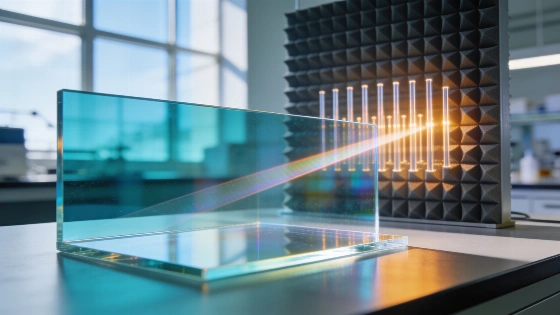
There are narrower uses for electromagnetic metamaterials. Devices designed for radio frequencies can guide or screen signals in communication systems, including antennas. Metamaterial-based lenses have also moved closer to everyday use: metalenses are thin enough to fit inside mobile phones and can focus light in ways ordinary lenses cannot. Imperial College London describes metamaterial concepts moving from basic science into industry, with startups developing products. The wider photonics field includes work such as an earlier millimeter-wave conversion report, though that device is distinct from the metasurfaces described here.
Visible-light cloaking faces a harder set of constraints. Researchers would need to shrink the meta-atoms and suppress scattering across a broad range of optical frequencies. Andrea Alù's team found that active cloaks can become unstable as the concealed object grows unless the operating bandwidth is reduced. Alù said a human-sized cloak spanning visible frequencies was not realizable on the basis of those results.
Sound and impact
Acoustic metamaterials offer more immediate engineering routes because audible sound has wavelengths that can be addressed with structures much larger than optical meta-atoms. Experiments have shown that lattices containing mostly empty space can reduce low-frequency noise without the mass of conventional absorbers. Such structures may suit applications where weight matters, including aircraft soundproofing.
Researchers have also created acoustic waveguides with quiet zones through which sound can pass as if the zone were absent. The setup uses microphones and loudspeakers in the waveguide walls to adjust transmission. Commercial products described in the field include panels that allow airflow while restricting sound. Metasonixx has also developed injection-moulded units that can be slotted together, an alternative to relying on costly 3D-printed prototypes.
For protective materials, ceramic metamaterials could potentially combine the hardness and strength of conventional armor with lower weight. Claire Dancer of the University of Birmingham has described this as a research goal, not an established body-armor capability. A design might manage impact energy through deformation, while multi-hit performance and repeatable manufacturing remain challenges. Ceramic 3D printing is still underdeveloped compared with other material classes.
From prototypes to scale
Metasurfaces may also support augmented-reality displays. Andrea Di Falco and colleagues made transparent films from arrays of pillars about 200 nanometres wide. A laser delivered through an optical fiber can evoke a hologram that appears over the wearer's view. The demonstration used standard spectacles coated with the film; making moving images would require the surface to change shape or work with switchable components.
The UK roadmap describes a research base supported by public investment, including £2.5 million for the Metamaterials Network in 2024 and £19 million in UK Research and Innovation funding for a nanoscale metamaterials hub at the University of Exeter. Its ten-year plan aims to establish conditions for commercialization and scale-up. The Institute of Physics says the pathway from discovery to deployment remains fragmented by gaps in coordination, infrastructure and investment. The report warns that without action the UK could fall behind other countries. Anne Crean of the Institute of Physics said the country does not need to build its metamaterials capability from scratch, but must turn its existing science expertise into industrial success.
For metamaterials to reach wider industry, the roadmap identifies manufacturing, innovation, skills and assurance as connected priorities. It also calls for mapping fabrication capability, building links with adjacent sectors and creating pilot lines to help technologies move from prototypes toward repeatable production. Its central technical obstacle is practical: designs must be made reliably and at a cost that works beyond the laboratory.