
Major Discoveries - Part 8
352 reports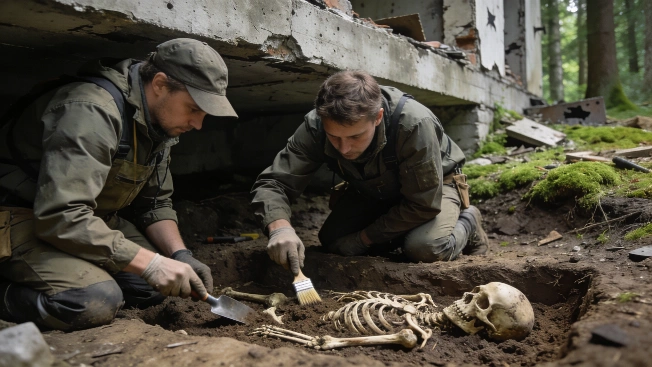
Excavation Reveals Göring's Wolf's Lair Residence Built Over Cemetery
Archaeologists investigating human remains beneath Hermann Göring's former house at the Wolf's Lair have determined that the Nazi-era structure was built atop a pre-existing cemetery. Stratigraphic and osteological analysis helped clarify the context of the remains.
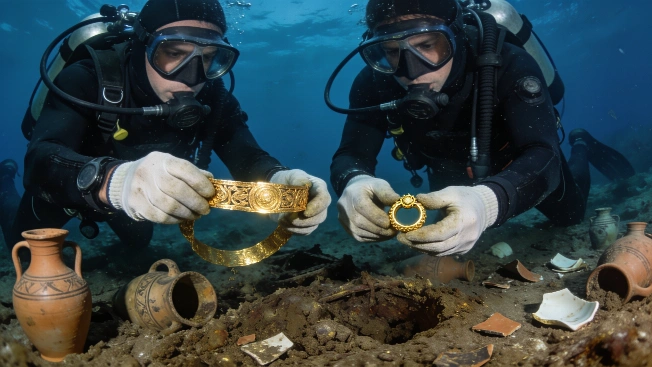
Byzantine Gold Regalia and Imperial Ring Found in Adriatic Shipwreck
Archaeologists have recovered gold ceremonial belts and imperial coins, along with a rare signet ring, from a Byzantine shipwreck off Croatia's Mljet island. The finds offer new evidence of elite travel and trade across the Adriatic in the early Middle Ages.
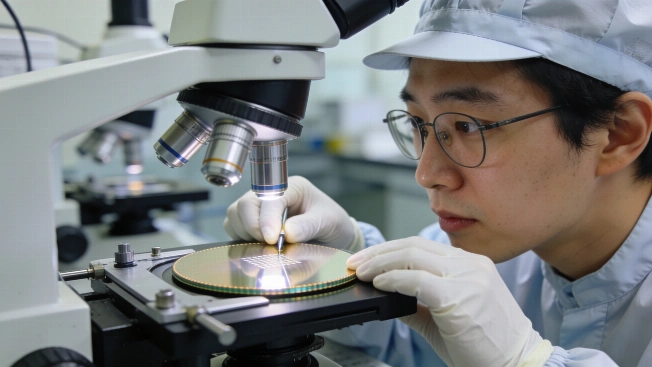
Zinc Oxide Defect Proposed as Room-Temperature Spin Qubit Alternative
A theoretical study led by SKKU researchers identifies a molybdenum-oxygen-vacancy complex in zinc oxide as a candidate for high-fidelity spin qubits operating at room temperature, potentially addressing fabrication challenges faced by diamond NV centers
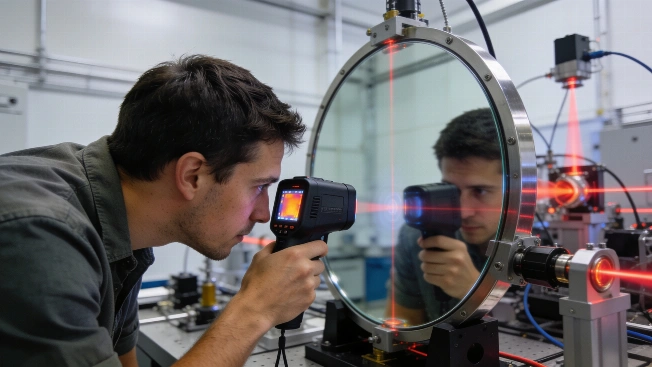
Thermal Cameras Could Sharpen LIGO's View of Distant Black Holes
Researchers have demonstrated that commercial thermal imaging cameras, combined with computer modeling, can correct heat-induced distortions in LIGO's mirrors, potentially expanding the observatory's reach by tens of millions of light-years.
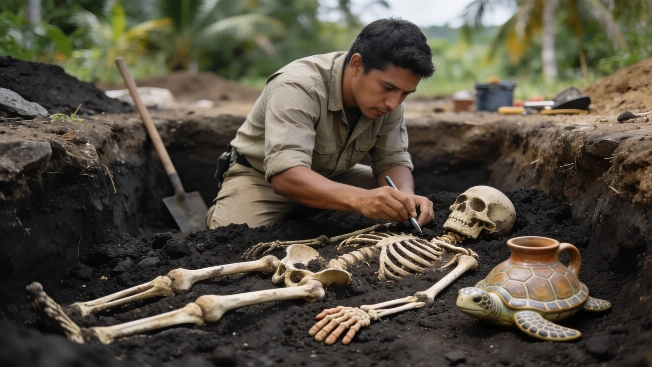
2,800-Year-Old Prone Burial With Sea Turtle Vessel Found in El Salvador
Archaeologists excavating in Antiguo Cuscatlán, El Salvador, have uncovered a 2,800-year-old burial featuring a face-down skeleton and a ceramic vessel shaped like a sea turtle, offering new evidence about mortuary practices in pre-Maya Mesoamerica.
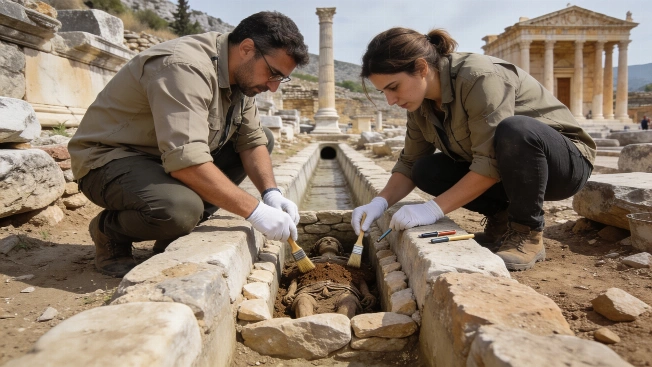
Byzantine-Era Twin Infant Burial Discovered Near Temple of Artemis
Archaeologists have identified a 1,200-year-old grave containing two premature infants near the Temple of Artemis at Ephesus, Turkey, revealing rare evidence of twin burial and a genetic anomaly in one skeleton
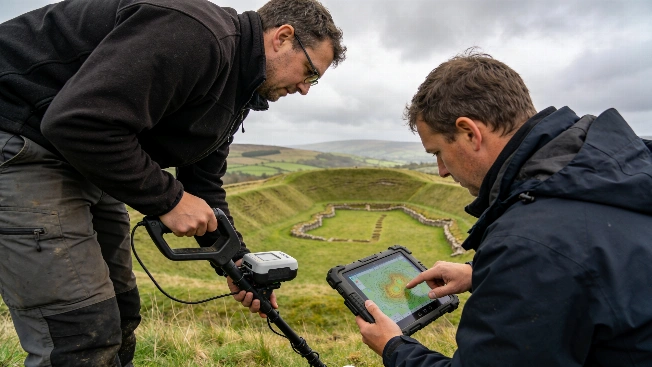
Haughey's Fort Reveals Monumental Bronze Age Power Center in Ireland
A new study at Haughey's Fort in County Armagh, combining lidar and geophysics with excavation, has identified more than 200 timber structures and a vast enclosure, challenging assumptions about prehistoric Ireland's social complexity.
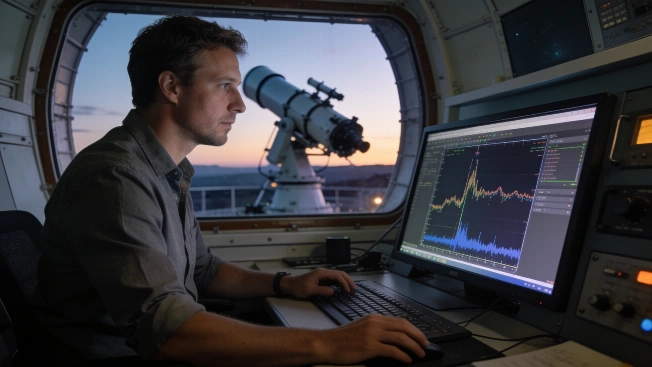
Ejected Matter May Account for Universe's Missing Baryons
Researchers analyzing intergalactic space have identified a impressive fraction of the universe's missing ordinary matter, suggesting that violent galactic outflows may have expelled it beyond galaxies' boundaries.
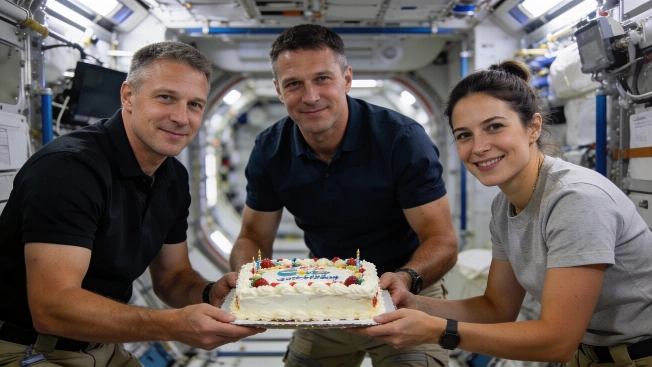
Expedition 74 Crew Begins Science Operations on International Space Station
Expedition 74 astronauts Anna Kikina, Pyotr Dubrov, and Anil Menon have joined the International Space Station, beginning an eight-and-a-half-month mission focused on microgravity research and operational adaptation.
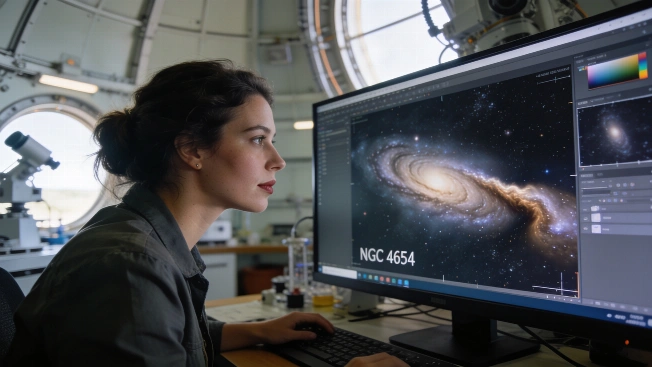
Hubble Reveals Asymmetric Spiral Galaxy Shaped by Cluster Forces
A new Hubble Space Telescope image captures NGC 4654, a spiral galaxy in Virgo, showing dramatic asymmetry caused by ram pressure stripping and past gravitational encounters

Hubble Reveals High-Speed Gas Bullets from Rare Helium Nova in Milky Way
Astronomers using Hubble and other observatories have observed V445 Puppis, the Milky Way's only known helium nova, ejecting dense gas clumps at speeds of up to 32 million kilometers per hour.
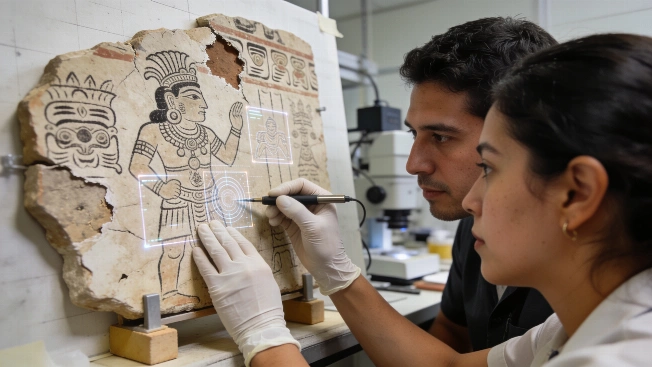
Earliest Maya Calendar Writing Identified at Calakmul Mural
Archaeologists have reconstructed a deteriorated mural from Calakmul, Mexico, revealing the earliest known calendrical inscription at the site. The find adds evidence of early Maya writing traditions and ritual practice in the Late Preclassic period.
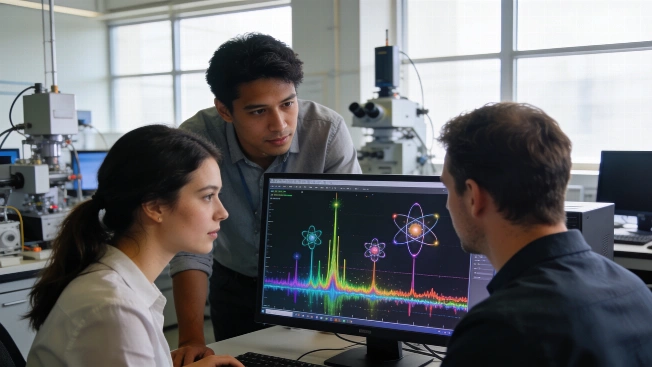
Sun's Silver Shortfall Explained by Advanced Atomic Modeling
Researchers examining solar spectra explain how atomic simulations affect estimates of the sun’s silver abundance and comparisons with meteorites, while emphasizing the limits of those measurements.
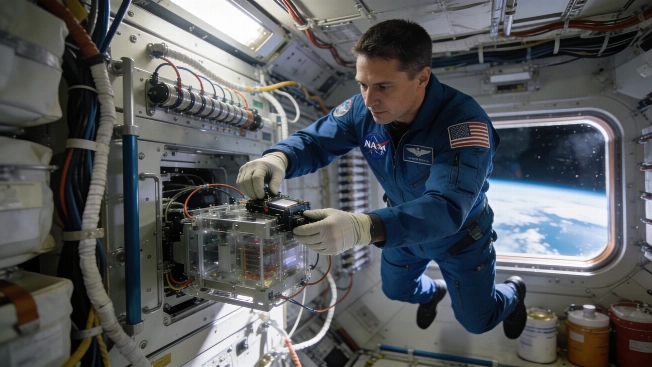
NASA Astronaut Chris Williams Ends ISS Mission After Eight Months
Chris Williams is set to return from his first mission aboard the International Space Station, where he supported research on cancer therapies and semiconductor materials, alongside tests of robotic systems during an eight-month stay.
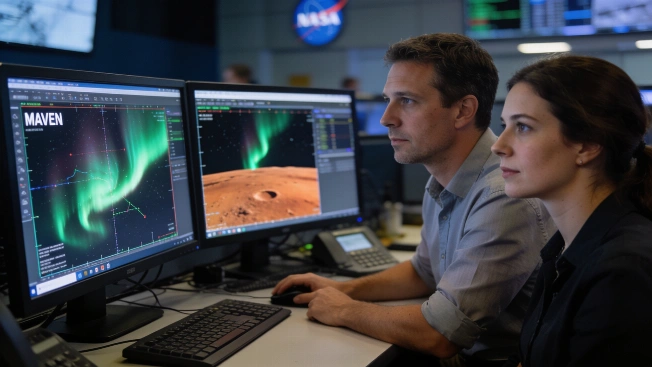
MAVEN Data Reveals Earth-Like Aurora Mechanism on Mars
NASA's MAVEN orbiter has found evidence that localized auroras on Mars are powered by a process similar to Earth's Dungey cycle, offering new understanding into Martian atmospheric loss and magnetic-field interactions.
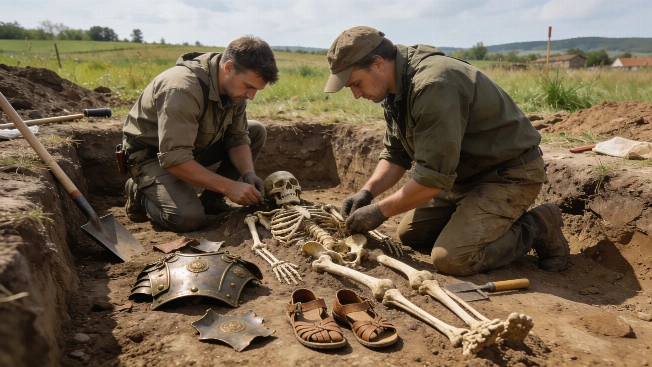
Roman Military Camp in Slovakia Reveals Unusual Soldier Burials
Archaeologists have identified a large Roman military camp near Šurany, Slovakia, containing hastily buried remains of soldiers and military equipment, offering new evidence for Roman campaigns during the Marcomannic Wars.
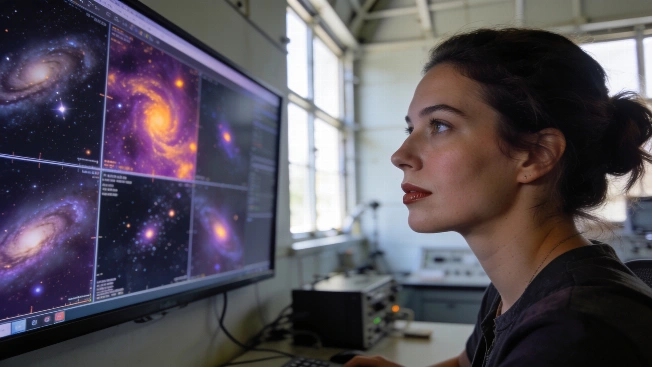
Webb Telescope Links 'Little Red Dots' to Ancient Star Clusters
Astronomers using the James Webb Space Telescope have traced mysterious 'Little Red Dots' in the early universe to the possible origins of globular clusters, offering new clues about how these dense stellar systems formed.
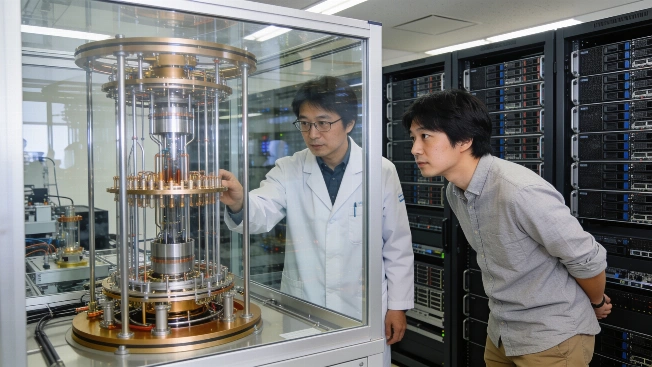
ROQUO Hybrid Supercomputer Links Trapped-Ion Qubits and NVIDIA Blackwell GPUs
Japan's RIKEN Center for Computational Science has launched ROQUO, a hybrid quantum-classical supercomputer integrating Quantinuum's trapped-ion Reimei system with NVIDIA Blackwell GPUs. The system aims to benchmark quantum circuit synthesis and quantum chemistry workloads.
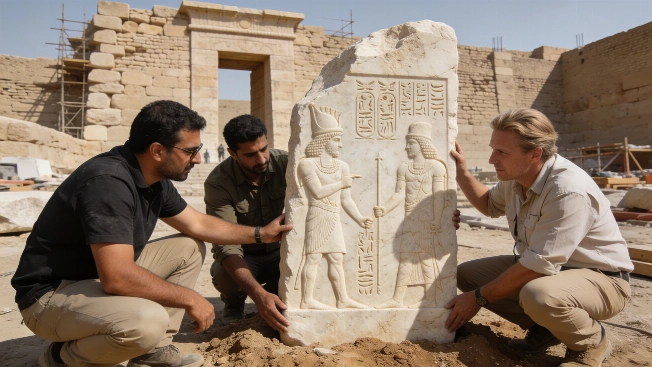
Assyrian Royal Stele Discovered at Nineveh's Sun Gate
Archaeologists working at the Sun Gate of ancient Nineveh have uncovered a monumental Assyrian stele inscribed with records of King Ashurbanipal's building projects, offering new evidence for royal activity in the seventh century BCE
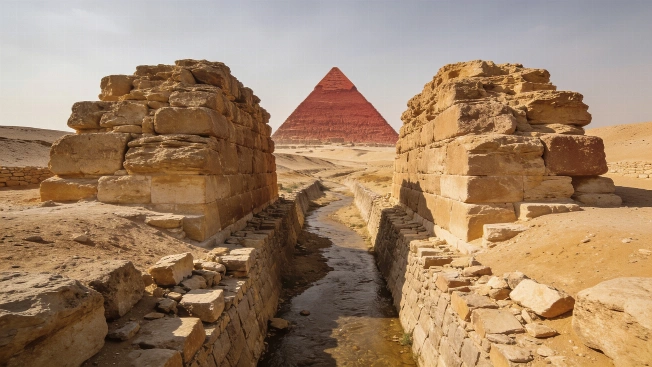
Ancient Dams Near Egypt's Red Pyramid May Reveal Water Management
A new study reinterprets two large stone structures near the Red Pyramid at Dahshur as ancient dams, not ramps. Using satellite imagery and hydrological modeling, researchers propose that the structures formed part of a sophisticated water-management system more than 4,500 years ago.
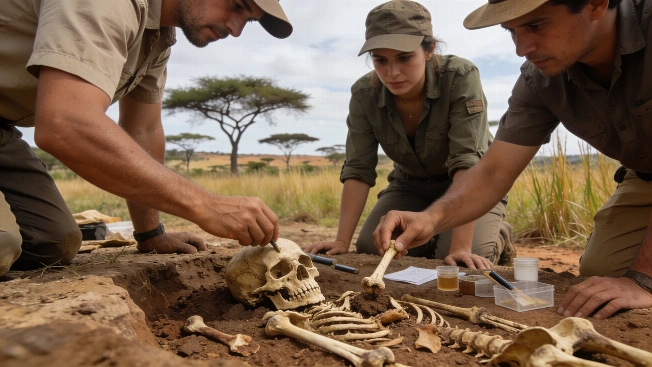
Isotope Evidence Reveals Maize-Based Farming in Ancient Brazilian Cerrado
Analysis of stable isotopes from over 100 individuals across 37 archaeological sites in Brazil's Cerrado shows that some large precolonial communities relied on maize-based polyculture, challenging assumptions about Indigenous subsistence in tropical South America
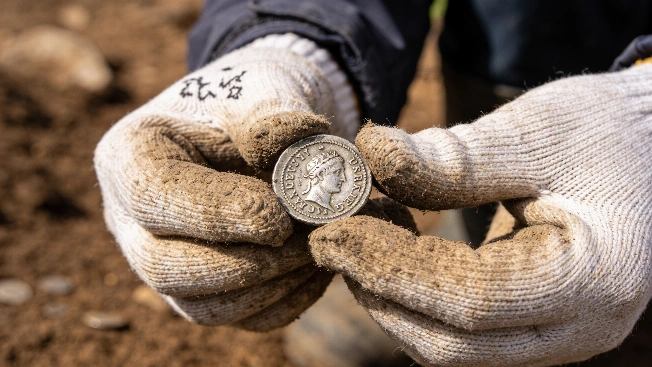
Roman Republican Silver Coins Reveal Early Cross-Border Exchange
A newly documented hoard of Roman Republican silver denarii found near Halle, Saxony-Anhalt, offers rare evidence of early contact and exchange between the Roman Republic and communities beyond its northern frontier.
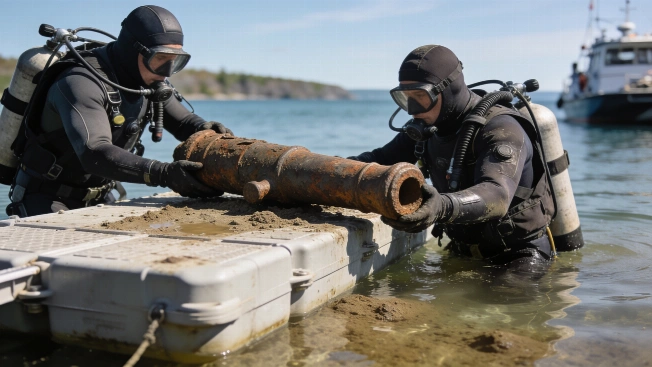
Final Revolutionary War Cannon Fragment Recovered from Lake Champlain
Archaeologists have retrieved the last known fragment of a Revolutionary War-era cannon from Lake Champlain, closing a decades-long search and adding physical evidence to the archaeological record of the Battle of Valcour Island.
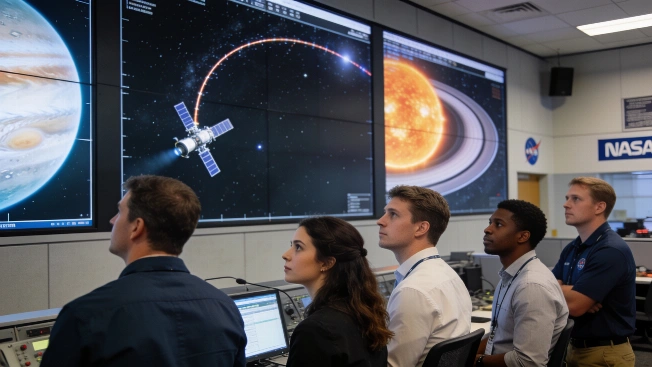
New Horizons Resumes Science at Solar System's Edge After Hibernation
NASA's New Opportunities spacecraft has emerged from a 321-day hibernation and is transmitting data from the outer solar system as it prepares to study the boundary between the Sun's influence and interstellar space with its advanced instruments.
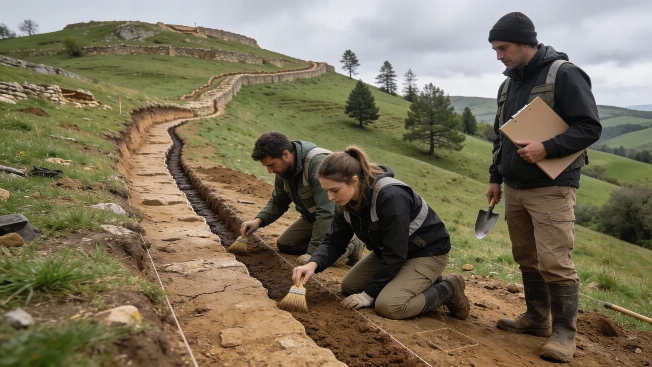
Roman Siege Network at La Loma Larger Than Previously Known
Archaeologists have identified a seventh Roman military camp near the Iron Age hill fort of La Loma in northern Spain, revealing a more extensive siege network during the Cantabrian Wars than earlier evidence suggested
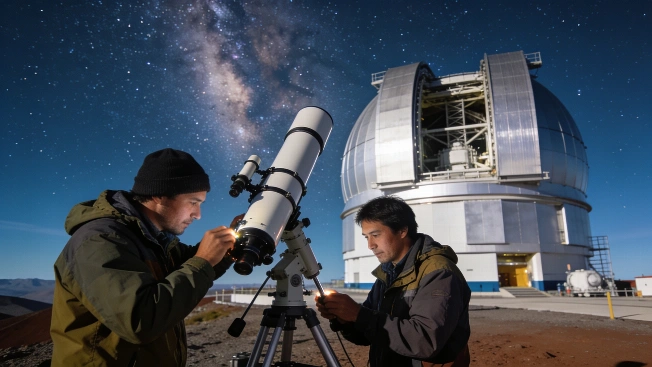
Possible Exomoon Candidate Challenges Definitions in Distant Star System
Astronomers using the Very Large Telescope have detected a moon-like object orbiting a brown dwarf in the CD-35 2722 system, prompting questions about how to classify such bodies beyond our solar system.
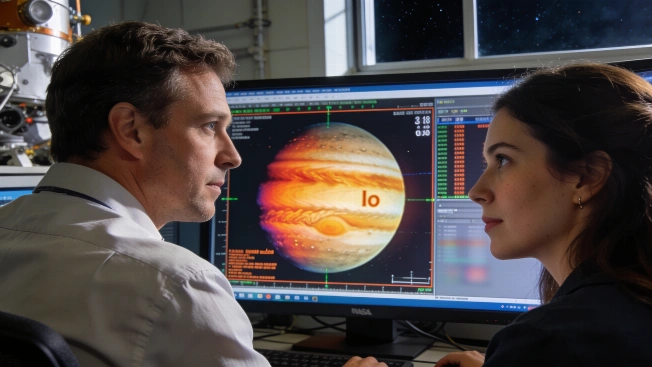
Juno Mission Probes Subsurface Heat on Jupiter's Volcanic Moon Io
NASA's Juno spacecraft has measured temperatures beneath Io's surface, revealing intense internal heating and unexpectedly smooth, low-density terrain. The findings, published in a peer-reviewed journal, offer new understanding into tidal heating on active moons
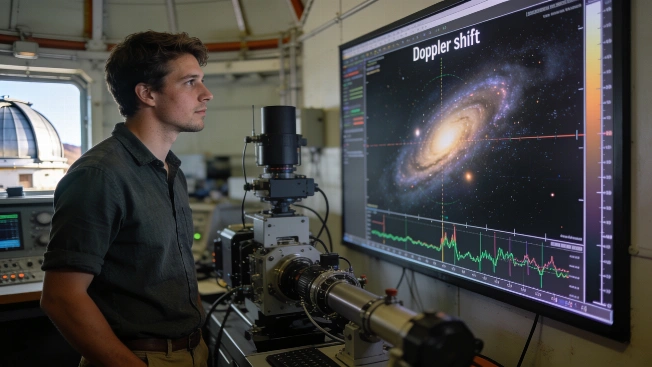
Giant Exosatellite Discovery Redefines Boundaries of Planetary Systems
Astronomers have identified a Jupiter-sized exosatellite candidate orbiting a brown dwarf, which itself orbits the star CD-35 2722. Detected using high-resolution spectroscopy, the candidate challenges current definitions of moons and planets.
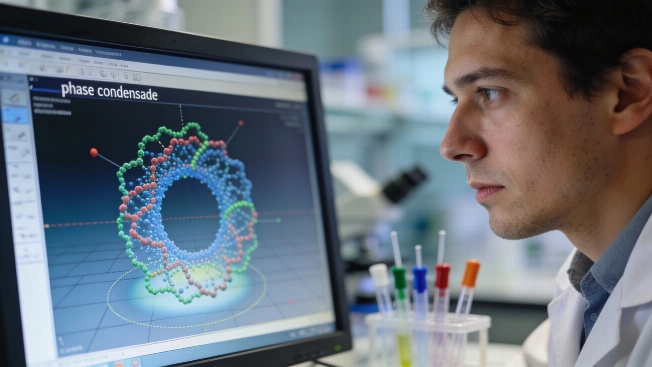
Simulations Map Phase Separation in Disordered Protein Condensates
Researchers used computer simulations to analyze how intrinsically disordered proteins with prion-like domains cluster and undergo phase separation, identifying distinct regimes and challenges in measuring critical parameters.

Humanoid Robot Learns to Walk on Real Terrain With Less Training
Georgia Tech researchers have introduced a machine-learning structure that enables a humanoid robot to walk across unpredictable real-world surfaces while reducing training time and computational demands compared with previous methods.
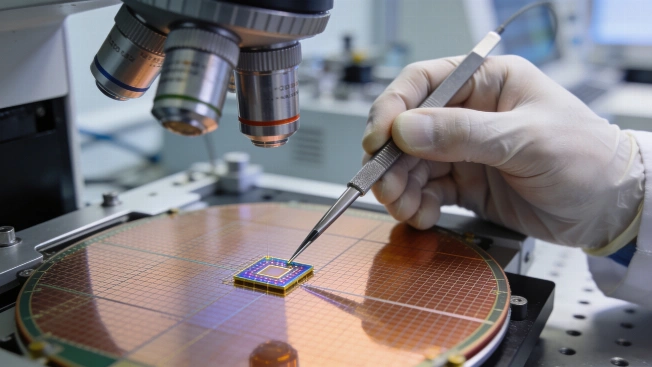
Micro-Transfer Printing Advances Heterogeneous Silicon Photonics Integration
Researchers have demonstrated micro-transfer printing to combine materials such as III-V semiconductors and lithium niobate with silicon photonics, addressing integration challenges for faster optical computing and communications hardware.
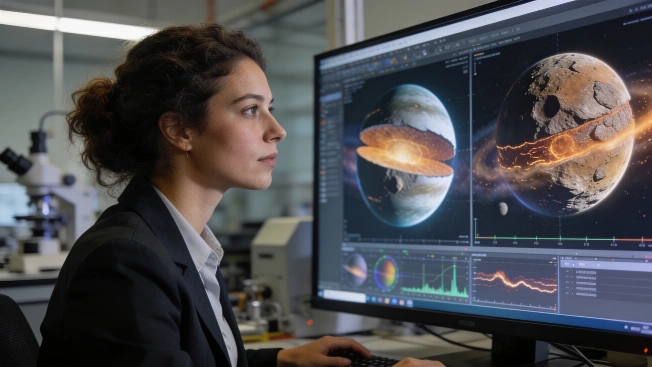
Exoplanets Smaller Than Mars May Lose Atmospheres Too Quickly for Life
A new planetary modeling study suggests rocky exoplanets must be at least 80% of Earth's width to retain atmospheres for billions of years, narrowing the search for potentially habitable worlds around sun-like stars.
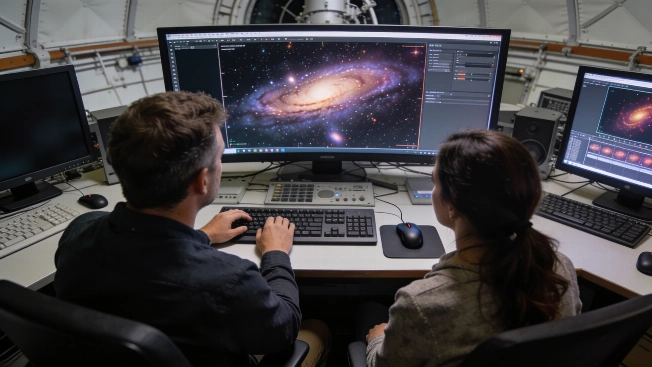
Webb Telescope Reveals How Early Galaxies Produced Cosmic Dust
Astronomers used the James Webb Space Telescope to study a nearby dwarf galaxy, uncovering how ancient galaxies enriched the early universe with stardust impressive for star and galaxy formation.
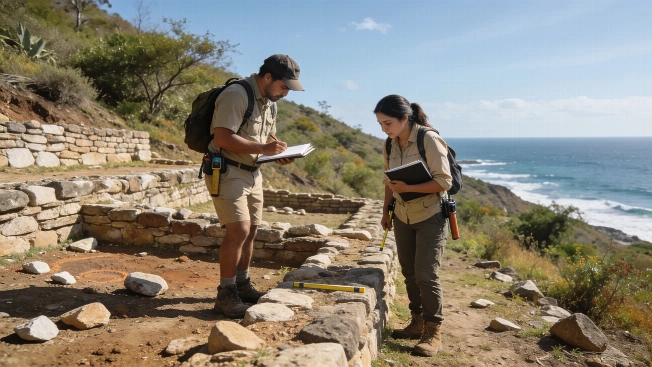
Indigenous Settlements in Guerrero Survived Spanish Conquest
Archaeologists in Mexico have identified two Indigenous settlements in Guerrero that remained occupied after the Spanish conquest. Ground surveys and drone mapping documented evidence of their survival into the late 16th century.
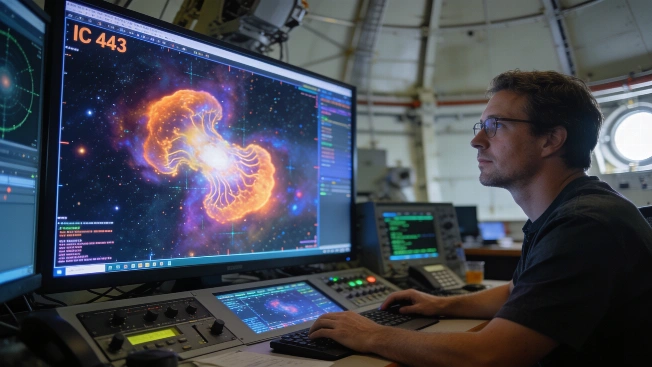
Possible Twin Supernova Remnants Identified in the Jellyfish Nebula
Astronomers analyzing data from NASA's Fermi Gamma-ray Space Telescope and other observatories have found evidence suggesting that both stars in a binary system exploded as supernovae, leaving overlapping remnants in the IC 443 region.
Part 8 of 11