Researchers using high-fidelity atomic simulations have found that the sun contains significantly more silver than previous spectral measurements suggested, resolving a longstanding discrepancy between solar and meteorite compositions
For decades, astronomers have noted a puzzling mismatch between the amount of silver measured in the sun's outer layers and the levels expected from studies of ancient meteorites. While the sun is overwhelmingly composed of hydrogen and helium, trace elements like silver provide important clues about the processes that shaped the solar system. The apparent deficit of solar silver has challenged models of stellar evolution and nucleosynthesis, raising questions about the accuracy of both astronomical observations and laboratory analyses.
Tracing Silver from Meteorites to the Sun
Silver is a rare but informative element in astrophysics, believed to form primarily in supernova explosions that seed the galaxy with heavy elements. Meteorites known as CI chondrites, which condensed from the same primordial material as the sun 4.6 billion years ago, contain well-characterized amounts of silver. Scientists have long expected the sun's composition to closely match these meteorites for elements that are not easily lost or altered. However, repeated spectroscopic studies of sunlight have consistently found less silver than predicted, suggesting either a gap in our understanding of stellar chemistry or a limitation in measurement techniques.
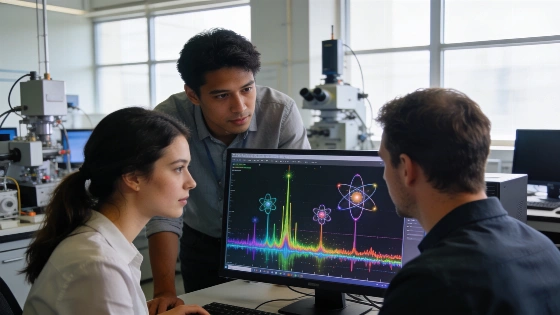
To determine the sun's chemical makeup, astronomers analyze its spectrum-the pattern of dark absorption lines imprinted on sunlight as it passes through the solar atmosphere. Each element absorbs light at specific wavelengths, creating a unique spectral fingerprint. By measuring the depth and shape of these lines, researchers estimate the abundance of elements like silver. Yet, for silver, the observed spectral lines have implied a lower abundance than meteorite data would indicate.
Modeling Atomic Effects in Solar Spectra
A new study led by Sema Caliskan at the University of Liège has addressed this discrepancy by simulating the behavior of silver atoms in the sun's outer layers with unprecedented detail. Previous models often assumed that atoms in the solar atmosphere are in local thermodynamic equilibrium, a simplification that does not always hold for trace elements. Caliskan's team incorporated complex "non-equilibrium" effects, which account for how intense solar radiation alters the energy states and absorption properties of silver atoms.
Using the Tetralith supercomputer in Sweden, the researchers constructed a model of the solar atmosphere that included these non-equilibrium processes for silver. Their simulations showed that the traditional approach underestimates the true silver abundance because it does not fully capture how silver atoms interact with solar photons. When these effects are included, the model predicts that the sun contains about 55% more silver than previous spectral analyses suggested-bringing the solar value much closer to that found in CI chondrites.
This result does not eliminate all uncertainty, as the modeled silver abundance is still not a perfect match for meteorite measurements. However, the improved agreement suggests that the missing silver was not absent from the sun, but rather hidden by the limitations of earlier spectral models. The findings were published in the journal Astronomy & Astrophysics in July 2026.
Implications for Stellar Chemistry
The resolution of the silver discrepancy has broader consequences for how astronomers interpret stellar spectra. Trace elements like silver, copper, and iron are used to reconstruct the history of star formation and chemical enrichment in the Milky Way. If non-equilibrium effects are significant for other elements, as this study suggests, abundance estimates for many stars may need to be revised. The new modeling approach could also help clarify the origins of other apparent anomalies in solar and stellar chemistry.
Understanding the true composition of the sun is essential for calibrating models of stellar evolution and for interpreting the chemical signatures of exoplanet host stars. The improved agreement between solar and meteoritic silver supports the idea that the early solar system was chemically well-mixed, but it also highlights the need for careful modeling of atomic processes in stellar atmospheres. Similar techniques are now being applied to other elements and types of stars to test the generality of these findings.
Advances in radio astronomy and spectral analysis have recently enabled astronomers to reconstruct the magnetic field structure of distant galaxy clusters, as demonstrated by the mapping of Abell 2255's magnetism using LOFAR data (deep radio observations of a galaxy cluster's magnetic field). These developments underscore the importance of high-fidelity modeling and measurement in modern astrophysics.
Remaining Questions and Next Steps
While the new atomic models resolve much of the silver shortfall, some differences between solar and meteoritic abundances persist. These may reflect residual uncertainties in the models, unrecognized systematic errors in laboratory measurements, or subtle processes affecting the distribution of elements in the early solar system. Further work will be needed to refine atomic data, improve solar atmosphere models, and extend the analysis to a wider range of elements and stellar types.
Caliskan and colleagues plan to apply their non-equilibrium modeling approach to other trace elements in the sun and to stars of different ages and compositions. As more sophisticated simulations become feasible, astronomers expect to gain a clearer picture of how heavy elements are produced, distributed, and detected across the galaxy. The study demonstrates that even well-studied objects like the sun can yield new insights when examined with advanced computational tools and a careful attention to physical detail.
Spectroscopy is the primary tool for determining the chemical composition of stars. By dispersing light into its component wavelengths, astronomers can identify the unique absorption lines produced by different elements in a star's atmosphere. The strength and shape of these lines depend not only on the abundance of each element, but also on the physical conditions-such as temperature, pressure, and radiation field-within the stellar atmosphere. Accurate abundance measurements require detailed models that account for these factors, including non-equilibrium effects that can alter atomic energy levels and absorption properties. As this study shows, advances in atomic modeling can reveal hidden complexities in stellar spectra and help resolve longstanding discrepancies in astrophysical measurements.