Astronomers used the James Webb Space Telescope to study a nearby dwarf galaxy, uncovering how ancient galaxies enriched the early universe with stardust essential for star and galaxy formation
Understanding how the first galaxies seeded the cosmos with dust and heavy elements is central to tracing the evolution of stars and galaxies. While the James Webb Space Telescope (JWST) can observe galaxies from the early universe, its ability to resolve their internal processes remains limited by distance and faintness. To overcome this, astronomers have turned to a nearby analog: the dwarf galaxy Sextans A, which shares key chemical properties with primordial galaxies but lies just 4.6 million light-years away.
Studying a Local Stand-In
Sextans A is a small, irregular galaxy on the outskirts of the Local Group. Unlike the Milky Way, it contains only about 1-7% of the heavy elements-known as metals in astronomical terms-found in the Sun. This low metallicity makes Sextans A a valuable proxy for the conditions that prevailed in the universe's first galaxies, where hydrogen and helium dominated and heavier elements were scarce. By observing Sextans A, researchers can investigate how early stars contributed to the enrichment of the interstellar medium with dust and metals.
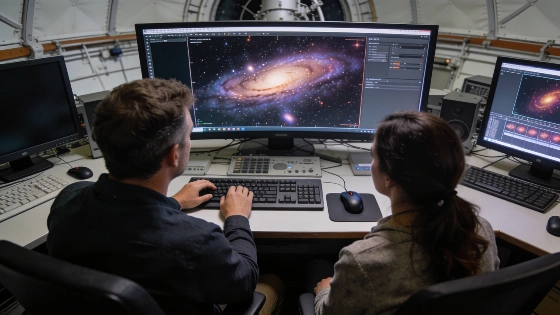
Using JWST's NIRCam and MIRI instruments, the team obtained high-resolution infrared images of Sextans A. These observations allowed them to map the galaxy's population of stars in the asymptotic red giant branch (AGB) phase-a late evolutionary stage when stars shed material into space. The data revealed that most AGB stars in Sextans A lack significant dust shells, but a minority are surrounded by thick envelopes of dust, acting as "dust factories."
Tracing the Origins of Stardust
The early universe's first stars, known as Population III (Pop III) stars, formed from pristine hydrogen and helium. Through nuclear fusion, these stars created heavier elements, which were dispersed into space by supernova explosions. This process gradually enriched the interstellar medium, enabling subsequent generations of stars-Population II and later Population I-to form with increasing metallicity. Sextans A's metal-poor environment offers a window into these early enrichment processes.
The JWST observations identified around 20 AGB stars in Sextans A with substantial dust shells. Analysis suggests these stars originated 2-3 billion years ago and had initial masses about 1.5 times that of the Sun. Their dusty envelopes indicate active dust production, similar to what would have occurred in the universe's first galaxies. The findings help clarify which types of stars were most responsible for producing the dust that shaped the chemical evolution of galaxies.
Limits and Implications of the Findings
While JWST's sensitivity enables detailed study of Sextans A, direct observation of individual stars in truly ancient galaxies remains out of reach. The approach of using local analogs is therefore essential for reconstructing the processes that governed early cosmic evolution. The research, published in The Astrophysical Journal, demonstrates how modern instruments can bridge the gap between distant, unresolved galaxies and the physical mechanisms that operated in the early universe.
These results complement other recent JWST studies that probe the environments around black holes and star-forming regions. For example, astronomers have used Webb to map gas flows feeding supermassive black holes, revealing cycles that may have influenced galaxy growth in the early universe (see related coverage). Together, such studies are building a more complete picture of how the first stars and galaxies transformed the cosmos.
Numerical Context and Remaining Questions
The Sextans A observations covered a galaxy just 4.6 million light-years from Earth, with metallicity estimated at 1-7% of solar values. Of the AGB stars mapped, about 90% showed little or no dust, while roughly 20 stars exhibited thick dust shells. These dust-producing stars likely formed 2-3 billion years ago, with initial masses near 1.5 solar masses. The study's reliance on a local analog highlights the challenge of directly resolving similar processes in galaxies at high redshift, where JWST's resolution and sensitivity are still limited by distance and cosmic dimming.
Although the findings support the idea that intermediate-mass stars in metal-poor environments can be major dust producers, uncertainties remain about the precise contribution of different stellar populations to the dust budget of the early universe. Further observations and modeling will be needed to refine these estimates and to test whether Sextans A is truly representative of the first galaxies.
In astronomy, "metals" refer to all elements heavier than hydrogen and helium. The metallicity of a star or galaxy is a key indicator of its evolutionary history, as heavier elements are produced by nuclear fusion in stars and distributed by stellar winds and supernovae. Infrared observations, such as those from JWST's NIRCam and MIRI, are especially sensitive to dust and cool stars, allowing astronomers to trace the life cycles of stars and the enrichment of the interstellar medium. By studying local analogs like Sextans A, researchers can infer processes that shaped the early universe, even when direct observation remains beyond current technological limits.