Analysis of stable isotopes from over 100 individuals across 37 archaeological sites in Brazil's Cerrado shows that some large precolonial communities relied on maize-based polyculture, challenging assumptions about Indigenous subsistence in tropical South America
New research using stable isotope analysis has provided direct evidence that some of the largest precolonial settlements in Brazil's Cerrado region were supported by maize-based polyculture, rather than by intensive monoculture or exclusive reliance on wild resources. The findings, published in Science Advances, challenge longstanding debates over whether Indigenous societies in this vast tropical savanna were primarily hunter-gatherers or intensive maize farmers.
Dietary Evidence from Human Remains
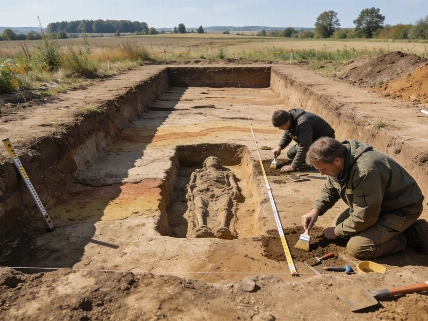
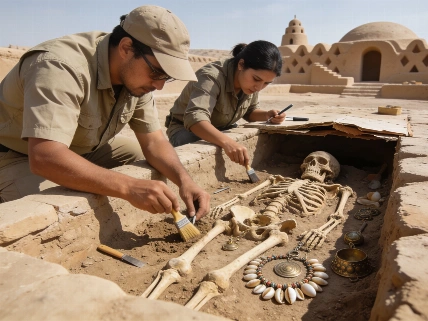
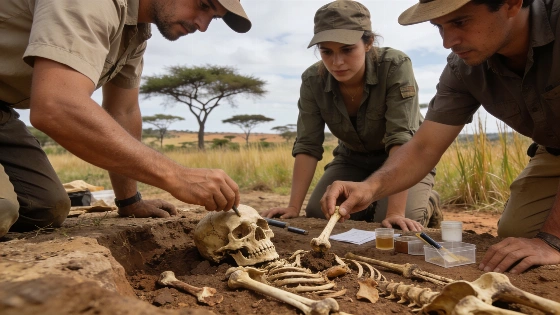
The international research team analyzed stable carbon, nitrogen, and oxygen isotopes preserved in the teeth and bones of more than 100 individuals from 37 archaeological sites distributed across the Cerrado, Caatinga, and Atlantic Forest biomes. These isotopic signatures, combined with new radiocarbon dates, faunal isotope baselines, archaeobotanical remains, and paleoecological records, allowed researchers to reconstruct dietary patterns during the Late Holocene.
The results revealed that residents of large open-air villages in the Cerrado obtained a substantial portion of their diet from maize, while neighboring populations living in rock shelters consumed a more diverse range of wild and cultivated foods, with little evidence for intensive maize use. Both groups inhabited similar environments, suggesting that these differences reflect distinct cultural traditions and economic strategies rather than environmental constraints.
Polyculture and Settlement Sustainability
Rather than practicing intensive monoculture, the maize-dependent communities cultivated the crop within resilient polycultural systems that also included wild plants and other domesticated species. This diversified approach appears to have supported the growth and maintenance of large, stable settlements in the region. The study highlights the Cerrado as a center of Indigenous agricultural innovation prior to European colonization, an area that has often received less attention than the Amazon in discussions of precolonial land use.
Isotopic and archaeobotanical evidence from the sampled individuals indicates that maize was a staple food for some communities, but not universally adopted across the region. The presence of contrasting dietary signatures among neighboring populations underscores the diversity of Indigenous subsistence strategies in tropical South America.
Implications for Agricultural History
The research challenges simplified models of agricultural development in the region, demonstrating that maize was integrated into complex, locally adapted food production systems. The findings also suggest that Indigenous farming practices played a significant role in shaping Cerrado ecosystems for centuries, with potential relevance for modern discussions on biodiversity conservation and sustainable land management.
Beyond resolving a long-standing archaeological debate, the study's use of stable isotope analysis to reconstruct ancient diets parallels approaches used in other contexts, such as the investigation of childhood origins and dietary diversity in West African populations liberated from slave ships, as discussed in recent research on St. Helena burials.
Numbers, Methods, and Limitations
The study examined skeletal remains from over 100 individuals across 37 archaeological sites, representing a broad geographic and environmental range within central and northeastern Brazil. Isotope analysis focused on carbon, nitrogen, and oxygen values from dental and bone collagen, providing insight into both plant and animal contributions to diet. Radiocarbon dating established the Late Holocene chronology of the sampled populations. While the sample size is substantial for the region, preservation and recovery biases may limit the representativeness of the results, and not all communities or time periods are equally documented.
Stable isotope analysis is a key method for reconstructing ancient diets and subsistence strategies. By measuring the ratios of specific isotopes in human bone and tooth collagen, researchers can infer the types of plants and animals consumed over different periods of an individual's life. Carbon isotopes distinguish between plants using different photosynthetic pathways, such as maize (a C4 plant) and most wild plants (C3). Nitrogen isotopes provide information about the trophic level of dietary protein, while oxygen isotopes can reflect water sources and mobility. These methods, when combined with archaeological and environmental data, offer a powerful approach to understanding the complexity of past human diets and the development of agricultural systems.