Researchers analyzing intergalactic space have identified a significant fraction of the universe's missing ordinary matter, suggesting that violent galactic outflows may have expelled it beyond galaxies' boundaries
A longstanding puzzle in cosmology concerns the whereabouts of the universe's missing baryonic matter-the ordinary atoms that make up stars, planets, and living things. While theoretical models predict a certain density of baryons, observations have consistently found only about one-tenth of the expected amount within galaxies and galaxy clusters. Recent research now points to a substantial portion of this missing matter residing in the vast spaces between galaxies, likely expelled by energetic processes in galactic history.
Tracing the Missing Baryons
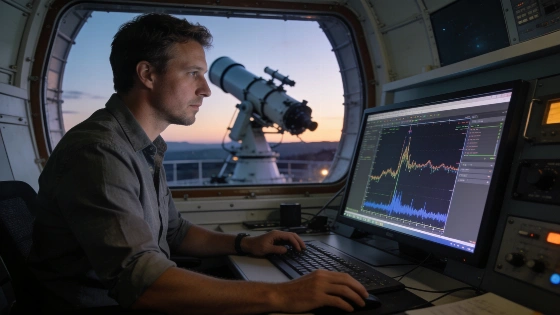
To investigate the deficit, scientists have turned to sensitive measurements of the intergalactic medium-the diffuse gas that fills the space between galaxies. By analyzing the absorption of background light from distant quasars, researchers can detect the presence of ionized gas that is otherwise invisible. These studies suggest that much of the universe's baryonic matter is not lost, but rather distributed in low-density filaments and clouds outside galaxies, consistent with predictions from cosmological simulations.
Galactic Outflows and Violent Ejection
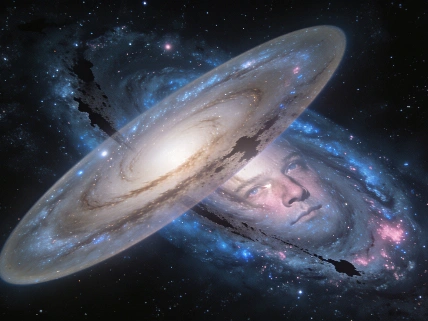
The evidence indicates that powerful galactic winds, driven by supernova explosions and active galactic nuclei, have expelled significant amounts of ordinary matter from galaxies over billions of years. These outflows can reach velocities sufficient to overcome a galaxy's gravitational pull, dispersing gas into intergalactic space. The process appears to be more violent and efficient than earlier models anticipated, helping to explain why so little baryonic matter remains bound within galaxies themselves.
Measuring the Intergalactic Reservoir
Quantitative estimates based on absorption-line spectroscopy and X-ray observations suggest that up to 90% of the universe's baryonic matter may reside outside galaxies, primarily in the warm-hot intergalactic medium (WHIM) at temperatures between 105 and 107 kelvins. This finding aligns with recent results from space-based observatories and large-scale simulations. The challenge remains to directly detect and map this diffuse material, as its low density and high temperature make it difficult to observe with current instruments. Related research using the James Webb Space Telescope has also explored how early galaxies contributed to cosmic enrichment, as discussed in a recent analysis of stardust production in dwarf galaxies.
Understanding the distribution of baryonic matter is crucial for refining models of galaxy formation and evolution. The apparent efficiency of galactic outflows in removing ordinary matter from galaxies has significant implications for star formation rates, chemical enrichment, and the growth of cosmic structures. Ongoing and future observations with next-generation telescopes are expected to provide more detailed maps of the intergalactic medium and further constrain the fate of the universe's missing baryons.
In cosmology, baryonic matter refers to the protons, neutrons, and electrons that make up atoms-distinct from dark matter and dark energy, which dominate the universe's mass-energy budget. The search for missing baryons relies on indirect detection methods, such as absorption-line spectroscopy, which measures how intervening gas clouds absorb specific wavelengths of light from background sources. These techniques allow astronomers to infer the presence, temperature, and density of otherwise invisible matter, helping to close the gap between theoretical predictions and observed quantities.